
Copper Water: Can copper water help your plants grow better? Here is what you should know |
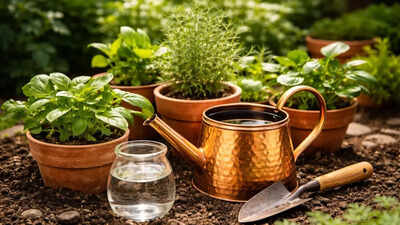
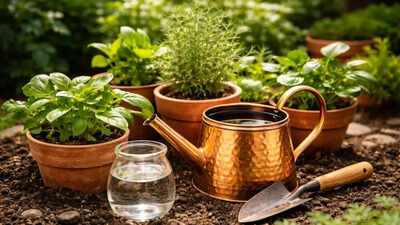
People begin their day by drinking water that was stored in a copper container overnight. This practice has been associated with traditional health habits and is considered to have health benefits. Recently, garden enthusiasts have posed an interesting question: ‘Can copper-infused water benefit plants?’The idea may sound strange at first, but copper is an essential micronutrient that plants require. It plays an important role in plant metabolism. This idea has inspired some plant enthusiasts to use copper-infused water to water their house or garden plants. It should, however, be noted that copper can benefit plants in small amounts, but it is essential to understand how copper can benefit plants.
Why copper matters for plant health
Copper is considered a micronutrient in the nutrition of plants. This implies that plants need it in very small amounts, but it is still required for some biological processes.In the cells of plants, copper helps to activate some enzymes that take part in the process of photosynthesis and respiration. These enzymes play an important role in enabling the plants to harness energy from the sun and for healthy metabolic activities.Copper is used to manufacture lignin, a material used to thicken the cell walls of plants. This enables the plants to stand upright and helps them to cope with stress.Therefore, a lack of copper in the soil can result in weak growth, weak stems, or yellow leaves.
Poll
Do you believe that copper-infused water can benefit plants?
How copper-infused water forms
When water is stored in a copper container for several hours, tiny amounts of copper ions dissolve into the water. This process happens naturally through a reaction between the metal and water.The resulting copper-infused water contains trace levels of copper. These levels are usually very small, but they can have antimicrobial properties and may influence plant health when applied to soil.For plants growing in nutrient-poor soil, these trace minerals could potentially contribute to micronutrient availability.However, the amount of copper that dissolves depends on factors such as water acidity, storage time, and the quality of the copper vessel.
Possible benefits for plants
Some gardeners think that using copper water might have some possible benefits for the plants, but only if used occasionally.One possible benefit is related to the availability of micronutrients for the plants. Although copper is required in small quantities for the enzymes to function, it might be beneficial for the growth of the plants.Another possible benefit might be related to the antimicrobial properties that copper water might have for the plants. It is known that copper inhibits the growth of some microorganisms. It might be possible to reduce some harmful bacteria or fungi using copper water.Some enthusiasts think that copper water might have benefits for the strength of the plants, as copper helps in the formation of the cell walls of the plants.It must be remembered that the scientific evidence for using copper water for the plants is still limited.
Why too much copper can harm plants
While it is necessary to have trace amounts of copper, too much of it can be harmful to plants. Excessive amounts of copper in the soil can cause damage to the roots of the plants.Copper toxicity in plants can cause problems such as stunted growth, discolouration of leaves, and underdeveloped roots.It is therefore important to note that gardeners should not overuse copper in the soil and should not overwater the plants with copper-based solutions.Plants are able to obtain enough copper from the fertilisers and the soil, so it should be added cautiously.
A balanced approach for plant care
If you are interested in trying out the experiment of using copper water for plants, moderation is the key. Using copper water at times for houseplants will not affect the soil chemistry to any great extent.Plants require sunlight, water, healthy soil, and nutrients such as nitrogen, phosphorus, and potassium to thrive. Although copper water does play an important role, it is just one small part of the entire picture.
What gardeners should remember
The concept of using copper water for plants is an intriguing idea, as it brings together traditional practices and the curiosity of modern gardeners. Copper is an essential nutrient, and in trace amounts, it helps facilitate critical plant growth.However, it is crucial to note that plants need balanced nutrients, and too much copper can be detrimental rather than beneficial.While copper is essential for plants, most soils already provide sufficient amounts, and there is currently little scientific research showing that copper vessel water improves plant growth.For all the plant enthusiasts out there, it is recommended that instead of using copper water, you focus on healthy soil, water, and balanced fertilisers. The idea of using copper water for plants might be an occasional trial, but it is not recommended as a magic potion for your plants.In nature, it is generally seen that balanced nutrients are essential for growth, and this is as applicable to humans as it is to plants.