
US Visa rule: Travellers from 50 countries face $15,000 visa bond rule; new rules aim to curb overstays — full list Inside |


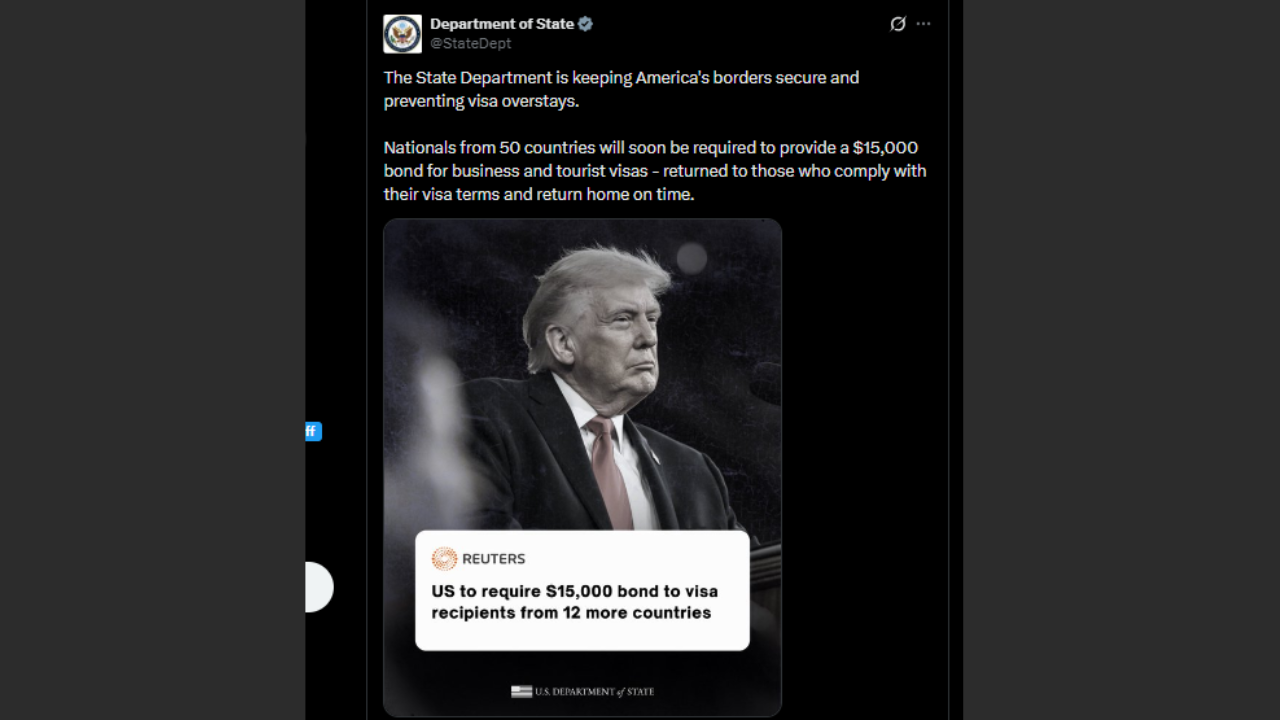
In a significant move to tighten immigration compliance, the US Department of State has announced that travellers from 50 countries may soon be required to pay a visa bond of up to $15,000 when applying for business (B1) and tourist (B2) visas. The policy, introduced under provisions of the Immigration and Nationality Act, will apply to selected nationalities identified based on overstay rates recorded by the Department of Homeland Security.
US visa bond
What the visa bond means for travellers
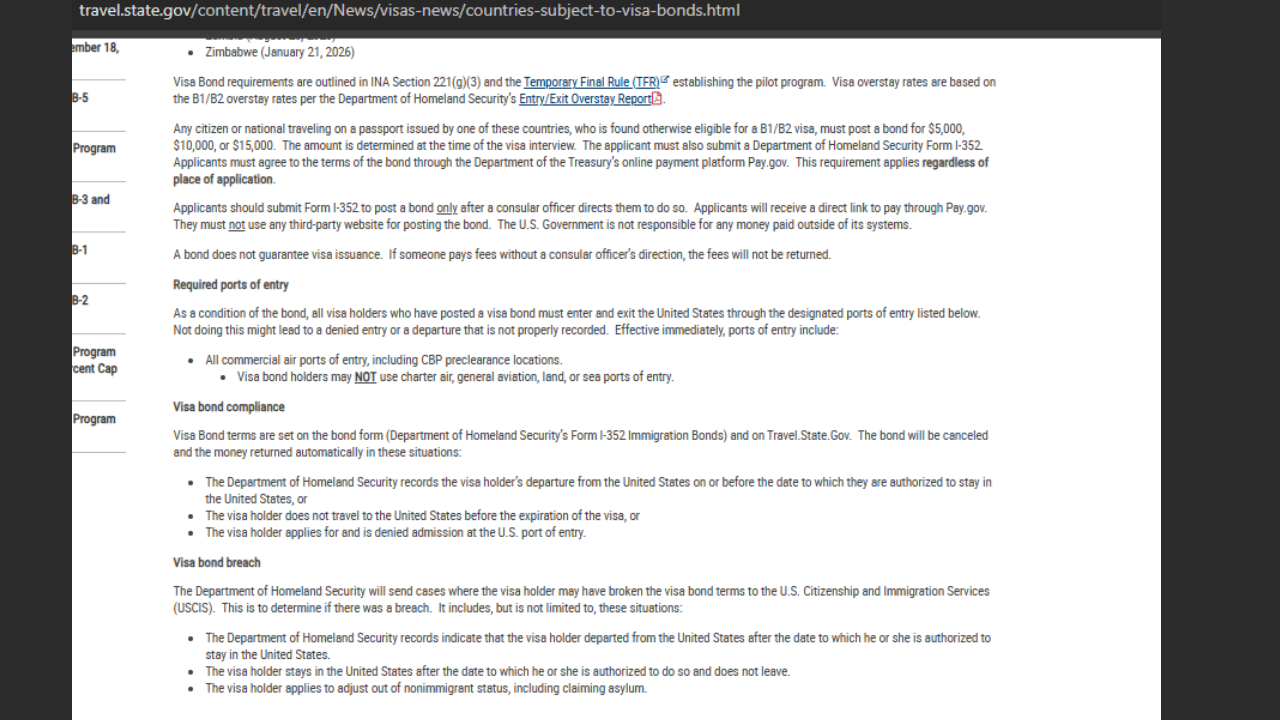
Under the new system, the eligible candidates of the specified countries may be asked to pay a bond of $5,000, $10,000, or $15,000 depending on the risk assessment of the applicant during the course of the visa interview. The amount is not a fee but a security deposit. The travelers will be refunded the amount if they adhere to the terms of the visa, i.e., if they leave the United States within the specified period. However, it needs to be noted that paying the bond does not guarantee visa approval. Applicants must first be deemed eligible for a visa, after which a consular officer may instruct them to post the bond.
Who needs to pay?
The requirement applies to nationals from 50 countries across Africa, Asia, the Caribbean, and parts of Eastern Europe and Oceania. Full list of countries subject to visa bonds, along with implementation dates: Africa & CaribbeanAlgeria (Jan 21, 2026)Angola (Jan 21, 2026)Benin (Jan 21, 2026)Botswana (Jan 1, 2026)Burundi (Jan 21, 2026)Cabo Verde (Jan 21, 2026)Central African Republic (Jan 1, 2026)Cote d’Ivoire (Jan 21, 2026)Djibouti (Jan 21, 2026)Dominica (Jan 21, 2026)Ethiopia (Apr 2, 2026)Gabon (Jan 21, 2026)The Gambia (Oct 11, 2025)Guinea (Jan 1, 2026)Guinea-Bissau (Jan 1, 2026)Lesotho (Apr 2, 2026)Malawi (Aug 20, 2025)Mauritania (Oct 23, 2025)Mauritius (Apr 2, 2026)Mozambique (Apr 2, 2026)Namibia (Jan 1, 2026)Nigeria (Jan 21, 2026)Sao Tome and Principe (Oct 23, 2025)Senegal (Jan 21, 2026)Seychelles (Apr 2, 2026)Tanzania (Oct 23, 2025)Togo (Jan 21, 2026)Tunisia (Apr 2, 2026)Uganda (Jan 21, 2026)Zambia (Aug 20, 2025)Zimbabwe (Jan 21, 2026)Asia & Middle EastBangladesh (Jan 21, 2026)Bhutan (Jan 1, 2026)Cambodia (Apr 2, 2026)Kyrgyz Republic (Jan 21, 2026)Mongolia (Apr 2, 2026)Nepal (Jan 21, 2026)Tajikistan (Jan 21, 2026)Turkmenistan (Jan 1, 2026)Europe, Americas & OceaniaAntigua and Barbuda (Jan 21, 2026)Cuba (Jan 21, 2026)Fiji (Jan 21, 2026)Georgia (Apr 2, 2026)Grenada (Apr 2, 2026)Nicaragua (Apr 2, 2026)Papua New Guinea (Apr 2, 2026)Tonga (Jan 21, 2026)Tuvalu (Jan 21, 2026)Vanuatu (Jan 21, 2026)Venezuela (Jan 21, 2026) Implementation dates vary, with some countries already under the rule and others—such as Cambodia, Ethiopia, and Georgia—set to be included from April 2, 2026.
@StateDept/X
How the process works
Travellers directed to pay the bond must submit Form I-352 (Immigration Bond) and complete payment through the US government’s official platform, Pay.gov. Authorities have cautioned applicants against using third-party websites, warning that payments made outside official systems will not be recognised or refunded. Importantly, applicants should only proceed with payment after receiving explicit instructions from a consular officer.Read more: Emirates travel alert: Reduced flights, multiple changes allowed till April 30; Dubai city check-in closed
Entry rules tightened for bond holders
Travellers who post a visa bond will face stricter entry and exit requirements. They must enter and leave the United States exclusively through designated commercial airports, including those with US preclearance facilities. Also, it needs to be noted that visa bond holders don’t use land borders, sea ports, charter flights, or private aircraft.If the conditions are not adhered to, there might be chances of denial of entry or difficulties in the departure record.
When will the bond be refunded?
The refund of the amount of the bond shall take place if the following conditions are satisfied:The departure from the US takes place within the stipulated periodThe visa is not used prior to the expiration dateThe entry into the US is denied at the port of entry
What happens if rules are violated?
If a traveller overstays or violates visa conditions, the case may be referred to US Citizenship and Immigration Services (USCIS) to determine a bond breach. This includes situations where a person:Departed from the United States after the allowed periodTries to alter immigration status, such as seeking asylum In all these situations, the visa bond holder will have their bond money forfeited.Read more: Travel alert: Jodhpur Airport to shut for 30 days from March 29; flights to 7 cities likely to be affected
A shift in US travel policy
This new rule indicates a major change in US visa policy, which places greater emphasis on accountability and compliance. Despite the fact that this action was designed to reduce overstays, travelers from the said nations will further have to face more burden. Therefore, all those travelers planning to visit the United States are encouraged to verify their eligibility and be ready for any new requirements during the visa procedure once the pilot program launches.