Three weeks, three challenges: Inside India’s battles as Middle East explodes | India News
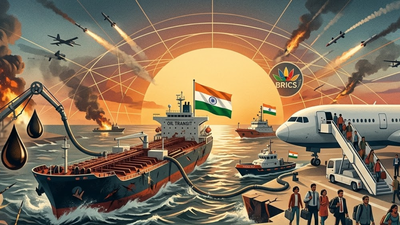
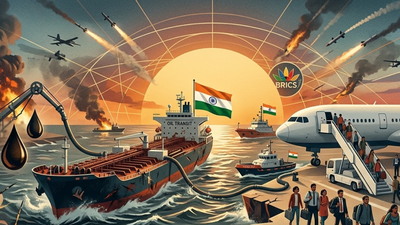
The last day of February was meant to be routine — travel plans, a turn of the calendar, the quiet anticipation of a new month. Instead, a long-simmering conflict boiled over as the United States and Israel launched coordinated strikes on Iran under what has been referred to as Operation Epic Fury.The escalation took a dramatic turn with the reported killing of Iran’s Supreme Leader, Ayatollah Ali Khamenei, a development that marked a decisive and unprecedented shift in the conflict’s trajectory. What began as a targeted military action quickly spiralled into a wider regional confrontation. Iran retaliated, not with direct strikes on US or Israeli territory alone, but by targeting their military assets across the Middle East, widening the theatre of tension.
Within days, the conflict’s ripple effects were global. Energy markets felt the strain as supply chains were hit, shipping routes became dangerous, and diplomatic lines became complicated. Countries far from the battlefield found themselves pulled into its orbit; not as mere participants, but as stakeholders in an increasingly volatile and fragile world order.For India, like many other countries, the stakes were immediate and multi-layered, requiring the government’s involvement in ensuring the safety of its citizens across the Middle East, managing the risks of energy supply uncertainties, and carefully calibrating its diplomatic stance between competing global powers.Three weeks into the crisis, as the situation continues to evolve, let’s dive deep into how India is managing the chaos, a complex web of balancing security, economics, and diplomacy in the midst of a rapidly shifting geopolitical situation.
Bringing lakhs of Indians back
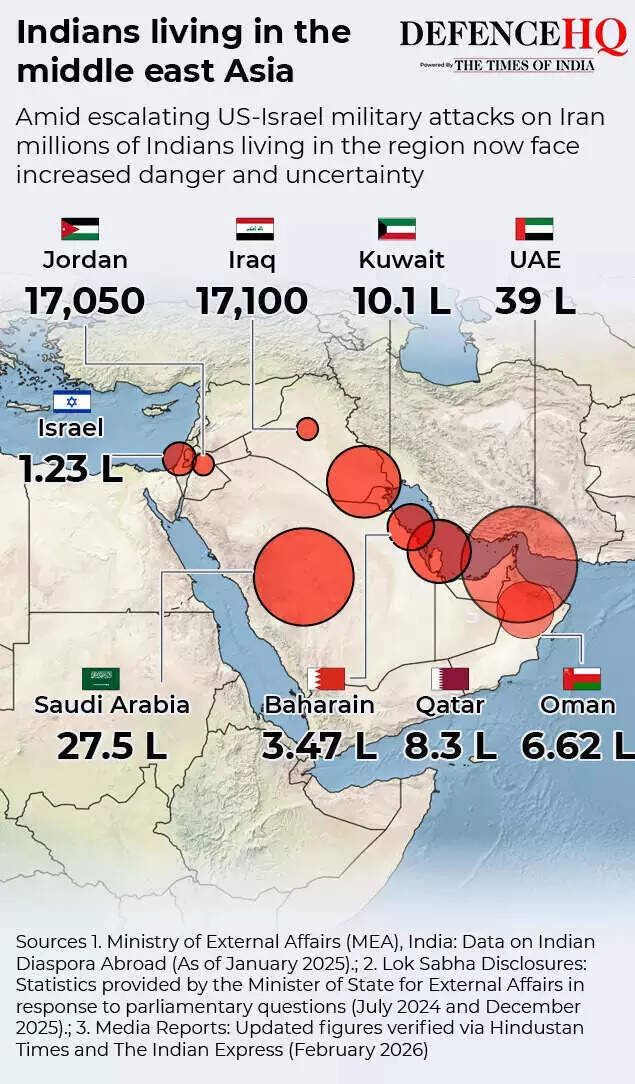
The first signs of strain came from the ground. The Ministry of External Affairs (MEA) has confirmed that five Indian nationals have been killed and one remains missing in the conflict zone. Over 2.2 lakh Indian nationals have returned to India since February 28, as the Gulf crisis escalated, marking the first major sign of the direct impact on Indian citizens.
In its latest briefings, the MEA said Indian missions in Iran, Israel and across West Asia are operating “round the clock”, maintaining contact with nationals and coordinating with local authorities. Dedicated control rooms have been set up in New Delhi as well as in embassies in the region to respond to distress calls.
“We have five Indians who have lost their lives and one who is missing in an earlier incident. Our missions in Oman, Iraq, UAE remain in touch with the concerned authorities regarding the missing Indian national and for early repatriation of mortal remains of the deceased after completing requisite formalities,”
Additional secretary (Gulf) Aseem Mahajan (during a public briefing)
So far, the government has not announced a full-scale evacuation operation, but has facilitated case-by-case movement of Indian nationals through available commercial routes. Officials have indicated that airspace restrictions and security conditions have limited large-scale evacuation planning at this stage.The Ministry of Civil Aviation has also been monitoring the situation, with airlines adjusting schedules and routes in response to airspace closures over parts of West Asia. While no dedicated evacuation flights have been formally declared, authorities have said they are prepared to scale up operations if required.According to a senior Indian government official, around 2,20,000 Indian nationals have returned to the country so far, travelling on 45 flights expected to land on Monday from major Gulf transit hubs including the United Arab Emirates, Saudi Arabia, Oman and Qatar. These flights are being coordinated with host governments and civil aviation authorities as airspace disruptions and closures continue to affect schedules.The earliest returns originated from Iran, where evacuations were complicated by border closures and limited air corridors. MEA Joint Secretary (Gulf) Aseem Mahajan told reporters that 550 Indian nationals have crossed into Armenia via land routes from Iran, and have since flown to India. Additionally, 90 Indians crossed into Azerbaijan from Iran just this week, with diplomatic and logistical assistance provided by the Indian embassy in Tehran.According to the govt officials, 284 people were in Iran on pilgrimage, part of the broader group now moving toward repatriation. “Our embassy in Tehran, in spite of difficulties, continues to be fully functional,” said the additional secretary (Gulf) Mahajan , adding that staff had relocated students from Tehran to safer cities before facilitating their onward travel.Students have been among the most visible returnees. On Sunday, nearly 70 Indian students, primarily from Jammu and Kashmir studying medicine in Iran, landed at Delhi’s Indira Gandhi International Airport after a multi‑stage journey that took them from Iran to Armenia, then Dubai and finally to New Delhi. Many paid for their own return tickets after booking one‑way flights home; fares reportedly climbed sharply under emergency demand, with one student saying a ticket that normally costs around Rs 25,000 was priced near Rs 55,000 in the crisis.For many returnees, the ordeal did not end at arrival. Students spoke of “anxiety and uncertainty” in Iran, disruptions to academic schedules and examinations, and communication challenges due to intermittent internet access. Some classmates still in Iran were relocated to Qom, which officials say is comparatively calmer.Meanwhile, the repatriation process continues in the Gulf. The MEA briefing reiterated that Kuwait’s airspace remains closed, though plans are underway for special non‑scheduled flights. Transits from Bahrain and Iraq are being facilitated via Saudi Arabia, as authorities seek to continue safe movement despite evolving security conditions.On the ground, evacuation has so far been selective and incident-driven. In one such case, 15 Indian crew members were moved to safety after a vessel was hit near Iraq, with the MEA confirming coordination with regional authorities to secure their exit.
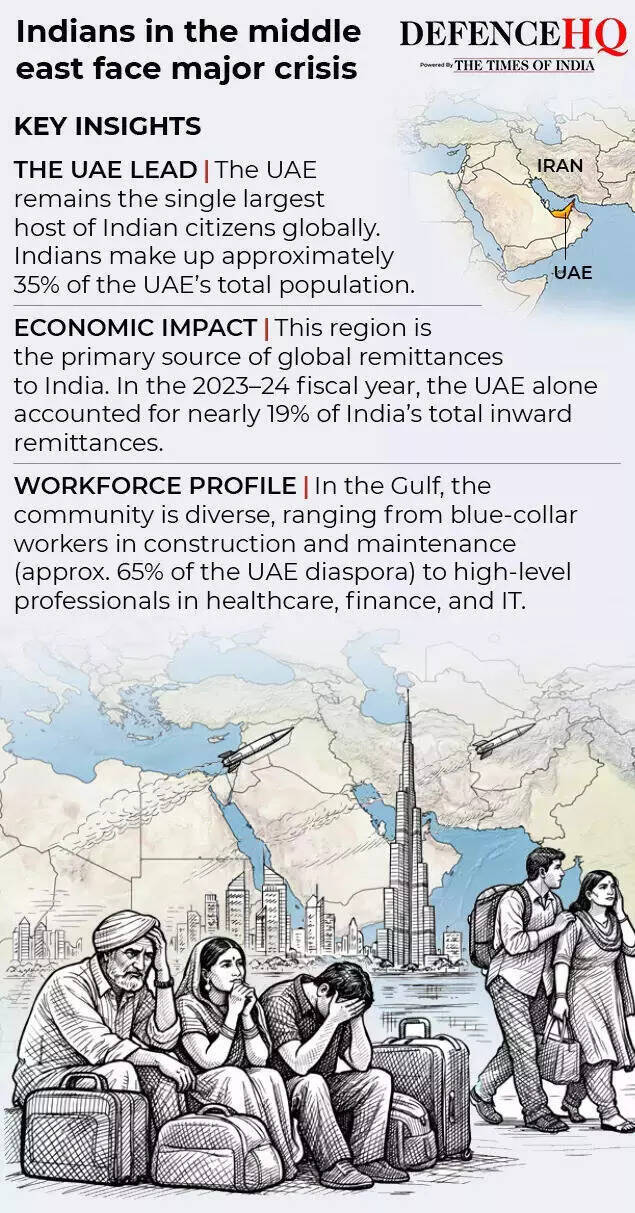
Officials have stressed that any broader evacuation will depend on “feasibility and evolving security conditions”, particularly access to safe corridors. With an estimated 8–9 million Indians living across the Gulf region, the government’s current approach remains cautious, focused on assistance, monitoring, and preparedness rather than immediate mass evacuation.
The energy & oil crisis
India’s energy supply chains have been under intense pressure in the three weeks since conflict escalated in the Middle East, with the narrow Strait of Hormuz emerging as a focal point of risk for crude and gas shipments.The strait, just about 33 kilometres wide at its narrowest point, is the conduit for roughly 20 per cent of the world’s seaborne oil trade. For India, it is particularly vital: the country imports over 50 per cent of its crude oil and a significant portion of its LPG through this route, primarily from Gulf nations such as the UAE, Saudi Arabia and Qatar. Any disruption in transit through Hormuz can therefore directly impact domestic fuel supply, industrial production, and cooking gas availability for millions of households.
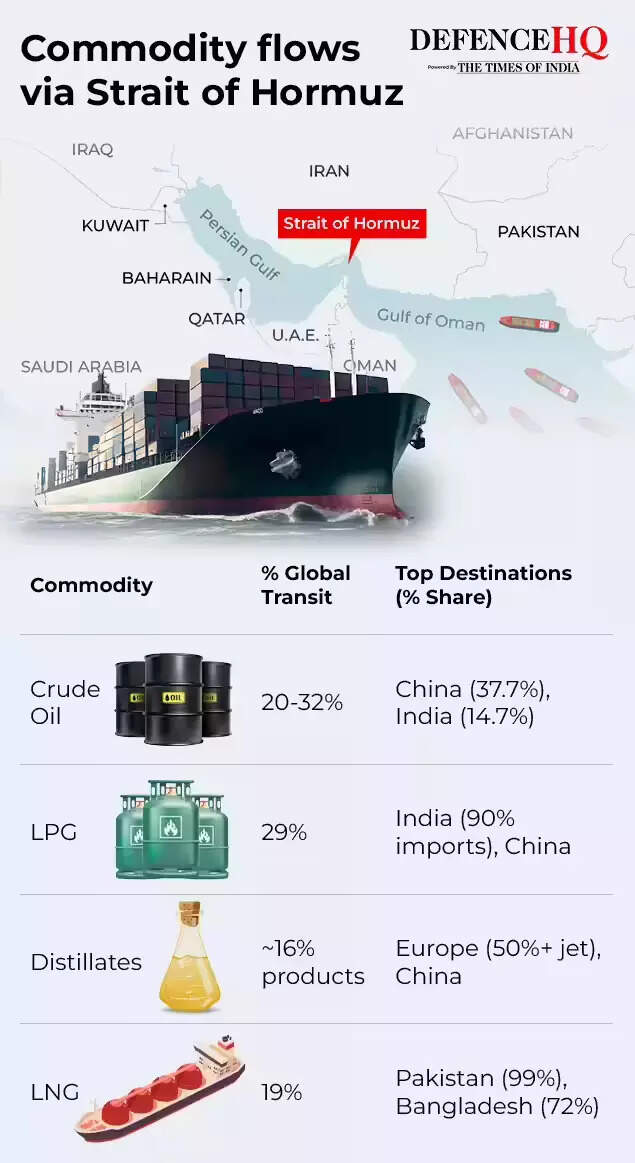
Despite sustained geopolitical tension, Indian energy imports have continued to make it home, albeit in a strained context. The Indian crude oil tanker “Jag Laadki” arrived at Mundra Port in Gujarat on Wednesday, by literally sailing the conflict. This vessel was loading at UAE’s Fujairah port which came under attack. The ship, while unharmed and its crew safe, crossed the region the next day. This marked the third vessel in recent days to successfully transit the Strait of Hormuz and deliver crude to Indian shores despite the conflict environment. Officials said the tanker navigated the sensitive waters safely.Earlier, two Indian‑flagged LPG carriers. Shivalik and Nanda Devi, also cleared the strait with nearly 92,700 tonnes of LPG between them and reached Gujarat facilities, providing a measure of relief to the domestic cooking gas market that heavily relies on imports from West Asia.
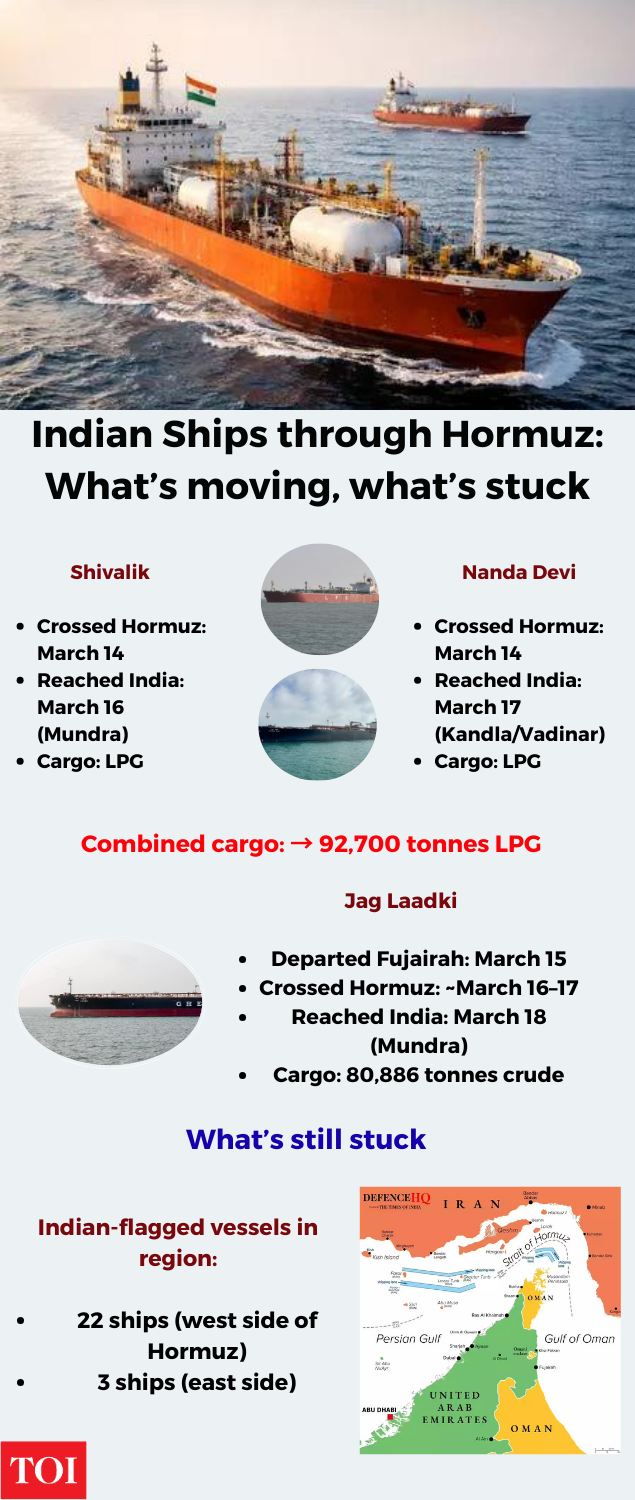
In the broader region, however, the picture remains challenging. According to the Ministry of Shipping’s own data cited in reporting today, around three lakh tonnes of LPG across six Indian‑flagged ships remain stranded in the Strait of Hormuz, with their arrival delayed amid security and transit bottlenecks.New Delhi’s diplomatic efforts to secure movement are ongoing, but the government has been careful to clarify that there is no blanket arrangement with Tehran guaranteeing automatic passage for Indian vessels; each transit requires case‑by‑case permissions and clearance, according to External Affairs Minister S Jaishankar.The Indian government is also monitoring hundreds of Indian seafarers and ships still in the region and has boosted maritime security oversight through the Directorate General of Shipping, which has issued enhanced advisories and 24×7 monitoring protocols for vessels in the Gulf amid missile, drone and other threat reports.At the same time, disruptions have not just been physical but economic. Indian refiners and importers are contending with surging freight and insurance costs, as global risk premiums spike with the wider disruption around Hormuz and the Gulf. When the Middle East conflict began following US-Israel strikes on Iran, 28 Indian-flagged vessels were in the strait: 24 on the west side and four on the east. Over the past week, two vessels from each side have safely reached open waters, leaving three ships on the east side after one more Indian-flagged ship joined them.and 22 on the west.“All 611 seafarers on 22 vessels (on the west side of the Strait) are safe,” he told a news briefing.
Additionally, Industry sources say many shipping firms are reluctant to quote rates for large tankers amid uncertainties, adding a cost dimension to the logistical strain.In this volatile environment, India’s strategy has been to keep key supplies moving while managing risk, rather than attempt an abrupt rerouting away from the Strait of Hormuz. The outcome so far is mixed: key cargos are arriving, several remain delayed, and the broader supply chain is under heightened geopolitical pressure. There are no signs yet that flows have collapsed entirely, but their continuity is far from assured.
Walking the diplomatic tightrope
As the conflict in the Middle East raged into its third week, India’s diplomatic posture has been shaped by a careful effort to balance competing interests in an increasingly divided geopolitical landscape.In its official briefings, the Ministry of External Affairs has repeatedly emphasised India’s core priorities: calls for de‑escalation, restraint and a return to dialogue while urging that civilian lives be protected. New Delhi has avoided taking explicit sides, sticking to messaging that reflects India’s broader foreign policy of pursuing its national interests through engagement rather than confrontation.
At the same time, Prime Minister Narendra Modi has been actively engaging world leaders to reinforce this posture. In recent days, he spoke by phone with the President of the United Arab Emirates to strongly condemn attacks on UAE territory, stressing India’s solidarity with the Gulf state amid ongoing hostilities.India has also maintained communication channels with Tehran. PM Modi spoke to Iranian President Masoud Pezeshkian, expressing deep concern over escalations and urging immediate de‑escalation and dialogue, while thanking Iran for its cooperation in the safe return of Indian nationals earlier in the crisis.These engagements reflect India’s broader multi‑alignment strategy, where ties with the United States, Israel, Iran and Gulf partners are calibrated to protect energy imports, expatriate welfare and strategic interests — all without overtly siding with any hostile bloc. The diplomatic challenge has extended into India’s role as chair of the BRICS grouping in 2026. With the bloc including countries with divergent positions on the Middle East conflict, attempts to issue a unified BRICS statement on the crisis have so far been unsuccessful, posing an early stress test for India’s leadership of the grouping. Tehran, in particular, has signalled expectations that New Delhi use its BRICS presidency to condemn the US‑Israel strikes on Iran — demands that India has been hesitant to endorse in explicit terms given its multi‑directional diplomacy.Even as the government maintains its calibrated stance, voices from the political opposition have called for a more assertive diplomatic role. In a latest Congress leader Shashi Tharoor, joined opposition’s call on March 18, urging New Delhi to take a “proactive lead” in demanding a ceasefire and pushing for peace.The Middle East conflict highlights the core tension of India’s foreign policy today, as the country navigates advocating for peace and multilateral engagement while simultaneously protecting its strategic, economic, and diaspora interests in a rapidly shifting regional landscape.”
A three-front crisis, still unfolding
Three weeks into the conflict, India is not dealing with a single crisis but a layered one. There are confirmed casualties among its citizens, partial but fragile continuity in energy flows, and a diplomatic environment that is becoming more polarised.Each strand is being managed, but none is fully under control. And as long as the situation around Hormuz remains unstable, all three challenges – evacuations, energy security and diplomacy— will continue to move together, shaping India’s response in real time.