
Nvidia CEO Jensen Huang reveals how AI became his everyday ‘tutor’ |
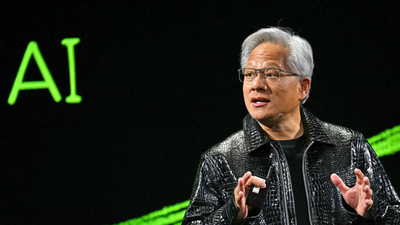
In the early hours of the day, wherever Jensen Huang happens to be, from Singapore to San Jose to Taipei, a quiet routine unfolds that reflects how deeply artificial intelligence has become part of his work. Before meetings or major decisions, Huang engages with AI by asking questions, following up, and refining his understanding through continuous interaction. He has practised this consistently over the years, treating AI not simply as a tool, but as a regular part of how he learns and processes information. As the head of NVIDIA, whose hardware powers much of today’s AI systems, Huang describes AI in practical terms as a “daily tutor.” He has said, “A personal tutor for every single person, that is what AI can be,” reflecting his view that AI can help individuals learn faster and access knowledge more efficiently in everyday life.
Jensen Huang uses AI beyond basic search
Huang uses AI in a way that goes beyond traditional search engines. Instead of asking a single question and moving on, he treats AI interactions as an ongoing conversation. He asks follow-up questions, reframes queries, and explores different angles until he reaches a clearer understanding.He has pointed out that the ability to ask well-structured questions is becoming an important skill. By refining prompts and iterating on responses, he is able to move beyond surface-level answers and gain more detailed insights. This approach helps him quickly grasp topics that would otherwise require extensive reading.
Jensen Huang and AI as a personal tutor
Huang has described AI as “a personal tutor for every single person,” and he applies this idea directly in his routine. When he encounters a topic outside his immediate expertise, he uses AI to break it down into simpler parts and explain key concepts step by step.Rather than relying entirely on summaries prepared by teams, he often engages with the material himself using AI assistance. This allows him to form his own understanding of complex subjects, whether related to technology, business, or emerging trends. It also enables faster learning without depending solely on traditional resources.
Using AI for routine work
In addition to learning, Huang uses AI to handle everyday tasks that would otherwise take up time. This includes drafting emails, summarising long documents, and refining written communication.These applications are practical rather than experimental. By using AI to manage routine work, he reduces the time spent on repetitive tasks and improves efficiency. This allows him to focus more on areas that require direct involvement, such as strategic planning and decision-making.
Jensen Huang and keeping human judgment central
Huang has consistently stated that AI is a support tool, not a decision-maker. He uses it to gather information, explore options, and test ideas, but final decisions remain his responsibility.He has said, “I am not asking it to think for me,” making it clear that human judgement remains central to his workflow. AI provides inputs and perspectives, but it does not replace accountability or leadership decisions.
Verifying AI outputs
Huang also takes a cautious approach when working with AI-generated responses. Instead of accepting answers at face value, he verifies them by asking questions in different ways or comparing outputs across systems.He has compared this process to seeking multiple opinions before reaching a conclusion. This method helps reduce the risk of errors and ensures that the information he relies on is more balanced and accurate.
AI as a basic skill
Huang believes that the ability to use AI effectively is becoming an essential skill. He has suggested that people who adopt AI tools in their daily work will have a clear advantage over those who do not.He has also stated, “You’re not going to lose your job to AI, but you might lose your job to someone who uses AI.” This reflects his view that AI is not replacing workers directly, but changing how work is done and who performs it more efficiently.