
‘Layered system of threats’: How Iran’s use of ‘fast-attack ships’ is choking Hormuz
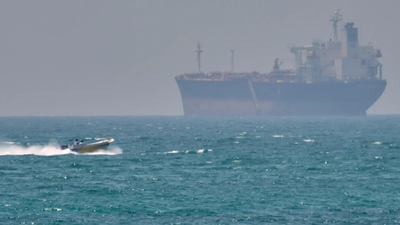
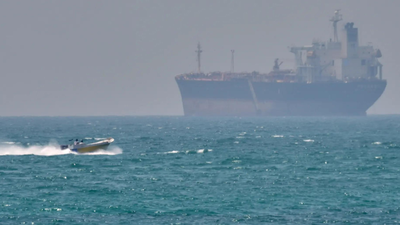
Iran’s use of swarms of small, fast boats to seize two container ships near the Strait of Hormuz is raising fresh concerns over maritime security. It also challenges claims that US forces have neutralised Tehran’s naval threat and highlights the difficulties in reopening a vital global oil route.Speedboat operations are now part of a broader “layered system of threats,” alongside “shore-based missiles, drones, mines and electronic interference to create uncertainty and slow decision-making,” Greek maritime security firm Diaplous told Reuters.Iran’s judiciary chief, Gholamhossein Mohseni Ejehi, said through a post on X that the country’s armed forces were showcasing their strength in Hormuz, pointing to a Revolutionary Guard “mosquito fleet” of speedboats and underwater drones, as well as recent action against three vessels.He added that “the IRGC’s mosquito fleet, with speedboats and drones, lies in wait from the sea caves of Faror Island for the American aggressor warships, ready to saturate their air defenses and bring utter ruin upon the invaders.”Unlike earlier incidents, these boats were not targeting large, unarmed commercial vessels and were far less heavily armed. In contrast, Iran’s Revolutionary Guards are equipped with heavy machine guns, rocket launchers and, in some cases, anti-ship missiles.Since the conflict began on February 28, around 100 or more of these boats may have been destroyed, said Corey Ranslem, chief executive of maritime security firm Dryad Global.US president Donald Trump had earlier acknowledged that while Iran’s conventional navy had been largely destroyed, its “fast-attack ships” had not previously been viewed as a significant threat, an assessment now being called into question by the latest developments.He warned that any such vessels approaching a US blockade outside the strait would be “immediately ELIMINATED,” using the “same system of kill” employed in the Caribbean and Pacific, where US air strikes have targeted suspected drug boats and killed at least 110 people.Before the war, Iran was believed to possess hundreds, if not thousands, of these small, fast boats, often concealed in coastal tunnels, naval bases or among civilian vessels, according to maritime security experts.“The civilian shipping industry is not equipped to prevent Iranian armed forces from seizing vessels,” said Daniel Mueller, a senior analyst at British maritime security company Ambrey, as cited by Reuters.Including this week’s incidents, Iran has deployed small, fast boats in at least seven operations since 2019, Mueller said.These fast boats have become the “backbone” of its naval strategy, enabling rapid deployment as part of its “asymmetrical war against the enemy,” a senior Iranian security official told Reuters.“Because of their very high speeds, these boats can successfully carry out hit-and-run attacks without being detected,” the official said, speaking on condition of anonymity.Prior to this week, Iran had largely relied on missile and drone strikes to target shipping near the Strait of Hormuz.