10 rapidly-growing trees for immediate privacy and long-lasting beauty |
Trees are vital natural resources that not only enhance the aesthetic appeal of the landscape but also provide significant social and economic benefits. Beyond acting as environmental “lungs” to sequester carbon, purify air, and reduce urban heat, they have historically fueled national development, timber production, and more. But the biggest drawback for many homeowners is time. Agree?Traditional trees can take decades to mature, leaving landscapes looking sparse for years. The good news is that certain trees can create privacy screens for your home by quickly establishing a dense, vertical barrier of foliage that blocks sightlines between properties.How fast-growing trees are effective for quick privacy?According to the USDA Forest Service, fast-growing trees can quickly improve shade coverage and even help cool surrounding areas. With thoughtful selection, they work better than fencing and have even shown signs of long-lasting beauty.In addition, their environmental impacts are never negligible. A study by TNC shows that a simple walk among the trees in a city park led to an impactful drop in anxiety and depression. Another study in Louisville, Kentucky, found that planting 9,000 trees improved neighbours’ health conditions linked to heart disease, stroke and some types of cancer.Fast-growing trees for quick privacyWhen building natural screens, it is essential to consider their annual growth and mature size to ensure they fit your space. Now, without further ado, scroll down for a list of trees that will transform your landscape.01) Weeping WillowKnown as one of the fastest-growing trees, the weeping willow (Salix babylonica) is known for its graceful, cascading branches. The ornamental tree is also grown for wood production and shelterbelts. Going by its name, the deciduous trees with weak wood drop many small and large branches quite frequently, making it relatively easy to propagate.Lifespan: 30–50 yearsMature size: Grows 6 to 8 feet annually, often reaching 35 to 50 feet tall and 5 to 50 feet wide in just a few years.Zones: 4–10 (USDA), and ideal for wet areas.Planted in: Spring seasonOther requirements: Full sun exposure, acidic, neutral, and moist soil, as well as moderate watering.02) American Sweetgum
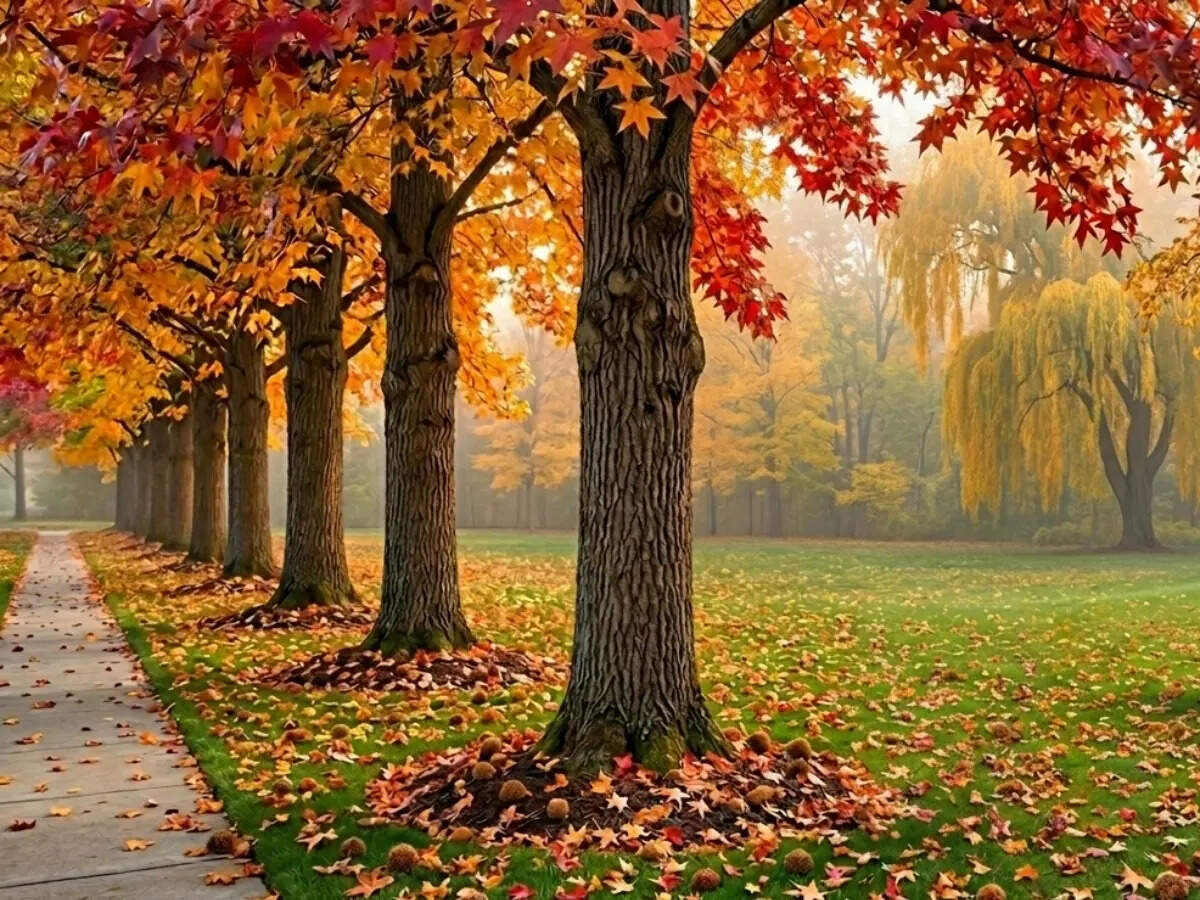
Series of American Sweetgum in the backyard. Image credit – Gemini
Known for their glossy, star-shaped leaves and dramatic fall colour, American sweetgum (Liquidambar styraciflua) trees are often found in wetter areas. However, their spiky seed pods that fall on the ground between December and April and their aggressive rooting system, damaging the sidewalks, can be a drawback for some homeowners.Lifespan: 150–300 years, though they can live up to 400 years under ideal conditions.Mature size: Grows 2 to 3 feet per year, often 60 to 80 feet tall and 40 to 60 feet in width.Zones: 5-9 (USDA) in wet areas.Planted in: Late winter to early springOther requirements: Full-sun conditions, deep, moist, acidic, loamy soils, and consistent moisture.03) Crape MyrtleFor year-round privacy, evergreens such as Crape Myrtle are a standout tree for smaller yards. Horticulturists note that it grows quickly and produces vibrant blooms that last from summer into fall.Lifespan: Typically 20 to 50 years, and retains its leaf colours for the entire summer.Mature Size: Grows 2 to 3 feet per year, with the standard varieties reaching 20 to 30 feet tall and 10 to 15 feet wide. In addition, there are exceptionally old and giant species, as well as semi-dwarf and shrub Varieties.Zones: 7 to 9Planted In: Late winter or early spring.Other requirements: Full Sun, clay and alkaline, well-drained, moist soil with a slightly acidic to neutral pH, regular watering and 2–4 inches of organic mulch04) River BirchRiver birch (Betula nigra) stands out for its peeling, cinnamon-colored bark that becomes no less than a visual interest. It is ideal for low-lying or flood-prone areas due to its ability to tolerate wet soils.Lifespan: 50 to 75 yearsMature size: Grows 1.5 to 3 feet per year, reaching 40 to 70 feet tall x 40 to 60 feet wide.Zones: 3 to 9Planted in: Late summer or winterOther requirements: Full to partial sun; well-draining soil; moderate watering05) CrabappleThe small to medium-sized deciduous trees with their cherry blossoms are perfect for your home yards and porches. Besides their unparalleled curb appeal, Crabapple trees (Prunus) can also be prone to diseases such as powdery mildew and fire blight. It is advisable to plant these trees with a pest-resistant species.Lifespan: 30 to 70 yearsMature size: Grows 12 to 24 inches per year, often reaching 15 to 25 feet tall and 10 to 20 feet wide. They also have dwarf and large varieties.Zones: 4 to 8Planted in: Spring or fallOther requirements: Full sun; well-draining, slightly acidic soil; moderate watering06) Paper BirchPaper birch (Betula papyrifera) is one such deciduous tree that offers multiple interests in varying seasons. Its white exfoliating bark turns yellow in autumn. In spring, the tree produces small flowers, followed by cone-like fruits in late summer.Lifespan: 50 to 80 yearsMature size: Grows 2 to 3 feet per year in early stages, often reaching 50 to 70 feet tall and 25 to 50 feet wide.Zones: 2 to 6Planted in: Cool, moist, well-draining soil throughout the year.Other requirements: Partial sun, protection from heat stress, consistent watering07) Japanese Flowering CherryThese trees create a seasonal show with their soft pink and white blossoms during spring. While Japanese Flowering Cherry (Prunus serrulata) grows relatively quickly, they have a shorter lifespan than slower-growing species.Lifespan: 15 to 20 yearsMature size: Grows 1 to 2 feet per year, often reaching 15 to 25 feet tall and 15 to 25 feet wide.Zones: 5 to 8Planted in: Fall or early springOther requirements: Well-draining soil, full sun exposure, moderate watering, protection from strong winds, regular pruning for structure08) Tulip PoplarTulip poplar (Liriodendron tulipifera), with its surreal, plant-like structure, is one of the fastest-growing native hardwood trees. Known for its tall, straight trunk and tulip-shaped flowers, it quickly adds a visual appeal in large landscapes.Lifespan: 100 to 300 yearsMature size: Grows 2 to 3 feet per year, often reaching 80 to 120 feet tall and 30 to 60 feet wide.Zones: 4 to 9Planted in: Early spring or fallOther requirements: Full sun exposure, deep, well-draining, slightly acidic soil, regular watering in early years, and mulch to retain soil moisture09) Eastern RedbudThe ornamental Eastern redbud (Cercis canadensis) is another plant ideal for smaller spaces. This fast-growing tree not only fits well in residential landscapes but also has early spring blooms that create a striking visual effect. According to horticulturists, this tree also supports pollinators, making it a valuable addition to eco-friendly gardens.Lifespan: 50 to 70 yearsMature size: Grows 1 to 2 feet per year, often reaching 20 to 30 feet tall and 25 to 35 feet wide.Zones: 4 to 9Planted in: Spring or fallOther requirements: Fertile, well-draining soil, partial to full sun exposure, regular watering and annual pruning10) Blue SpruceNative to the Rocky Mountains, the Blue Spruce (Picea pungens) is known for its silvery-blue foliage, pyramid shape, and longevity. These slow-to-moderate growing evergreen trees are also often referred to as the Colorado Blue Spruce.Lifespan: 150 to 300 yearsMature size: Grows 1 to 2 feet per year, often reaching 30 to 60 feet tall, 10 to 20 feet wideZones: 3 to 7Planted in: Early spring or fallOther requirements: Full sun, consistent moisture during establishment, low-humidity environments, well-draining soil, slightly acidic conditionsApart from the above list, trees such as Dawn Redwood, White Pine, Crabapple, Leyland Cypress, Thuja Green Giant, Citrus, Mango, Avocado and Peach, among others, also take a major place on the list of fast-growing windbreak or fruit species.Planting guidelinesTo maximise the effectiveness and health of your natural privacy screen, here are some strategic planting tips:Spacing: Plant trees close enough that their mature canopies will slightly overlap to create a seamless wall. However, avoid overcrowding, which can create damp, swampy areas leading to disease.Layering: For a more natural look and better pest resistance, plant a mixed screen of different species rather than a single row.Location: Maintain a distance of at least 12 feet from foundations or power lines to prevent damage from roots or tall branches.Maintenance: Fast-growing trees often have weaker wood. However, regular pruning helps establish a strong structure and prevents storm damage.