In 1950s, secretary Bette Nesmith Graham’s simple trick turned it into a million-dollar office tool |


Prior to the advent of computing and easy editing, typos were among the most serious challenges that typists had to cope with. Agree? One erroneous keystroke could ruin an entire page of writing. Secretaries in the 1950s typically had to rewrite the whole document to fix minor mistakes.One such employee of a company’s accounting department, Bette Nesmith Graham, encountered similar challenges at work every day. While working, she noticed something from outside the office premises, and that observation led to an incredible innovation. Namely, she witnessed that painters did not erase their mistakes. Instead, they simply covered them up with paint.A simple observations changed how errors are fixedThe idea was not a grand lab breakthrough but a simple trick she used in her work that changed the history of typing. Also, it showcased how folks should seek practical answers to everyday problems.According to the Lemelson-MIT Program, Bette Nesmith Graham developed the idea of hiding mistakes on paper after watching painters at work. Instead of attempting to eliminate the ink from the paper, she tried using a white liquid to mask mistakes made when typing.In most cases, experts have observed that most inventions are usually the result of borrowing ideas from other disciplines. Here, Graham borrowed the application of colour from art and applied it in the office environment, which increased typing efficiency and reduced stress for millions of people.Journey from secretary to inventor and founderGraham’s invention did not remain just a personal fix for long. She started manufacturing Liquid Paper correction fluid in her house and in 1956 founded a company around the product. According to the United States Patent and Trademark Office, Graham was both an inventor and an entrepreneur who revolutionised office supplies.Being a single parent, she turned the office improvement into a business empire. Liquid Paper became widely popular in the era of typewriters. It enabled secretaries to make corrections without losing their rhythm.According to the USPTO, giant corporations took some time to acknowledge the potential of Liquid Paper. In 1957, IBM refused to market the product. However, it later became the primary purchaser. This depicts how valuable ideas require time to gain recognition.
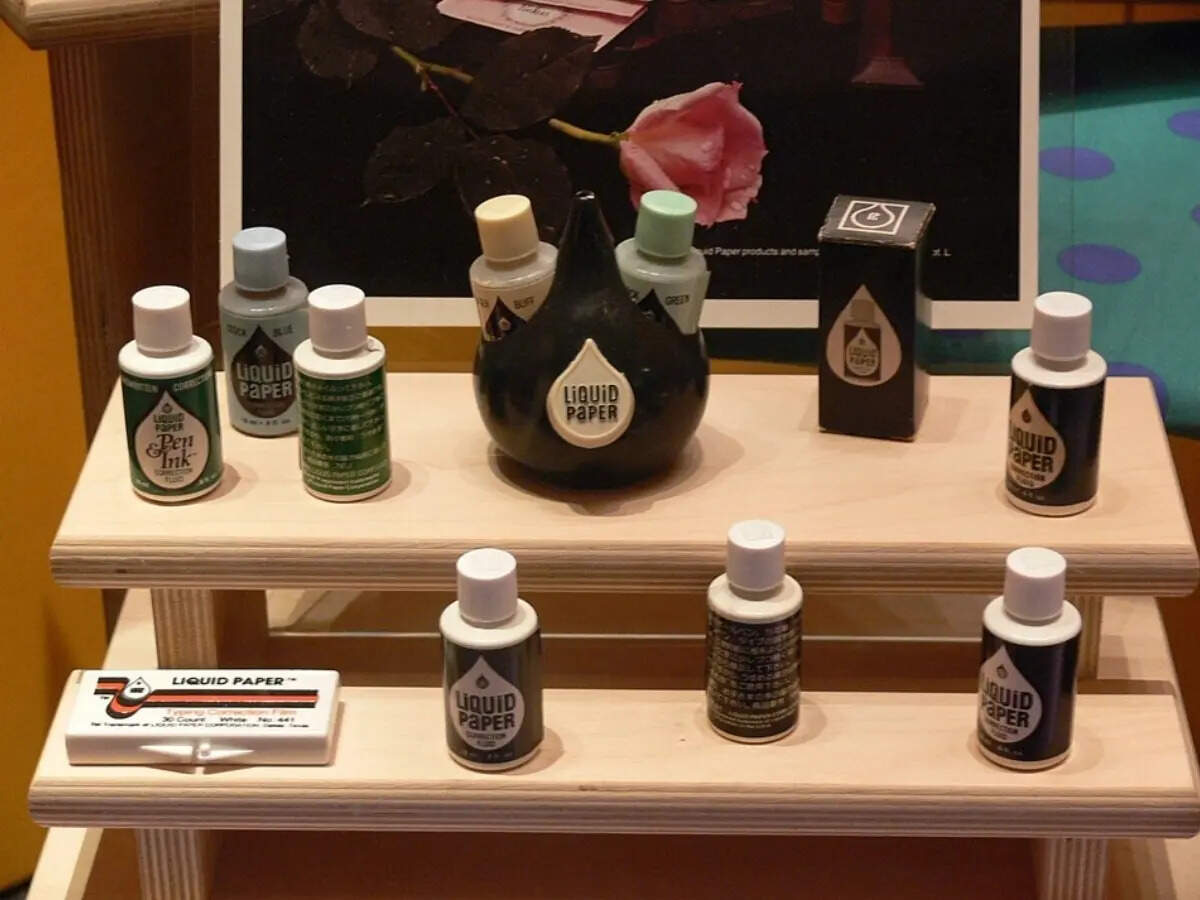
Typists stopped rewriting pages thanks to one smart idea. Image credit – Wikimedia
Why did the invention of correction liquid matterLiquid Paper had an impact on almost all office workers. Without it, one would have to retype pages of hard work due to simple mistakes, wasting both time and paper.The product was adopted as a necessity for any office environment in America. It gained popularity not because of market trends but due to massive consumer demand.Documentation of the product at the University of North Texas proves how Liquid Paper evolved into a company and not just another quick fix, making it an essential part of the rich history of typing.Graham’s personal experience with Liquid PaperPersonal testimonies give a deeper insight into how Liquid Paper came into existence. In a 1979 interview with the University of North Texas, Graham shed light on the difficulties and successes during the invention process.Her struggles and efforts in developing the product and establishing the company reveal that many great inventions begin as pragmatic solutions to common problems.Surprisingly, another interesting aspect of the history of Liquid Paper is connected with American music. The inventor’s son, Michael Nesmith, became part of the band called The Monkees.While initially conceived as a means of solving the problem in her office, the commercial success of the invention provided new opportunities outside of it. However, according to the USPTO, the business’s success deeply affected Bette’s family. Her second marriage deteriorated, and her ex-husband – then chairman of the board – also convinced a group of executives to bar Graham from the premises. He then went about trying to change the Liquid Paper formula to remove trade secret protections and strip her of income from her royalty rights.Bette Nesmith Graham had no grand goalsHer journey was a good case for pragmatic innovations, making her work routine easier. She paid close attention to something happening around her, looking for a more efficient solution.The invention of Liquid Paper turned into a standard product of the age of typewriters, remaining popular until computers made it redundant. It remains a prime example of the innovative power of simple ideas.