
Upset Nvidia CEO Jensen Huang to Anthropic CEO Dario Amodei: Get out of your ‘God complex’ and stop …
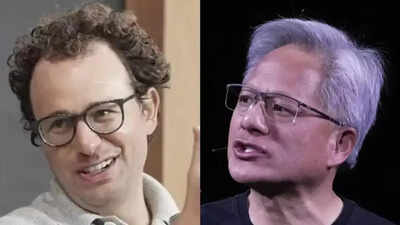
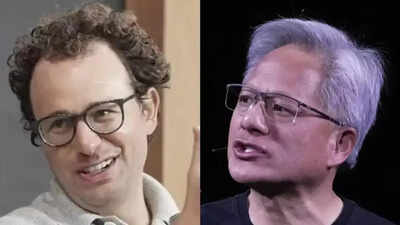
Nvidia CEO Jensen Huang is firing back at AI ‘doomsayers’ – essentially CEOs and top leadership of companies – calling predictions of a massive job wipeout “ridiculous” and urging fellow tech leaders to drop their “God complex”. In a recent interview with the Special Competitive Studies Project (via Fortune), Huang argued that while warnings about an AI apocalypse may be intended to help, they are actually causing harm by scaring away the next generation of talent.Huang specifically took aim at claims that AI will eliminate 50% of entry-level jobs – a figure previously cited by Anthropic CEO Dario Amodei. While he did not mention Amodei by name, Huang’s critique of fellow executives was sharp. “They’re made by people who are like me, CEOs, and somehow because they became CEOs you adopt a God complex, and before you know it you know everything,” Huang said. He insisted that leaders must “ground” themselves in facts rather than making grand, frightening predictions.
Why the ‘AI Apocalypse’ is not happening
According to Huang, the fear that AI will replace workers ignores how technology actually drives growth. He estimated that AI has already created over half a million jobs in just the last few years.Huang pointed to several reasons why AI is a job creator, not a killer. One of the examples is in software engineering, where the task is coding but the purpose is solving problems and innovating. AI can handle the task, but humans are needed for the purpose.Similarly, Huang noted that the world doesn’t just need a fixed amount of code. “We need a trillion lines of code written,” he said, citing massive unsolved problems in healthcare, science, and manufacturing. When businesses use AI to become more efficient, they grow faster and, in turn, hire more people.
More efficiency, more work
Some economists are backing Huang’s optimistic view with Torsten Slok, chief economist at Apollo Global Management, pointed to the Jevons paradox, which shows that making a resource more efficient actually leads to more consumption of it.“When steam engines made coal more efficient, Britain didn’t burn less coal, it burned more,” Slok noted, predicting that the same will happen for professional services like law, accounting and consulting. This is because AI makes these services cheaper and faster.Huang warned that the current rhetoric could have a “hurtful” impact on the US economy if it discourages students from pursuing technical careers.“If we convinced all the young college graduates to not be software engineers, and it turns out the United States needs more software engineers than ever, that’s hurtful,” Huang explained.