Army Cheetah helicopter carrying Major General crashes in Ladakh, all on board safe
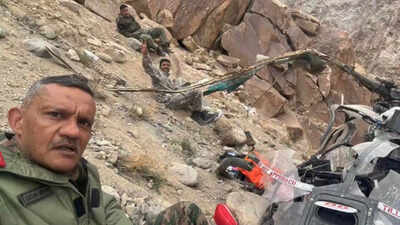
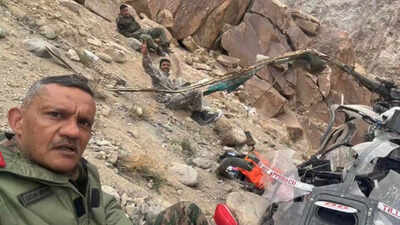
Three Army officers including the General Officer Commanding (GOC) of 3 Division (also known as Trishul Division) had a miraculous escape when the Cheetah helicopter they were flying in crashed near Tangtse, south east of Leh. The single‑engine chopper, piloted by a lieutenant colonel and a major, went down on Wednesday but was reported on Saturday. All three occupants escaped with minor injuries. A Court of Inquiry (CoI) has been ordered to determine the cause of the crash, an army officer stated.The accident underscores the risks faced by India’s ageing fleet of Cheetah and Chetak helicopters, which the Army plans to begin phasing out soon. Over the next decade, these helicopters are planned to be replaced by the modern Hindustan Aeronautics Limited (HAL) Light Utility Helicopters (LUH) as part of the Army Aviation Corps’ modernisation drive.The Cheetah, inducted in 1971 after setting high‑altitude records, has long been the backbone of operations in the Himalayas. It has served as a flying jeep, postal van, artillery spotter, reconnaissance platform and most critically as an air ambulance, especially in the high Himalayas.Operating at heights above 18,000 feet, such as posts on the Siachen Glacier, pushes the Cheetah beyond its design limits. Thin air reduces rotor lift and engine power, forcing multiple sorties for tasks achievable in one flight at lower altitudes. Yet these helicopters remain the lifeline for remote outposts like Bana Top, Ashok, and Sonam, perched between 19,600 and 21,000 feet.HAL’s LUH program, cleared in 2009, is designed specifically for these super‑rarified conditions. Powered by the Shakti‑1U turboshaft engine, the LUH can reach 21,300 feet, land at the world’s highest helipad on the Saltoro Ridge, and fly at speeds up to 235 km/h. The 3‑ton class helicopter carries six soldiers with a crew of two, features a digital glass cockpit compatible with night‑vision devices, and supports roles from medical evacuation and troop transport to reconnaissance and VIP missions.