Warships, spy flights & fighter bases: What the US military footprint around Cuba looks like
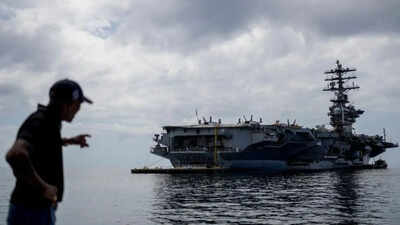
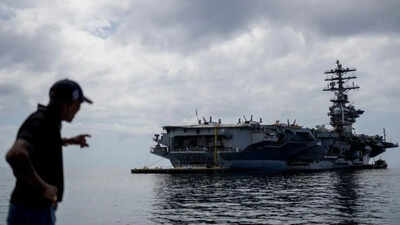
As the tensions between Washington and Havana continue to rise, US is increasing pressure on the island nation from multiple fronts. With the fuel blockade in place, US has stepped up its military presence in the Caribbean, deploying warships, surveillance aircraft and other assets in the region.The arrival of USS Nimitz carrier strike group on May 20 further escalate the standoff. Cuba has been facing a severe oil shortage, which has led to nationwide power outages, disrupted public transport and affected industrial activity. The crisis has added further pressure on Cuba already strained economy.US Secretary of State Marco Rubio recently described Cuba as a national security threat because of its ties with Russia and China. On the Cuban foreign minister Bruno Rodriguez warned that a war would lead to ‘bloodbath’, that could kill thousands of Cubans and Americans.Relations between US and Cuba deteriorated sharply after the Cuban revolution in 1959. Followed by Invasion of Bay of Pigs in 1961, a US backed failed invasion attempt to overthrow Castro regime. The confrontation reached its peak during the 1962 Cuban missile crisis, when the discovery of Soviet nuclear missiles on the island prompted President John F. Kennedy to impose a naval blockade.Although the cold war ended decades ago, tensions never fully disappeared. The US economic embargo on Cuba remains in place, with other disputes like sanctions and Guantanamo Bay. The latest military deployments and rising rhetoric have drawn comparisons with earlier confrontation between the two countries.US deployment around Cuba The US has significantly expanded its military presence in the region with multiple warships, including: –· USS Nimitz (CVN-68): The nuclear-powered aircraft carrier is the centrepiece of the deployment, operating dozens of combat aircraft.· Carrier Air Wing 17: Aboard USS Nimitz, the air wing includes F/A-18E/F Super Hornet fighters, EA-18G Growler electronic warfare aircraft. E-2D Hawkeye early warning aircraft and MH-60 Seahawk helicopter.· USS Iwo Jima (LHD-7): – The amphibious assault ship with around 2500 marines, helicopters and other expeditionary forces, providing rapid-response capability.· USS Fort Lauderdale (LPD-28): – The San Antonio-class amphibious transport dock designed to carry troops, vehicles and equipment.· USS Lake Erie (CG-70): – The Ticonderoga-class guided missile cruiser with long range strike capabilities.· USS Gridley (DDG-101): – The Arleigh Burk-class guided missile destroyer with air defence, anti-submarine and long-range strike capabilities.Other naval assets include USNS Patuxent (T-AO-201) replenishment ship and USS Billings (LCS-15) littoral combat ship for coastal waters.Surge in US Surveillance around Cuba Along with the deployment of warships, the US has also significantly increased intelligence-gathering missions around Cuba. According to the recent Wall Street Journal analysis, US military have logged more than 150 hours of surveillance flights around the island since February.The operations involved a range of intelligence and surveillance platforms, including:· RC-135 Rivet Joint signals intelligence aircraft· P-8A Poseidon maritime patrol aircraft· MQ-4C Triton high-altitude surveillance drone· MQ-9 Reaper reconnaissance droneBeyond the warships operating in the Caribbean, US maintains a network of military bases in the region to support any military operations on Cuba. Located just 145 km from the US mainland the island nation lies well within the operational range of US fighter jets and other aircrafts.Important bases include: –· Guantanamo Bay Naval Base, Cuba: Located on Cuban Soil, the base provides forward military presence inside Cuba and provides logistics and operational support.· Naval Air Station Key West, Florida: Located around 150km from Cuba, the base serves a major naval aviation training and operational hub.· Homestead Air Reserve Base, Florida: The most strategically positioned fighter jet base housing F-16 C/D fighting falcon.· Naval Air Station Jacksonville, Florida: One of the US Navy’s most important maritime surveillance hubs, housing P-8A Poseidon and MQ-4C Triton. The scale of military assets positioned around the island nation highlights Washington ability to rapidly project power in the region. From Aircraft carriers to military bases in the close proximity of Cuba, US maintains a formidable military footprint within striking range.While there is no indication of an imminent attack on Cuba, America’s current military posture suggests Washington keeping multiple options on the table as tensions with Havana continue to rise.