Why US Supreme Court struck down Donald Trump’s trade tariffs; explained in 10 points
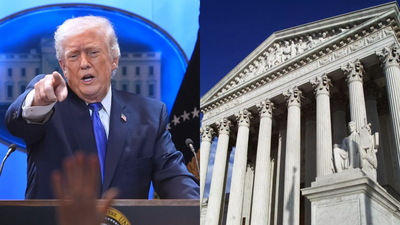
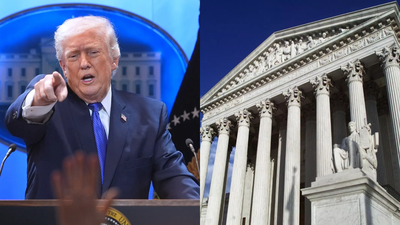
The US Supreme Court on Friday struck down many tariffs imposed by Donald Trump, ruling that a key emergency law he relied on does not give presidents the authority to impose such duties. The 6–3 decision was a major defeat for Trump and a relatively rare instance of the court checking his efforts in a second term that has relied heavily on tariffs as economic and foreign policy leverage against both allies and adversaries.The majority coalition brought together Chief Justice John Roberts and Justices Sonia Sotomayor, Elena Kagan, Neil Gorsuch, Amy Coney Barrett and Ketanji Brown Jackson. Justices Clarence Thomas, Samuel Alito and Brett Kavanaugh dissented.At the center of the case was the International Emergency Economic Powers Act (IEEPA), a 1977 statute that allows the president to regulate imports to address national security, foreign policy or economic threats. Trump had invoked the law to justify sweeping tariffs on nearly every country, citing “large and persistent” trade deficits and failures by China, Canada and Mexico to stem the flow of illicit fentanyl and other drugs into the United States. The court, however, concluded the law does not authorize tariffs.The ruling has wide economic and political implications. It raises the prospect that the administration may have to refund more than $100 billion in tariff revenue to importers and leaves unresolved how businesses or consumers affected by higher prices could be compensated. Trump reacted angrily and quickly moved to impose new tariffs under different laws, including the 1974 Trade Act, signaling the fight over presidential tariff powers is likely to continue.Also read | Nothing changes for India: Donald Trump’s big statement on trade dealTrump also said the court decision would not affect the ongoing India–US trade deal. Speaking after announcing a new 10% global tariff, he said the arrangement with India would remain unchanged and that New Delhi would continue paying tariffs while the United States would not.“Nothing changes, they’ll be paying tariffs, and we will not be paying tariffs. So, the deal with India is they pay tariffs. This is a reversal for what it used to be. I think Prime Minister Modi is a great gentleman, a great man, actually, but he was much smarter than the people that he was against in terms of the United States. He was ripping us off, India. So we made a deal with India, it’s a fair deal now, and we are not paying tariffs to them and they are paying tariffs. We did a little flip,” said Trump.
Why the court struck down Trump tariffs
1. The emergency law does not mention tariffs
IEEPA authorises the president to “regulate … importation” to address unusual and extraordinary threats to national security, foreign policy or the economy. But the statute does not use the words tariff, duty, levy or tax, which the court said was significant.
2. No president had used IEEPA this way before
The majority stressed that before Donald Trump, presidents had not understood IEEPA to allow tariffs. That history supported the view that Congress never granted such power in the law.Follow US Supreme Court Rejects Trump Tariffs Live Updates
3. Tariffs are different from other emergency tools
The court said tariffs differ from actions like quotas or embargoes because they “operate directly on domestic importers to raise revenue for the Treasury,” placing them outside the statute’s intended scope.
4. Government reading would give sweeping power
Under the administration’s interpretation, the court said, a president could impose duties “of unlimited amount and duration, on any product from any country,” a level of authority the justices said Congress had not clearly granted.
5. Majority relied on the major questions doctrine
Three conservative justices in the majority — Roberts, Gorsuch and Barrett — applied the principle that major economic or political powers claimed by the executive must be clearly authorised by Congress.
6. All six majority justices agreed on the core point
Despite differences in reasoning, all six concluded that IEEPA is silent on tariff authority and historically was not understood to include it.
7. Roberts’ central conclusion
Chief Justice John Roberts wrote: “Our task today is to decide only whether the power to ‘regulate … importation,’ as granted to the president in IEEPA, embraces the power to impose tariffs. It does not.”
8. Some justices noted other tools exist in the law
The opinion said IEEPA allows measures such as quotas or embargoes on imports during emergencies, but that does not mean tariffs — a separate and revenue-raising instrument — are included.
9. Tariffs had broad economic effects
The struck-down tariffs had pushed up prices of imported goods including furniture, apparel and electronics. Economists said prices may not fall quickly because Trump is already pursuing replacement tariffs and companies may keep prices high amid uncertainty.
10. Decision creates legal and practical fallout
The ruling opens the door to possible refunds of more than $100 billion in tariff revenue to importers, with lower courts, the US Court of International Trade, Customs and Border Protection and the Treasury Department expected to oversee the process. Importers are directly eligible, while other businesses may seek reimbursement through lawsuits; compensation for consumers is unclear.Within hours of the decision, Trump announced he would impose a new 10% tariff on all imports starting February 24 by invoking Section 122 of the 1974 Trade Act, a provision no president had previously used, and said he would pursue further tariffs through Section 301 investigations into other countries’ trade practices.