
Cobra that isn’t a snake! Scientists discover a rare whip-tailed ‘cobra lily’ plant in Mizoram |
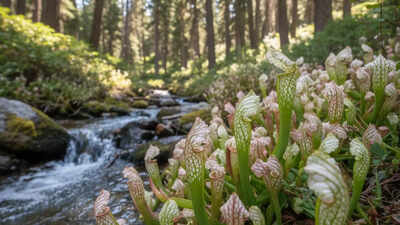
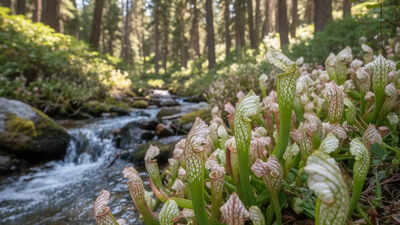
In the misty mountains of Northeast India, scientists have discovered a fascinating plant that appears to be almost alien-like. Scientists from the Botanical Survey of India have been able to identify it as a new species of Cobra Lily, named Arisaema siahaense. This plant was discovered in Mizoram’s Siaha District, where it is unique for its unusual height and the presence of a whip-like tail that is seen to be hanging from its flowering head. The plant had been noticed by locals before, but it had never been closely studied. Scientists were finally able to record the species in field expeditions between 2023 and 2025.
Mizoram’s whip-tailed cobra lily has a 21cm tail and unique three-part leaves
Arisaema siahaense is an evergreen herb that can grow over a metre tall. Its spathe, which is the part of the flower resembling a cobra’s hood, is familiar to those who know Cobra Lilies. What makes this species unique is its spadix appendix, a long, thin tail that can reach 21 centimetres. It’s covered in fine, brownish-green hairs. Unlike its relatives in China and Southeast Asia, this species grows from a rounded tuber instead of a creeping rootstock. Its leaves are also distinctive, divided into exactly three segments. Observers say it almost seems to have a personality of its own.The plant reportedly thrives in moist, rocky slopes near streams, where sunlight and water meet just right. Seeing it in the wild seems like finding a hidden treasure.
How it was found
The plant was discovered by scientists who were exploring the remote areas of the Indo-Burma biodiversity hotspot in the state of Mizoram. They were trekking in the area around Tlangpui Peak, measuring streams and vegetation, when they came across plants that looked unlike any other species. After examining the flowers under microscopes, they were sure that they had found something new. It appears that the discovery was made through patience and a keen eye.Expeditions reportedly lasted from September 2023 to June 2025, showing how much effort goes into documenting remote flora. This isn’t a quick find.
Naming the cobra lily: A tribute to local stewardship
The name Siahaense honours the Siaha District where the plant was first spotted. Scientists also wanted to recognise the local people, such as the Kompa family, who have helped protect the forests. It seems a small gesture, but it shows respect for communities that preserve biodiversity without fanfare. Observers say it’s a reminder that human stewardship and science often go hand in hand.Naming a species isn’t just about science. It’s about telling a story. And this plant tells one of nature, discovery, and local care.
Siaha cobra lily faces growing risks
Despite the excitement, experts warn the Siaha Cobra Lily might already be at risk. Its habitat faces pressure from road construction, grazing animals like goats and mithuns, and invasive weeds. Since it’s only known from a small area, any disturbance could be serious. Conservationists say protecting these forests is essential. It seems that even small changes could have big impacts.The plant is currently classified as Data Deficient, but researchers suggest monitoring is urgent. Watching this plant grow in its natural setting is reportedly a rare treat.