
Pakistan, Venezuela & now Iran: Why Chinese-made weapons keep failing
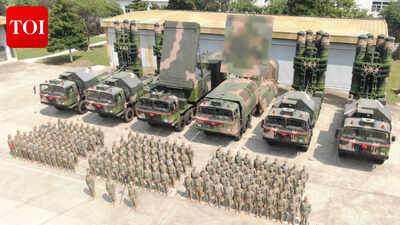
Chinese-manufactured weaponry — long touted as cheaper but equally powerful alternative to Western arsenals — has imploded spectacularly in recent conflicts.From India dismantling Pakistan‘s defenses during Operation Sindoor; America’s surgical raid snatching Venezuela’s Maduro; to US-Israeli strikes pulverising Iran’s shields, Beijing’s gear has proven inept. What was hyped as “battle-tested innovation” now reeks of shoddy engineering, weak software, and zero real-war grit.In Pakistan, Chinese-dependent forces watched helplessly as IAF BrahMos missiles shredded YLC-8E “anti-stealth” radars and HQ-9 batteries. Venezuela’s JY-27A radars and HQ-9s were blind during the US Delta Force extraction. Chinese-supplied HQ-9B defence systems in Iran crumbled against F-35 stealth barrages.The repeated failures suggest that these aren’t mere glitches, but a sign of systemic rot.
Operation Sindoor: Piercing Pakistan’s Chinese shield
On May 7, 2025, India launched Operation Sindoor, retaliating against the horrific Pahalgam terror attack that killed 28 civilians. The Indian Air Force (IAF) executed precision strikes on nine Pakistani military bases — including Chunian, Rafiqui, Murid, and Sukkur — and terror camps linked to Jaish-e-Mohammed, using BrahMos supersonic cruise missiles and air-launched munitions without crossing the LoC. The 23-minute mission showcased India’s SEAD (Suppression of Enemy Air Defences) prowess, bypassing Pakistan’s Chinese-dominated defenses.Pakistan, sourcing 82% of its arms from China, deployed the YLC-8E anti-stealth radar at Chunian Air Base, 70km south of Lahore. China boasted that its radar has a 450km-detection range, and enhanced sensitivity for stealth targets like Rafales, and anti-jamming via frequency agility. Yet, IAF’s ELM-2090U Green Pine radars and Growler-like EW (electronic warfare) jammed it, enabling BrahMos missiles to obliterate the site undetected. Lahore’s HQ-9 SAM — mimicking Russia’s S-300 system — failed to engage, crippled by poor integration and EW vulnerability.Pakistan countered with Wing Loong-II MALE UAVs armed with AR-1 laser-guided missiles but India’s Akash-NG and MRSAM systems intercepted them mid-flight. A PL-15E air-to-air missile (export variant of China’s PL-15) fired by PAF JF-17s missed and was recovered intact by India. Fragments revealed flaws in the rocket motor and guidance system errors.These failures exposed Chinese tech’s core issues: Inferior stealth detection (YLC-8E hyped F-35 detection but faltered vs. decoys), sluggish software updates, and no real combat hardening. India’s indigenous air defence systems and electronic warfare dominance routed the Chinese-made systems. Operation Sindoor validated BrahMos’ low-altitude evasion (10m height) and multi-sensor fusion, eroding Beijing’s propaganda.
Venezuela: Maduro’s capture exposes Chinese weapons
In January 2026, the US unleashed “Operation Absolute Resolve,” a daring midnight raid in Caracas that snatched Venezuelan strongman Nicolás Maduro from his fortified presidential residence without firing a shot. Delta Force teams, inserted via stealth MH-60M Black Hawk helicopters, extracted the target amid a labyrinth of Chinese and Russian defenses — exposing Beijing’s arsenal as a house of cards. Venezuelan air defenses, bloated with hype but starved of competence, registered zero intruders despite a $2 billion+ investment in Chinese gear.The backbone of Venezuela’s air defence — Chinese JY-27A “meter-wave” anti-stealth radars — were blinded. These AESA arrays, meant to spot F-22s or F-35s buckled under EA-18G Growler electronic attacks. Growlers’ ALQ-99 pods and Next Generation Jammers exploited JY-27A’s sluggish frequency hopping. HQ-9 SAMs and shorter-range HQ-12s stayed mute; their illuminators couldn’t lock amid barrage jamming.Layered with rusty Russian S-300PMU-2 batteries, the network imploded. Over 60% of Venezuela’s 22 Chinese radars — procured since 2019 — were offline pre-raid due to Beijing’s stingy spares policy and zero on-site tech support. Corrosion, power surges, and untrained crews rendered JY-27V variants scrap. The raid also netted intact HQ-9 guidance sections. Analysis revealed that the detection system was too weak for advanced jammers and there was a fire-control software lag.
Trump ‘s jab before Iran strikes
In his record-breaking 2026 State of the Union address, President Donald Trump mocked adversaries’ reliance on foreign tech. Referring to the operation in Venezuela, Trump said there was a “major military installation protected by thousands of soldiers and guarded by Russian and Chinese military technologies,” questioning, “How did that go for them?” Delivered amid rising tensions with Iran, the remark foreshadowed events, tying into prior failures like Pakistan’s.Trump’s rhetoric underscored perceived weaknesses in Chinese and Russian systems, boosting US confidence ahead of operations. While not naming Iran explicitly then, it aligned with his warnings on Tehran’s nuclear ambitions and missile threats.
Iran: HQ-9B Crumbles under US-Israel strikes
The ongoing US-Israeli airstrikes have further exposed falws in Chinese-made weaponry. Acquired in 2025 after Russian S-300s flopped against Israeli F-35s, China’s HQ-9B SAM — Beijing’s S-400 clone — promised 260km engagement range with active radar homing. Reality delivered humiliation: zero intercepts amid onslaught by stealth F-35s and AGM-158C LRASM stand-off munitions.The HQ-9B’s targeting seekers and two-stage rocket motors couldn’t cope with Israeli ALQ-322 jamming devices. Big holes in its radar coverage let stealthy F-35s get within 50 nautical miles undetected, due to weak side-radar cleanup and sluggish signal changes (stuck in rigid patterns). Sea-skimming Tomahawk missiles at 30m height slipped past blind spots from the HQ-9’s fixed launch positions.Poor system integration made things worse: Iran’s command centers lacked smooth data-linking like NATO’s, slowing handoffs from Bavar-373 radars (a homegrown copycat, untested) to Pantsir-S1 close-range defenses—taking 20 seconds to react versus the US Patriot’s 6 seconds. F-35s’ advanced radars spotted and locked enemy targeting first, guiding Rampage missiles that destroyed six batteries before launch. Wreckage showed the seekers’ jamming defenses were weak against US wide-band jammers (10-40GHz blasts), just like Pakistan’s HQ-9 failures in Operation Sindoor.US teams recovered HQ-9B fragments, exposing rocket motor inconsistencies and software bugs. These failures mirror Venezuela’s JY-27A blindness.
Why Chinese weapons keep failing
China, the world’s third-largest arms exporter, faces a credibility crisis. Sales to Pakistan (82% Chinese), Venezuela, and Iran highlight battlefield humiliations, deterring potential clients like Middle Eastern states. US dominance in stealth, EW, and precision strikes amplifies the gap.Chinese weapons prioritise export volume over battle-testing, lacking the rigorous trials of US or Russian counterparts. Design flaws, like HQ-9’s radar vulnerabilities, make them easy targets for jamming and anti-radiation missiles. Poor integration hinders multi-layer defenses, as seen in all three cases.
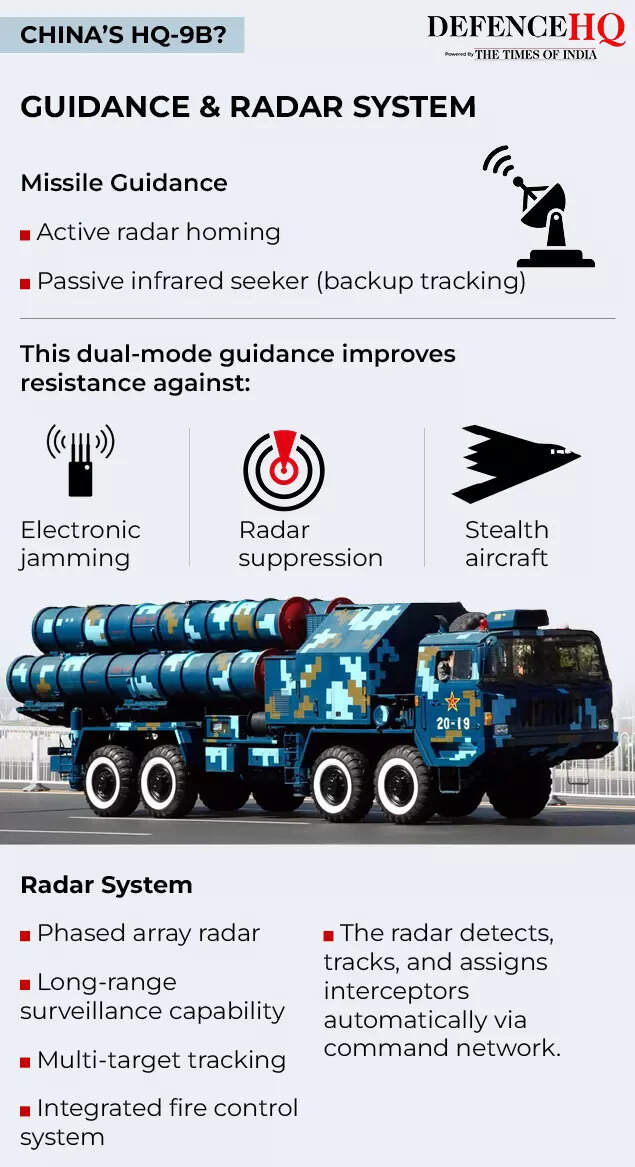
Maintenance issues further plague users. Venezuela’s radars failed from parts shortages, while Pakistan and Iran struggled with operator training. Chinese tech lags in electronic warfare resistance and stealth detection against fifth-gen threats. These shortcomings erode buyer confidence, prompting shifts away from Beijing.Allies like Russia, strained by Ukraine, leave China exposed. Future deals may demand upgrades, but unproven claims risk further embarrassments.