US-Israel War with Iran: Where is JD Vance? The curious case of the ‘missing’ vice president | World News
In the 19th century, Otto von Bismarck famously observed that politics is “the art of the possible, the attainable — the art of the next best”. Few modern American politicians embody that sentiment quite like US vice president JD Vance. Over the past decade, Vance’s political journey has been marked by dramatic pivots: from a sharp critic of Donald Trump who once described him as “cultural heroin” for the Republican Party, to one of the most prominent champions of the Trump movement, and now to a vice president navigating the uneasy terrain between populist isolationism and an administration willing to use military force abroad.That tension became particularly visible during the early days of the Iran war, when Washington’s attention shifted to a curious question that began circulating across political circles and newsrooms alike: where exactly was JD Vance?
What happened
The latest escalation between the United States and Iran began when the Trump administration authorised strikes targeting Iranian military infrastructure and elements of its nuclear programme. The White House framed the campaign as a limited operation designed to degrade Tehran’s capabilities and prevent it from acquiring nuclear weapons.The strikes marked one of the most serious direct confrontations between Washington and Tehran in years. Senior officials quickly appeared on television and at press briefings defending the decision and explaining the administration’s strategy.But one absence stood out.According to reporting in the Financial Times, Vance “made no public comment on the military campaign for nearly 72 hours” even as Republican lawmakers and cabinet officials rushed to television studios to defend the strikes. The silence was notable because vice presidents have traditionally been among the most visible political advocates during moments of war.Instead, the administration’s public defence of the campaign was led by another figure.
Pete Hegseth becomes the face of the war
While the vice president remained largely out of the spotlight, defence secretary Pete Hegseth emerged as the administration’s most visible champion of the operation.Reporting from The Sunday Times described Hegseth as being “tasked with selling the conflict to a sceptical American audience” while “JD Vance stays in the shadows”. The phrasing captured the unusual optics surrounding the war’s early messaging.
A former National Guard officer who later became a Fox News host, Hegseth embraced the role enthusiastically. His rhetoric was blunt, combative and deliberately theatrical.“They are toast and they know it,” he said when describing Iran’s military position, before adding a line that quickly circulated across political commentary: “Death and destruction from the sky. All day long.”In another speech defending the operation, Hegseth declared that “America is winning decisively, devastatingly, and without mercy”.The language was striking not only for its bravado but also for what it revealed about the administration’s broader messaging strategy.Roger Stahl, a professor of communication studies at the University of Georgia who studies the rhetoric of war, told The Sunday Times that the justification being offered for the conflict sounded different from previous American interventions. “The level of moral justification we’re being given is zero,” Stahl said. “It’s all about US military power, the beauty of our weapons and the idea that we are going to win.”In effect, the administration was presenting the war less as a moral crusade and more as a demonstration of American power.That approach placed Hegseth at the centre of the administration’s communications effort.It also made the vice president’s absence more noticeable.
The vice president’s silence
The quietness surrounding JD Vance in the early days of the conflict quickly became a topic of discussion among political observers.Vice presidents have historically played a visible role during moments of military crisis. Dick Cheney was a prominent defender of the Bush administration’s Iraq strategy, while Joe Biden frequently served as a diplomatic envoy and political advocate for Barack Obama’s foreign policy decisions.Vance’s low profile therefore invited speculation about whether he was deliberately keeping his distance from the war.Part of the explanation may lie in his own political identity.Before becoming vice president, Vance had built a reputation as one of the Republican Party’s most prominent critics of foreign interventions. A Marine veteran who served in Iraq, he frequently warned that American leaders had become too willing to deploy military power overseas.In one interview discussing the possibility of a confrontation with Iran, he argued that the United States should avoid another prolonged Middle Eastern conflict. “The idea that we’re going to be in a Middle Eastern war for years with no end in sight — there is no chance that will happen,” he said while discussing potential escalation.That stance made the Iran war politically awkward for a vice president whose rise was closely tied to the populist critique of American foreign policy.
Not the first time
The Iran conflict was not the first moment when observers questioned Vance’s visibility during a foreign policy crisis. Earlier in the administration’s tenure, similar questions arose during a US operation targeting Venezuela’s leadership. Writing in The New Yorker, journalist Benjamin Wallace-Wells noted that during the announcement of the operation, “notably absent was the Vice-President, J. D. Vance.”The report also pointed out that a detailed Wall Street Journal account of the planning behind the mission “did not mention the vice-president’s name once”. White House officials pushed back against the suggestion that he had been excluded, insisting that Vance had been involved behind the scenes. But the optics reinforced a growing perception that the vice president was playing a quieter role in foreign policy debates than some of his predecessors. The Iran war strengthened that perception.
A political journey with sharp turns
JD Vance’s political trajectory has been unusually dramatic even by the fluid standards of modern American politics.During the early stages of Donald Trump’s political rise, Vance was openly critical of the future president. In 2016 he famously described Trump as “cultural heroin” for the Republican Party, arguing that Trump’s populist rhetoric offered emotional satisfaction without addressing deeper economic and political problems.Over time, however, Vance moved steadily closer to Trump’s political orbit. By the time he entered the Senate and later joined the administration as vice president, he had become one of the most prominent defenders of Trump’s worldview.
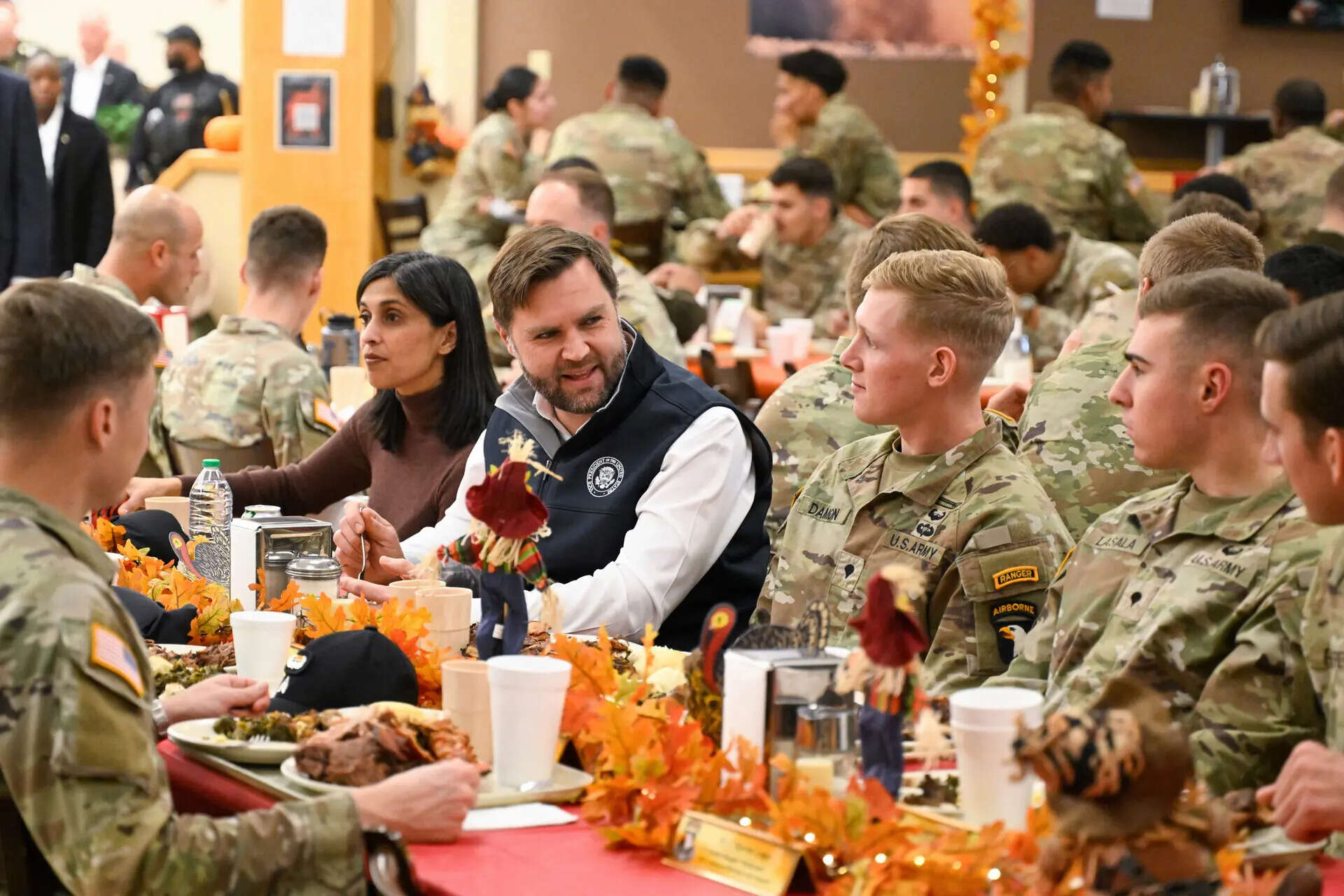
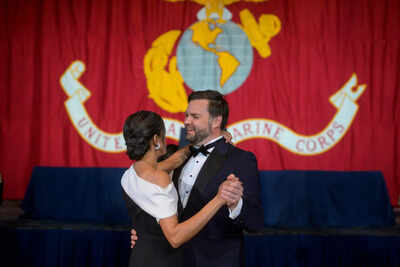
Vice President JD Vance and second lady Usha Vance, left, share a Thanksgiving meal with soldiers on base during a visit to Fort Campbell (AP photo)
The shift mirrored a broader transformation within the Republican Party, where populist nationalism gradually displaced the foreign policy doctrines that had dominated conservative politics for decades.Today, Vance himself echoes the administration’s hard line on Iran. In one interview discussing the conflict, he framed the objective in stark terms: “The principle is very simple: Iran cannot have a nuclear weapon.”The contrast between those two moments — from calling Trump “cultural heroin” to defending the geopolitical doctrine of a Trump administration — captures the scale of his political evolution.
The millennial ambition
At forty years old, JD Vance represents a generational shift in American politics. He belongs to the first wave of millennials to reach the highest levels of government and is widely viewed by allies as a potential presidential candidate.If he eventually succeeds in that ambition, he would become the first millennial to occupy the White House.That possibility shapes how he navigates the responsibilities of the vice presidency. A politician with presidential aspirations must remain loyal to the administration while preserving the political identity that helped propel his rise.For Vance, that identity is closely tied to the populist critique of American foreign policy.The Iran war therefore forces him to manage a delicate balance between defending the administration’s decisions and maintaining credibility with a political movement that remains deeply sceptical of foreign wars.
The bigger picture
The debate over JD Vance’s visibility during the Iran war reflects a deeper tension within contemporary American conservatism. One faction continues to emphasise the importance of projecting American military power abroad. Another increasingly argues that the United States should avoid costly interventions and focus instead on domestic priorities. Vance has long aligned himself with the latter view. Yet as vice president he now serves in an administration willing to use military force to reshape geopolitical realities. The result is an unusual political dynamic. Defence secretary Pete Hegseth has become the public face explaining and defending the war, while the vice president has adopted a quieter role during the early stages of the conflict. And in Washington, that contrast has left many observers asking the same question.Where exactly is JD Vance?