‘Adversely affected overall merit’: SC slams bias in evaluating women officers for Permanent Commission | India News
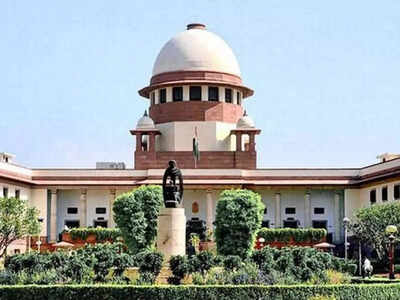
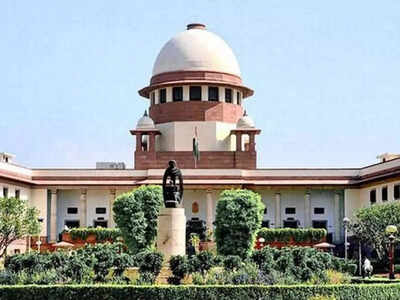
NEW DELHI: The Supreme Court on Tuesday held that the denial of Permanent Commission (PC) to women Short Service Commission (SSC) officers in the armed forces stemmed from a flawed and discriminatory evaluation system, particularly in the way their performance was assessed.A bench of Chief Justice of India Surya Kant and Justices Ujjal Bhuyan and N Kotiswar Singh, while delivering its verdict, observed that the Annual Confidential Reports (ACRs) of women officers were often assessed casually, undermining their chances of securing PC.“ACRs of appellants were written with presumption that they will not undergo career progression. Adversely affected overall merit,” the bench noted as per Live Law.“Model was rational, non-discriminatory and implemented as 1 time measure. Failure of respondents to disclose evaluation criteria etc. has adversely impacted officers,” the bench futher said.The ruling comes after a prolonged legal battle in which women officers challenged the criteria used to evaluate them, arguing that it placed them at a disadvantage compared to their male counterparts.During earlier hearings, the Centre had denied allegations of bias. It also submitted that following its 2022 approval, women officers are now being inducted through the National Defence Academy, and those completing training will be granted PC directly.While reserving its verdict earlier, the bench led by Chief Justice Surya Kant was informed by Additional Solicitor General Aishwarya Bhati that structural changes had already been initiated to address gender disparities in the forces.The court, however, remained critical of the evaluation process. During hearings, it questioned why women and men were assessed differently despite undergoing the same training and assignments.“How can there be two criteria based on gender? Is there a different format for evaluating SSC women officers and male officers? Is this format different for SSC officers and those in permanent commission?” the bench had asked.Senior advocate Menaka Guruswamy, appearing for 13 women officers, argued that their ACRs were graded casually and, in some cases, frozen before they became eligible for PC in 2020. In contrast, male officers continued to be assessed with PC in mind.She pointed to the service records of officers such as Lt Col Vanita Padhi, Lt Col Chandni Mishra and Lt Col Geeta Sharma, who had served in United Nations missions, high-altitude areas and counter-insurgency operations. Despite holding key operational roles, including ‘criteria appointments’ in difficult areas, their contributions were not fully recognised in their evaluation reports, unlike similar postings held by male officers.The court noted that such differential treatment could violate constitutional guarantees of equality under Articles 14 and 15, and may reflect entrenched biases within the system. Guruswamy also submitted that several women officers were denied pension and medical benefits proportionate to their service conditions.The petitioners relied on the Supreme Court’s 2020 judgment, which had directed the Army to grant PC to women officers and held that excluding them from command roles was unjustified and hindered career progression.Since then, the court has passed multiple orders expanding the scope of PC for women across the Army, Navy, Air Force and Coast Guard.The matter had also involved submissions from serving and retired officers, as the court examined similar concerns across different branches of the armed forces.