
Another TACO? Trump administration may delay long-promised semiconductor tariffs amid China concerns — report

The Trump administration may postpone the rollout of long-promised semiconductor tariffs, despite earlier indications that the measures would be announced soon. According to news agency Reuters, US officials have privately told government and industry stakeholders over the past few days that the tariffs might not be imposed immediately, according to multiple people with direct knowledge of the conversations.
Washington signals slower approach to semiconductor duties
These discussions, which had not been previously reported, suggest a more cautious approach intended to avoid provoking China.
Sources cited by Reuters claimed that Trump aides are carefully assessing the timing of the proposed duties to prevent a rupture with Beijing that could risk a renewed trade war or disrupt supplies of critical rare earth minerals. However, they also stressed that no final decision has been taken and warned that triple-digit tariffs could still be announced at any moment.
White House denies policy shift
The White House pushed back against suggestions that the administration has adjusted its stance. “The Trump Administration remains committed to using every lever of executive power to reshore the manufacturing that’s critical to our national and economic security,” spokesman Kush Desai said, as quoted by Reuters, calling anonymously sourced claims “Fake News.” A commerce department official also said that there had been “no change” in the department’s policy on semiconductor tariffs.Trump had announced in August that the US would impose a tariff of about 100% on imported semiconductors, while exempting firms manufacturing domestically or planning to do so. Officials had privately indicated for months that the rollout was imminent before the recent shift in tone.
China urges cooperation, not confrontation
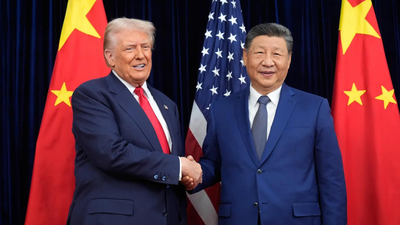
Responding to the reports, the Chinese embassy in Washington said cooperation was the best path forward. Embassy spokesperson Liu Pengyu was cited by Reuters as saying, “We welcome the US to work with China to… jointly maintain the stability of the global semiconductor supply chain.”The hesitation comes as Trump attempts to preserve a fragile trade truce with China. He recently met President Xi Jinping in Busan, where the two leaders agreed to set aside trade disputes for now. Still, US officials cautioned their Chinese counterparts that national security-related actions may follow in the coming months.
Political pressure over consumer prices rises
Any delay in chip tariffs also reflects domestic political sensitivities. The Republican president is facing growing consumer frustration over rising prices during the holiday shopping season. Taxing imported semiconductors could make everyday electronics—from refrigerators to smartphones—more expensive. The administration is also evaluating a plan to tax foreign electronic devices based on the number of chips inside them.Trump recently rolled back tariffs on more than 200 food items, though he has insisted his import duties have not significantly fuelled inflation.Inflation, however, has remained above the Federal Reserve’s target since the Biden administration, with the latest data delayed by the US government shutdown.Washington has also launched investigations into pharmaceutical and semiconductor imports, arguing that heavy reliance on overseas production poses national security risks.