
Dashrath Manjhi Story: “The man who moved mountains for love”: How Dashrath Manjhi carved an entire road with just a hammer |
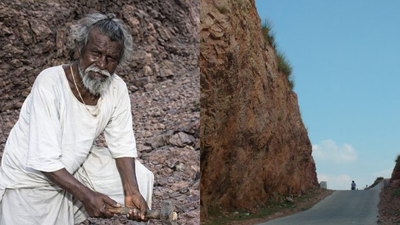
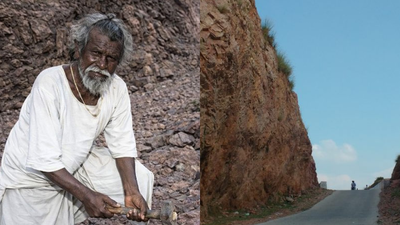
In a small village in Bihar, surrounded by rocky hills and long stretches of isolation, lived a man who refused to accept that geography should decide human destiny. His name was Dashrath Manjhi, a daily wage labourer with no formal education, no resources, and no institutional support. Yet by the time his life ended, he had achieved something extraordinary: he carved a road through a mountain entirely on his own. His story is not merely one of perseverance. It is a story shaped by love, grief, and an unwavering belief that even one determined individual can change the fate of many. Scroll down to read more.
A village cut off from opportunity
Dashrath Manjhi was born in 1934 in Gehlaur village, near Gaya in Bihar. The village lay trapped behind a rocky ridge that separated residents from nearby towns offering medical care, markets, and employment. For basic necessities, villagers were forced to travel long distances around the hill, journeys that could stretch up to 55–70 kilometres depending on the route.
Life in Gehlaur was shaped and constrained by constant hardship. The majority of its residents were employed as agricultural labourers, toiling in the fields for long hours while earning meagre and unreliable wages. Their daily survival depended on these uncertain incomes, and they had to make do with very limited access to basic infrastructure such as roads, healthcare, and educational facilities. For Manjhi, these harsh conditions were not unusual but simply formed the backdrop of normal life—persistent struggles that he and others had grown accustomed to enduring. However, everything changed when a deeply personal tragedy struck, shattering this fragile sense of acceptance. That single event transformed his experience of hardship into a powerful driving force, turning his suffering into a clear and unwavering purpose.
The loss that changed his life
In 1959, his wife, Falguni Devi, was seriously injured while crossing the treacherous terrain near the hill. With no proper road connecting the village to medical facilities, help arrived too late. She died without receiving timely treatment.
The loss devastated Manjhi. But instead of surrendering to grief, he arrived at a simple yet radical thought: if there had been a road through the mountain, she might have survived. That idea became his life’s mission.
A decision that seemed impossible
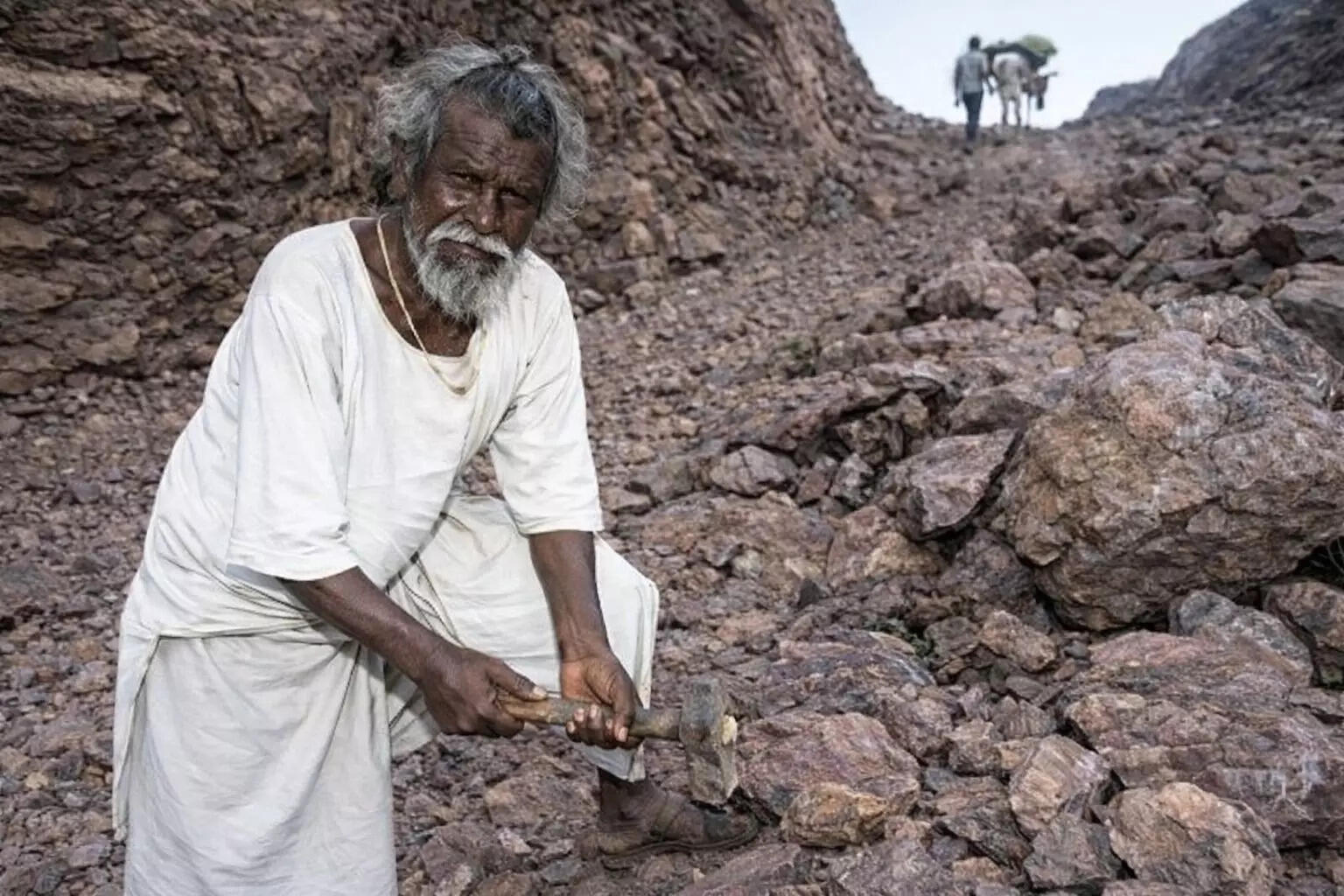
Around 1960, armed with nothing more than a hammer and a chisel, Dashrath Manjhi began cutting into the mountain. There were no machines, no engineers, and no funding, only determination.People initially laughed at him. Many villagers believed he had lost his sanity. The idea that one man could carve a passage through solid rock sounded absurd. Yet ridicule did not discourage him. He continued working day after day, often from sunrise until sunset.To sustain and continue his effort over such a long period, he took on work as a manual labourer, doing physically demanding jobs for meagre wages. Whatever little money he managed to earn from these jobs, he carefully saved and used to buy the tools he needed for his task. At one point, when his savings were not enough, he even went so far as to sell his goats, sacrificing one of his few assets in order to afford better and more reliable equipment.The work he undertook on the mountain was brutally hard, physically exhausting, and unbearably slow. Every single blow of the hammer broke off only a tiny fragment of rock, making progress almost imperceptible in the beginning. Yet, as the days, months, and years passed, these small, repeated efforts began to add up and slowly transformed the seemingly immovable mountain. Over a span of 22 long years, from 1960 until 1982, Manjhi persisted relentlessly, chipping away at the mountain bit by bit.
When persistence reshaped a landscape
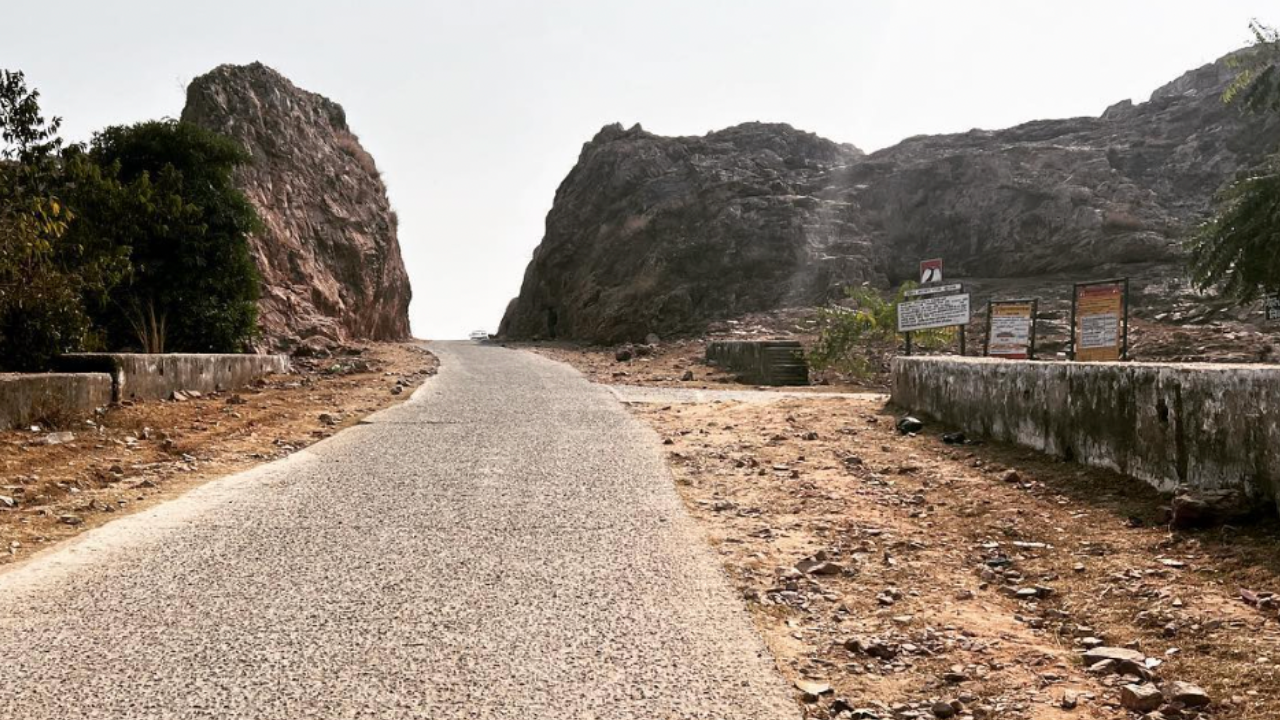
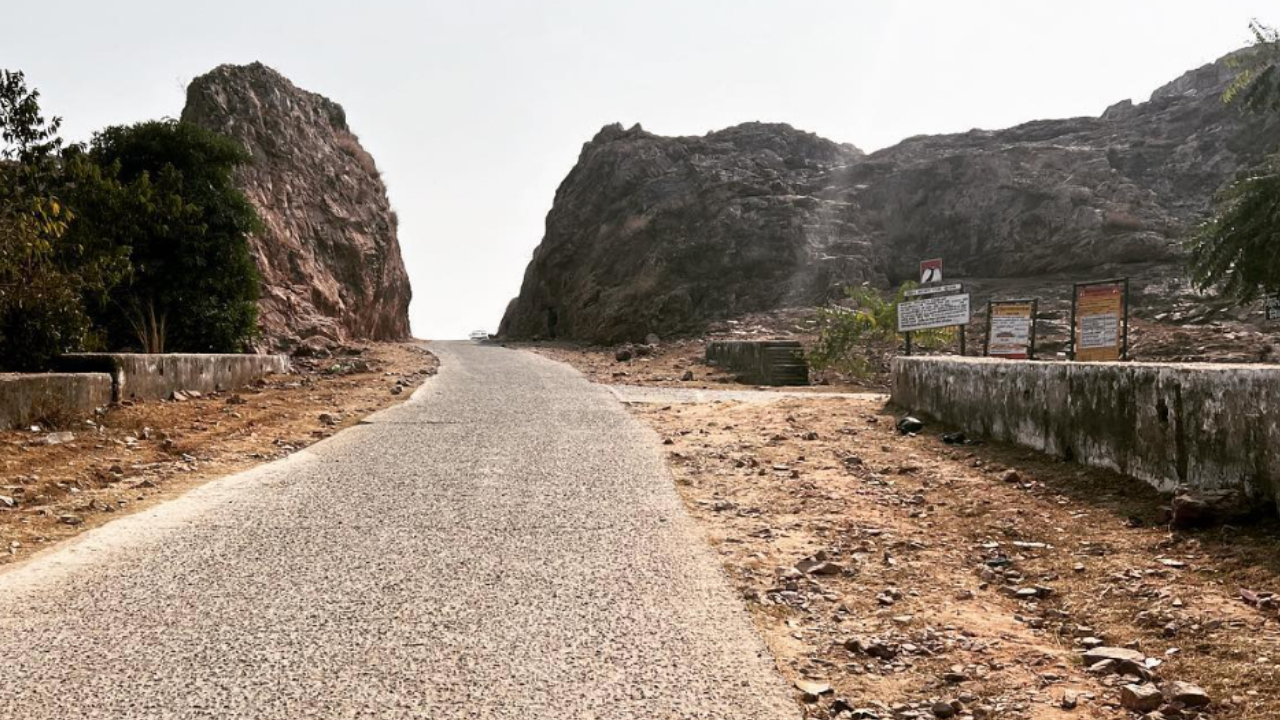
Gradually, the impossible took form. By the time he finished, Dashrath Manjhi had carved a road approximately 110 metres long, about 9 metres wide, and up to 7-8 metres deep in places, entirely by hand. The transformation was life-changing for the region. The distance between the Atri and Wazirganj areas of Gaya district was dramatically reduced. What once required a long, dangerous detour became a direct and far shorter path.For villagers, the road meant access to hospitals during emergencies, schools for children, and markets for livelihood. A journey that had once symbolized isolation became a pathway to opportunity. What began as one man’s response to personal grief evolved into a lifeline for an entire community.
Recognition that came late
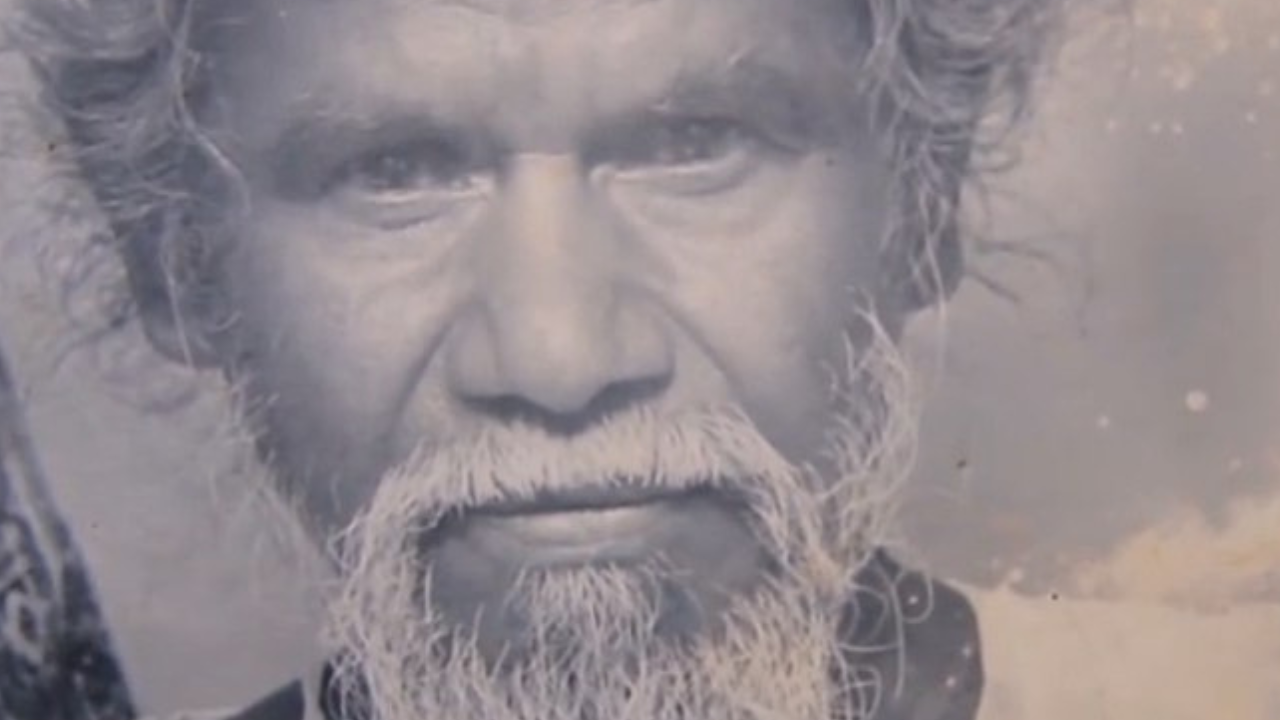
For decades, Manjhi’s work remained largely unnoticed beyond his village. He continued living simply, never seeking fame or reward. Eventually, journalists and local officials brought attention to his extraordinary achievement, and people across India began to realize the scale of what he had accomplished, earning him the title of the “Mountain Man.” Recognition arrived slowly but meaningfully. The Bihar government honoured his contribution, and his story began inspiring people nationwide as a symbol of resilience and determination.Dashrath Manjhi passed away on August 17, 2007, at AIIMS Delhi while undergoing treatment for gall bladder cancer. He was 73 years old and was given a state funeral, a remarkable tribute for a man who had once been dismissed as a dreamer.
A legacy carved from love
What makes Manjhi’s story deeply moving is not just the physical feat, but the emotion behind it. He did not act for the favour of recognition, wealth, or glory. His motivation was heartbreak and the conviction that no other family should suffer because a road did not exist. In a world that often waits for systems and authorities to solve problems, Dashrath Manjhi chose action. He proved that change can begin with a single individual willing to persist long after others stop believing.Today, the road he carved still stands in Gehlaur, Bihar. It is more than a passage through rock; it is a reminder that determination, when guided by purpose, can reshape even the most immovable obstacles. Mountains are often seen as symbols of permanence. Dashrath Manjhi showed that even mountains can yield, not to power or privilege, but to patience, love, and relentless human will.