
Delhi pollution: IMD issues orange alert as dense fog blankets city; AQI in ‘very poor’ category | Delhi News

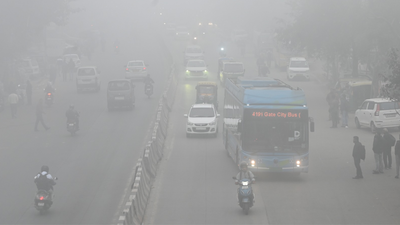
NEW DELHI: Very dense fog covered the city on Tuesday morning, reducing visibility and disrupting traffic. The AQI stood at 390, in the ‘very poor’ category, while the IMD had earlier issued an orange alert for dense fog in parts of the city.The India Meteorological Department (IMD) forecast moderate to dense fog on Tuesday and Wednesday. “Very dense to dense fog condition is likely to continue during night/morning hours over Punjab, Haryana, Chandigarh and west Uttar Pradesh till Dec 31 and east UP till Jan 1, and will reduce thereafter,” it said.Late Monday night, IMD issued a nowcast warning issuing red alert for very dense fog situation till 1.30am on Tuesday. Earlier, IMD issued an orange alert expecting very dense to dense fog at a few places and moderate fog across the city on Tuesday morning. Weather analysts said the fog is due to low winds, high humidity, and clear skies. Mahesh Palawat, vice-chairman of Skymet said, “Fog intensity dropped marginally, but moderate to dense fog will continue at least till Jan 1. Travel will be risky on highways from late night up to 10am. The reasons include light winds, high humidity, low temperature, clear skies, among others.” The minimum temperature on Monday was 8.3°C, two degrees above normal, while the maximum reached 20.3°C. IMD predicts minimum temperatures to remain near normal over the next three days, rising slightly from January 1, with maximums likely above normal. Light rain is expected on January 1. Air quality remained in the severe zone, with the AQI at 401 at 4pm, up from 390 a day earlier. Wazirpur (462), Jahangirpuri (460), Rohini (456), and Anand Vihar (455) were among the most polluted areas. With fog conditions continuing, AQI is expected to stay in very poor to severe categories over the next few days, with January 1 likely to see severe levels again.