Distant war, a regional shockwave: How Middle East crisis is making life difficult in Bangladesh and Pakistan
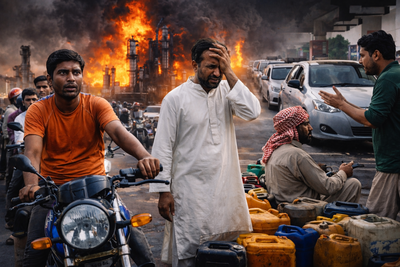
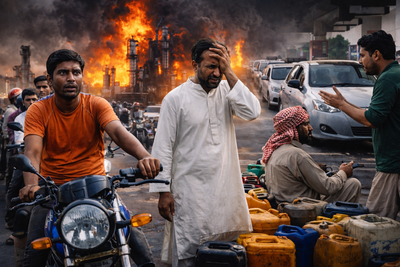
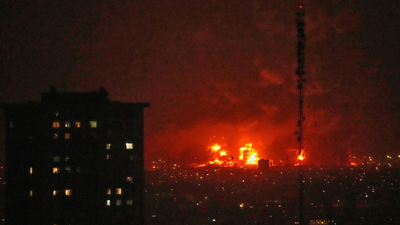
The escalating conflict in West Asia following joint United States and Israeli strikes on Iran has triggered a chain reaction far beyond the immediate battlefield. While missiles and drones dominate headlines in the Gulf, the economic aftershocks are being felt thousands of kilometres away in South Asia. Countries such as Bangladesh and Pakistan, heavily dependent on imported energy and regional trade routes, are now grappling with fuel shortages, rising prices, panic buying and social unrest.In Bangladesh, authorities have introduced fuel rationing for vehicles as fears of supply disruptions spread. Long queues have formed outside petrol stations in Dhaka and other cities, while protests and violence have erupted in some areas. Meanwhile in Pakistan, the crisis has disrupted cross-border trade with Iran and triggered panic buying of fuel amid soaring prices. In border regions of Balochistan, supplies of essential commodities have shrunk and prices of food and fuel have surged.
What began as a geopolitical conflict in the Middle East is rapidly turning into an economic and social crisis for millions in South Asia.
Bangladesh introduces fuel rationing amid panic buying
Bangladesh has launched fuel rationing as the conflict in the Middle East threatens global energy supply chains. The country of around 170 million people imports roughly 95 percent of its oil and gas requirements, leaving it highly vulnerable to disruptions.Following the strikes on Iran and Tehran’s retaliatory attacks across the Gulf, Bangladesh Petroleum Corporation restricted fuel sales for most vehicles in an effort to control panic buying.Authorities imposed strict caps on purchases. Motorcyclists, for example, are now allowed to buy only two litres of fuel at a time.“Consumers tend to buy more than they usually purchase” during times of crisis, BPC said in a statement.Despite the rationing, the restrictions have triggered long lines at petrol stations across the capital Dhaka.“I waited for more than an hour to get two litres,” said motorcyclist Md Al-Amin, 45.“My tank holds eight litres, and I usually fill up once a week so now I’ll have to come back the day after tomorrow.”
Public frustration and unrest over fuel shortages
The sudden restrictions have triggered anger among consumers already struggling with rising living costs.AKM Ruhul Amin, a paediatrician in Dhaka, said the fuel he managed to buy was not enough.“I already waited yesterday, and they closed the station just one car ahead of me,” he said.“I was only able to buy 10 litres today… the government could at least allow us to fill up completely.”Fuel distributors say the number of customers has nearly doubled as panic buying spreads.Ahmad Rush, an official with Meghna Petroleum Ltd., said demand surged immediately after rationing was announced.“We opened at 7:30 this morning and were able to refuel 300 vehicles in three and a half hours,” he said.The situation has already turned violent in some areas. In the southern district of Jhenaidah, a dispute over refuelling resulted in the death of 25 year old Nirob Hossain.After the incident, angry crowds torched three buses and vandalised a filling station, according to police officer Md Mahfuz Afzal.
Government launches crackdown on fuel hoarding
Authorities in Bangladesh have begun inspecting petrol pumps across the country amid concerns that traders are hoarding fuel to profit from the crisis.The energy ministry said reports had emerged of illegal stockpiling and fuel being sold above government approved limits.“In the current crisis situation, various media outlets have reported that some unscrupulous traders are illegally stockpiling fuel in an attempt to create an artificial shortage in the market,” the ministry said.Mobile court operations were launched in Dhaka to inspect fuel stocks and ensure compliance with rationing rules.Some filling stations were already running dry while others were found holding fuel reserves beyond permitted levels.The government says such inspections are necessary to prevent smuggling, black market sales and artificial shortages.
Fertiliser factories shut as gas supply tightens
The energy crunch has also affected Bangladesh’s industrial sector.Five out of the country’s six fertiliser factories have been temporarily shut down due to supply concerns.An official from the Bangladesh Chemical Industries Corporation, Ahsan Quddus Kuntal, said the plants would remain closed until at least March 18.The shutdown raises concerns about agricultural production as fertiliser supply is critical for farming.The government hopes fuel deliveries expected in the coming days will stabilise the situation.
Bangladesh may turn to US for LNG supplies
Bangladesh currently imports liquefied natural gas from Qatar, but the Middle East conflict has raised fears that shipments could be disrupted.Industry leaders say the country may turn to American suppliers if Qatari deliveries are interrupted.“Bangladesh imports LNG from Qatar, but if not from Qatar, I believe we have an agreement with the United States. Therefore, even at a higher price, the US companies might carry out the supply,” said Farhan Noor, Secretary General of the Bangladesh CNG Filling Station and Conversion Workshop Owners Association.He acknowledged that panic had worsened the situation.“When there was a fuel crisis, panic arose among the people. It created an unstable environment in the fuel sector,” Noor said.According to him, Bangladesh still produces most of the petrol and octane used domestically, but diesel imports remain essential.
Pakistan sees panic buying and fuel violence
Pakistan is also experiencing serious disruptions as the Middle East conflict disrupts global oil routes and raises fears of supply shortages.The closure of the Strait of Hormuz and rising oil prices have sparked panic buying across parts of the country.In Punjab province, the situation turned deadly when a dispute at a petrol pump escalated into violence.Police said a man was killed and two others were critically injured after gunmen opened fire following an argument over fuel purchases.The incident occurred in Sialkot when customers tried to fill fuel in containers, which is prohibited under government rules.“This led to an altercation between the filling station staff and the car riders,” police officer Dost Muhammad said.According to police, the men later returned with automatic weapons and attacked the staff.One of the victims, 25 year old Muhammad Sibtain, later died in hospital.Authorities have arrested the main suspect, Khawaja Munib, and registered a murder case against him and several accomplices.
Fuel price shock hits Pakistani consumers
The crisis has also triggered a steep increase in fuel prices in Pakistan.Authorities recently announced a price hike of 55 Pakistani rupees per litre, triggering widespread concern among motorists.Several petrol pump owners temporarily shut their stations ahead of the increase, creating long queues and panic buying.Economists warn that rising fuel costs will quickly spread through the economy.“The 20 per cent increase in oil prices means a 20-25% rise in the prices of commodities, essential items, fares, materials, and transportation. It means additional and sudden burden on consumers,” businessman Farooq Yousuf Sheikh said.Balochistan faces shortages as Iran border trade collapsesThe impact of the Middle East conflict is particularly severe in Pakistan’s Balochistan province, which relies heavily on cross-border trade with Iran.Regions such as Makran, Rakshana, Gwadar, Kech, Panjgur, Chagai and Washuk depend on Iranian goods because they are cheaper and easier to obtain than supplies from other parts of Pakistan.Local traders say the conflict has almost halted this trade.“Since the war began, border trade has almost stopped,” said Ishaq Roshan Dashti, president of the Makran Traders Alliance.Iran has imposed restrictions on the export of food items and other goods, severely disrupting supplies.According to traders, Iranian products account for nearly 80 percent of fuel and food consumed in the region.
Prices surge across coastal districts
As supplies shrink, prices have surged across Balochistan’s coastal districts including Gwadar, Pasni, Ormara and Jiwani.Traders say food prices have increased by between 30 and 40 percent.The situation is particularly severe in Mashkel, which has historically depended on Iranian goods due to poor road connectivity with the rest of Pakistan.Local trader Khuda Dad said prices of essential goods had risen sharply over the past week.The price of LPG gas has doubled to about 600 Pakistani rupees per kilogram.Diesel and cooking oil prices have increased by between 60 and 70 percent.Fishing industry in Gwadar under pressureRising fuel prices are also threatening livelihoods in Gwadar, where thousands of families depend on the fishing industry.Fishing boats require large amounts of diesel to operate, and higher fuel prices are making trips increasingly unprofitable.Local fishermen warn that prolonged disruptions could damage the region’s fragile economy.
A war far away with global consequences
The ongoing conflict in West Asia began after US and Israeli strikes targeting Iran’s missile infrastructure and military capabilities.The opening wave of the attacks killed several senior Iranian leaders including Supreme Leader Ayatollah Ali Khamenei, prompting a sweeping response from Tehran.Iran launched drone and missile strikes targeting US assets, regional capitals and allied forces across the region.While the fighting remains concentrated in the Middle East, the economic ripple effects are already spreading across global energy markets.For countries like Bangladesh and Pakistan that depend heavily on imported fuel and regional trade, the consequences are immediate and painful.As the conflict continues with no clear end in sight, millions of ordinary people far from the battlefield are already paying the price.