First Indian Citizenship Under Caa: Assam woman becomes first to receive citizenship under CAA; ends two-year detention and uncertainty over her status | Guwahati News
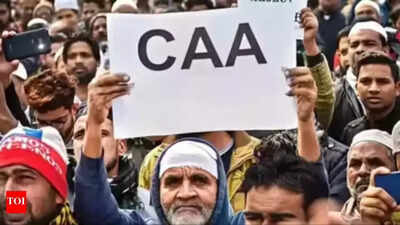
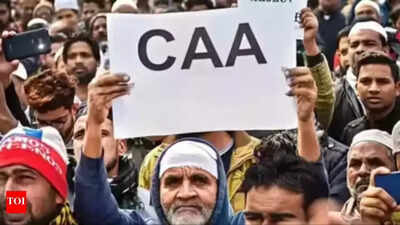
SILCHAR: A 60-year-old woman from Assam’s Cachar district has become the first person in the state to receive Indian citizenship under the Citizenship Amendment Act (CAA), nearly two years after she was declared a foreigner and put in a transit camp.Dipali Das, a resident of Hawaithang in the Dholai block of Cachar, received her Indian citizenship certificate on Friday (March 6). According to reports, Dipali entered Assam along with her husband from Bangladesh on Feb 7, 1988, allegedly after facing persecution. In the absence of valid documents to establish her Indian citizenship, authorities later declared her a suspected foreign national. In 2019, Das was sent to a detention camp in Silchar where she spent nearly two years before being released on bail.
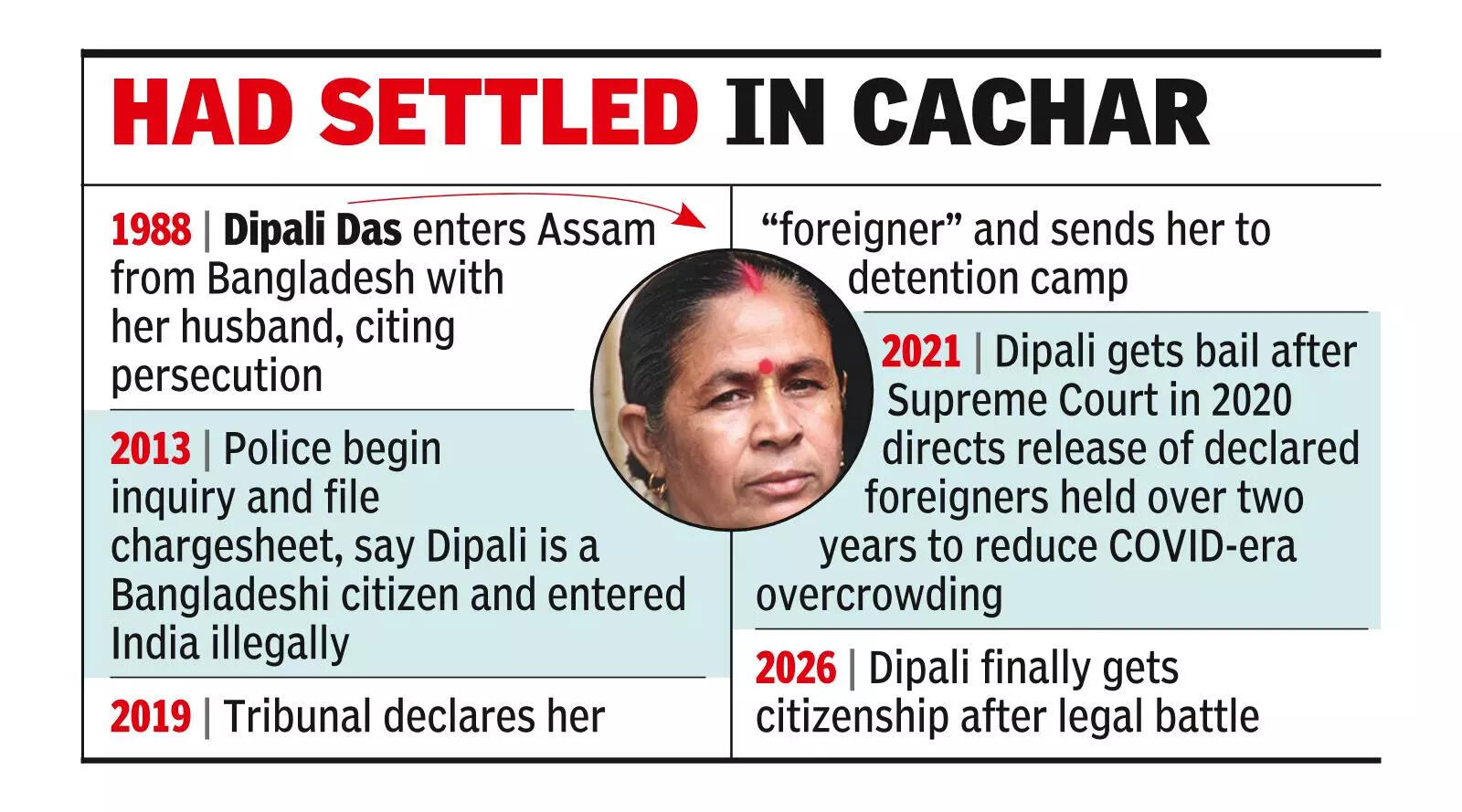
Her release came amid a wider move to ease overcrowding in detention centres during the Covid-19 pandemic. In April 2020, the Supreme Court directed that “declared foreigners” in Assam who had been held for more than two years be released, a measure aimed at reducing congestion in facilities.After her release, Das approached social worker Kamal Chakravarty, who connected her with advocate Dharmananda Deb. The lawyer took up her case and initiated legal proceedings to secure her citizenship.Originally from Dippur village under Dhirai police station in Bangladesh’s Sylhet district, Dipali married Abhimanyu Das of Parai village under Baniachong police station in Habiganj district of Bangladesh in 1987. The couple entered India in 1988 and settled in Cachar district, where they have been residing since then. Her citizenship status first came under scrutiny in 2013 when the police initiated an inquiry against her. A chargesheet filed on July 2, 2013, stated that Das was a resident of Baniachong in Bangladesh and had entered India illegally after March 1971.Interestingly, the same chargesheet later played a crucial role in her application under the CAA. Kamal Chakraborty, a Silchar-based social worker providing legal support and counselling to Dipali’s family, said the couple has six children — one son and five daughters. Their eldest child, Aditya, runs a small business in the Dholai area. Four daughters work in Bengaluru, while the youngest daughter, recently married, continues to live in Cachar district. Chakraborty said the citizenship certificate has brought a major relief to the family, ending years of uncertainty. He said the document can also help address any future questions about the citizenship of Dipali’s children, as they were born in India.