Green dilemma as plants selected for highway landscaping turn out toxic | Goa News

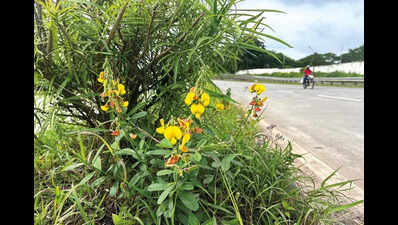
Panaji: With a central empowered committee (CEC) seeking a ban on an ornamental plant, conocarpus, in India due to ecological concerns, botanists and others flagged the use of a garden plant, nerium oleander, in Goa, for landscaping highways, stating that although it is beautiful, it’s highly toxic.CEC’s recommendation to the Supreme Court to direct states to ban conocarpus, known as buttonwood, is based on findings of possible health risks due to its allergenic pollen, impacts on local ecosystems and groundwater, and other aspects.In Goa, PWD is growing rose bay (nerium oleander) or kaner as it is known in Konkani, a commonly-grown shrub, and trumpet-flower (thevetia peruviana) as avenue plants.“All parts of kaner contain a glycoside called oleandrin which are harmful to men and animals if ingested,” said botanist Maria Fonseca. When the twigs are collected and burnt, the fumes can be toxic, too. “It can cause symptoms such as nausea, vomiting, hypotension, cardiac arrhythmia, coma, and even death,” she said.The plant gives beautiful flowers in shades of pink, white, yellow, and red clusters, and it grows around 13-15 feet tall with long branches and leaves.For regreening, these plants hold certain advantages, though it is poisonous. “They are hardy plants and can survive droughts. Their big advantage is they absorb carbon dioxide and need hardly any maintenance,” said lanscape designer Daniel D’Souza.A paper released by Ranchi University in 2018 even mentions its medicinal uses, as extraction of its bio-active compound is considered useful for cancer treatment.However, the plant’s sap can be used as a rat poison, said Fonseca. Soldiers of Alexander the Great’s military died after they consumed meat pierced on the twigs of this plant.The other plant, trumpet flower, grows wild and in gardens. “All parts of this evergreen shrub and the fruit contain milky latex, which has a cardiac glycoside thevetin A, thevetin B, and peruvoside,” said Fonseca.It is extremely poisonous and acts directly on the heart. “If ingested, it causes acute poisoning, headache, nausea, vomiting, abdominal discomfort and various other problems,” she said.The worst effects can be visual blurring, disorientation, occasional convulsions, cardiac arrhythmia, and coma.The avenue plants can be seen on highways, especially along the Bambolim highway and under the new flyovers and bridges. Awareness needs to be created about the toxic aspects of these plants, sources said.A PWD official said that the plants have been used for landscaping, considering the aesthetics and other aspects. “We will look into the matter and review the planting of these species,” the official stated.