
How UK’s university towns became a draw for Indian students in summer
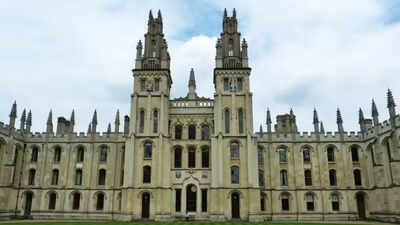
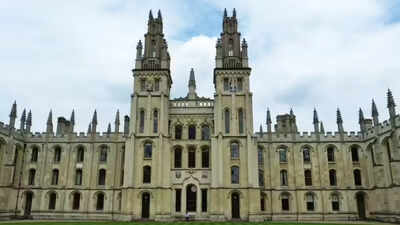
Every August, a quiet transformation takes place in Oxford. The undergraduates are gone, the colleges have exhaled, and in their place arrive young students from Mumbai, Delhi, Lagos, and Seoul, cycling along the Cherwell, debating ideas in wood-panelled seminar rooms, and doing something that would otherwise remain entirely out of reach for most of them: living, however briefly, as an Oxford student.Summer schools in Britain’s great university towns have become a serious fixture in the calendars of ambitious Indian teenagers. What parents once viewed as an expensive extravagance is now widely seen as a meaningful investment. Oxford and Cambridge lead the list of destinations, but programmes in St Andrews, Durham, and several American university towns have also grown substantially. The reason is straightforward. The University of Oxford admits a tiny fraction of those who apply from across the world. A summer school is, for most students, the closest they will come to experiencing what life inside those colleges actually feels like.And the experience carries weight. Oxford’s tutorial system, in which students defend written work before an academic in small group settings, is among the most demanding models of instruction anywhere. Encountering it at 16 does something that reading about it cannot.Several programmes have built their offerings around precisely this model. Oxford Horizon Academy, running from 16 to 30 August 2026 for students aged 14 to 18, is one of them. Students live in Oxford colleges, attend tutorials with experienced faculty, choose from five academic majors and a wide range of minor subjects, and travel on cultural excursions across Oxford and London. For Indian students especially, the draw carries an additional dimension. Most schools at home, however excellent, operate within relatively homogenous environments. A summer in Oxford throws a student into a genuinely global cohort.Kamakshi Iyer, 17, from Mumbai, attended a summer school in Oxford last year. “Being there, living like an Oxford student even for two weeks, was surreal,’ she says. ‘I was being taught by Oxford faculty, sitting in rooms where some of the world’s greatest thinkers had sat. It completely changed how I think about my own potential. I came back and applied to Ivy League universities, which I had never seriously considered before. The friendships I made, with students from over twenty countries, are still very much alive.”Admissions consultants in Mumbai, Hyderabad, and Bengaluru report a sharp rise in enquiries about Oxford and Cambridge summer schools over the past three years, particularly among students aged 15 to 17 beginning to think seriously about international applications. It reflects something broader: a generation of Indian students thinking bigger, earlier, and with considerably more global ambition than those before them.Not everyone is convinced, however. Critics have long pointed out that premium residential programmes, with fees that can run into several lakhs, risk becoming another rung on a ladder that only the already-privileged can climb. The concern is a legitimate one: if access to global academic networks is effectively priced out for most students, the inequality of opportunity widens rather than narrows. Some providers have responded with intent. Scholarship programmes, need-based fee waivers, and outreach partnerships with schools in smaller cities are increasingly common features of the more conscientious programmes. Whether these measures are sufficient is debated, but the direction of travel, at least, is the right one.