Iran Us Issue: Missile swarms & drone hordes: Why US should think twice before attacking Iran
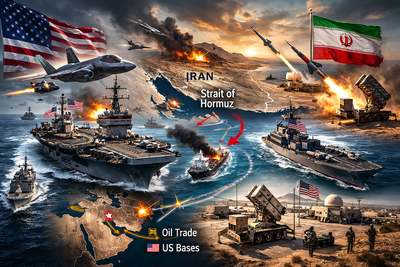
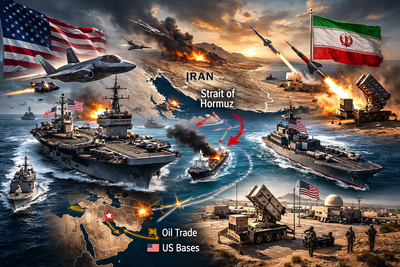
NEW DELHI: The United States has expanded its military presence in the Gulf, building one of its strongest regional deployments in recent years. Warships are operating along key sea routes, stealth fighter jets have been moved into Middle Eastern bases, missile defence systems have been reinforced, and two aircraft carrier strike groups are either deployed or on their way to the region.Washington says the build-up is linked to tensions with Iran, particularly over its nuclear programme. It has also indicated that the deployment is meant to ensure security in the Strait of Hormuz, a key global energy corridor.
Two days ago, Iran temporarily closed parts of the Strait of Hormuz during live-fire naval drills. Iranian media reported missile launches from inside the country and along its coastline into designated areas of the waterway. The disruption lasted several hours.
Nearly 20 per cent of the world’s oil and gas supplies pass through the strait. Even short interruptions can affect global energy markets.President Donald Trump said: “Now is the time for Iran to join us on a path that will complete what we’re doing. If they join us, that’ll be great. If they don’t join us, that’ll be great too — but it’ll be a very different path. They cannot continue to threaten the stability of the entire region.”
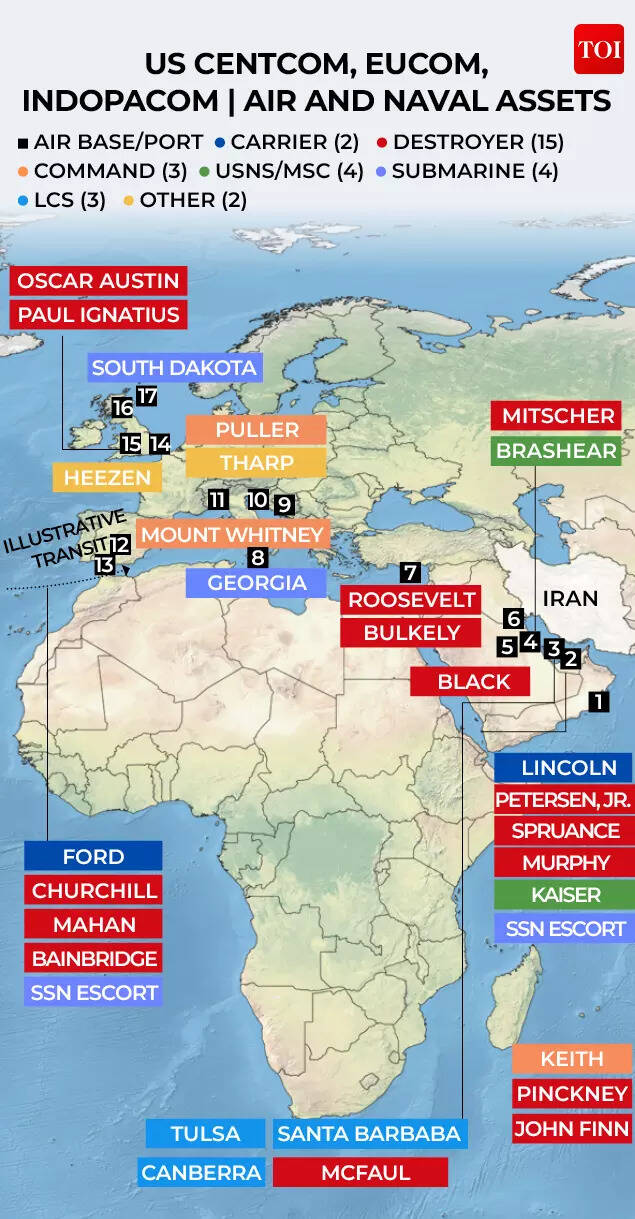
As carrier groups advance and aircraft reposition, the US–Iran standoff has entered a new operational phase.
The naval centrepiece: Two carriers, 600+ cruise missiles
At the core of Washington’s military posture in the Gulf are two aircraft carrier strike groups — a deployment scale not seen in the region in years.The USS Abraham Lincoln is currently operating in the Arabian Sea, roughly 150 miles off Oman’s coast. The nuclear-powered Nimitz-class carrier leads a strike group that includes Arleigh Burke-class guided-missile destroyers equipped with Tomahawk land-attack cruise missiles, Aegis air-defence systems, and advanced anti-submarine capabilities. Its embarked air wing of F-35 and F/A-18 fighters places dozens of Iranian military and nuclear-linked sites within operational range.Simultaneously, the USS Gerald R. Ford — the US Navy’s most advanced carrier — has entered the Mediterranean after transiting the Atlantic. Its arrival expands strike geometry, allowing Washington to approach Iranian targets from multiple axes while complicating Tehran’s defensive calculations.
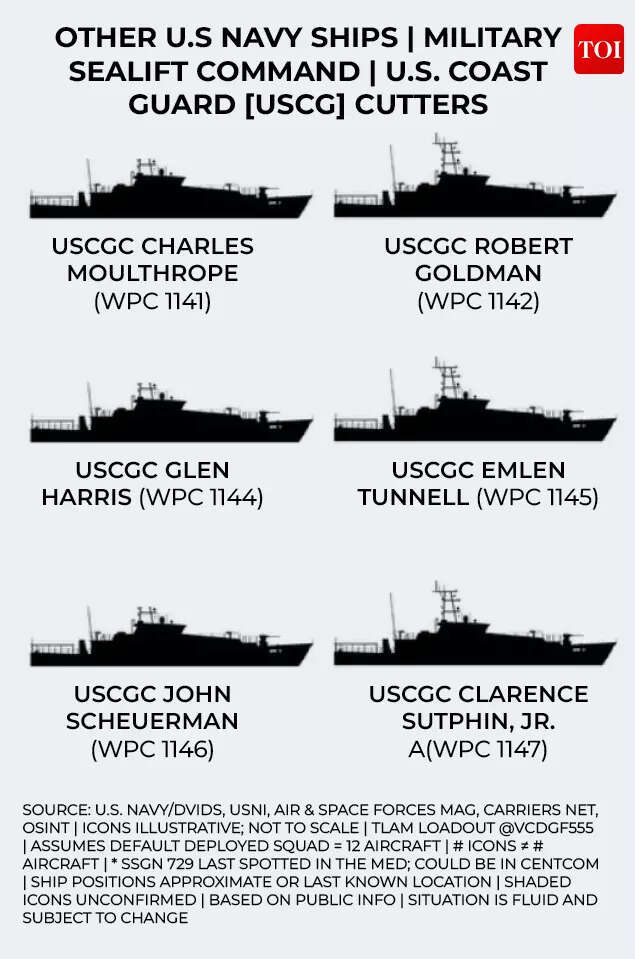
In total, the US now has approximately 15 destroyers positioned across the Persian Gulf, Red Sea and eastern Mediterranean, along with submarines operating discreetly in theatre. Collectively, these assets are capable of launching more than 600 Tomahawk cruise missiles — precision weapons designed to strike hardened infrastructure, missile batteries and air-defence networks from long distances.The distributed naval footprint also reduces reliance on fixed Gulf bases, which remain within range of Iranian ballistic missiles. By projecting power from sea-based platforms, Washington retains operational flexibility while limiting exposure.
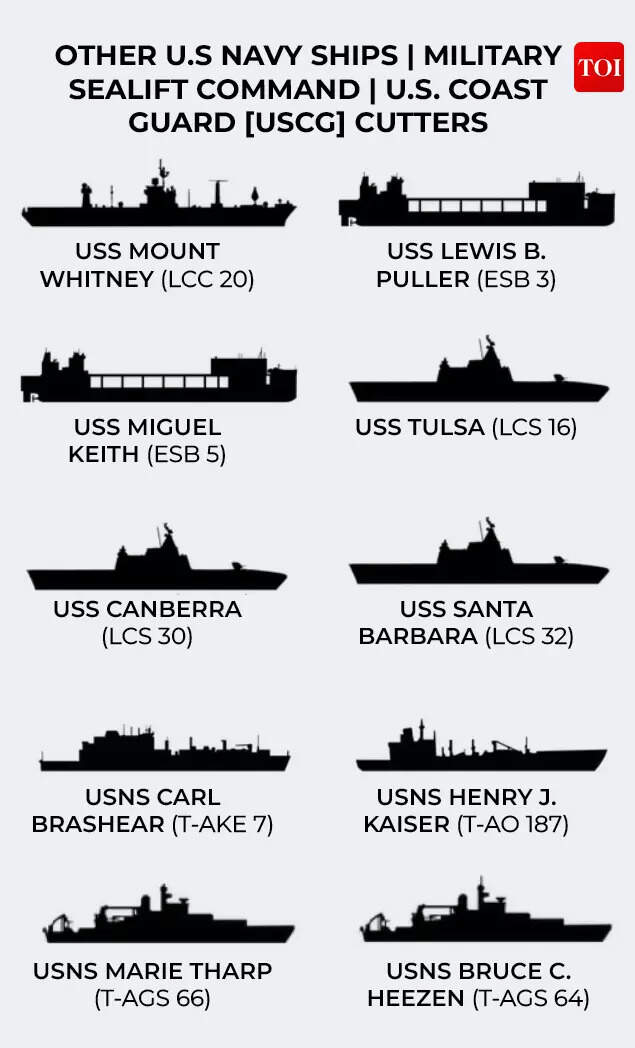
This configuration is not merely deterrent symbolism. It provides the Pentagon with layered options: limited precision strikes, sustained air operations, or broader maritime enforcement — all backed by one of the most concentrated naval forces currently deployed anywhere in the world.USS Abraham Lincoln: Forward pressure in the Arabian SeaOperating roughly 150 miles off Oman’s coast, USS Abraham Lincoln provides the most immediate airpower reach into southern and central Iran. As a Nimitz-class nuclear-powered carrier, it can remain at sea for extended periods without refuelling, giving Washington sustained operational endurance.A standard carrier air wing aboard Lincoln can include:
- F/A-18E/F Super Hornet strike fighters
- F-35C stealth fighters
- EA-18G Growler electronic warfare aircraft
- E-2D Hawkeye airborne early warning aircraft
- MH-60 helicopters for anti-submarine and maritime security missions
This air wing allows for simultaneous strike, suppression of enemy air defences, maritime patrol and defensive counter-air operations.USS Gerald R. Ford: Expanding the strike envelopeThe arrival of USS Gerald R Ford significantly broadens operational flexibility. As the newest class of US aircraft carrier, Ford features:
- Electromagnetic Aircraft Launch System (EMALS) for faster sortie generation
- Advanced radar systems
- Greater electrical capacity for future directed-energy systems
- Increased aircraft sortie rates compared to previous carriers
Positioned in the Mediterranean, Ford can threaten western Iranian targets while also providing coverage over Syria, Iraq and the eastern Mediterranean. This two-axis carrier posture complicates Iranian defensive planning. Tehran would have to account for potential strikes from both south and west.
Air power surge: Stealth fighters closer to Iranian airspace
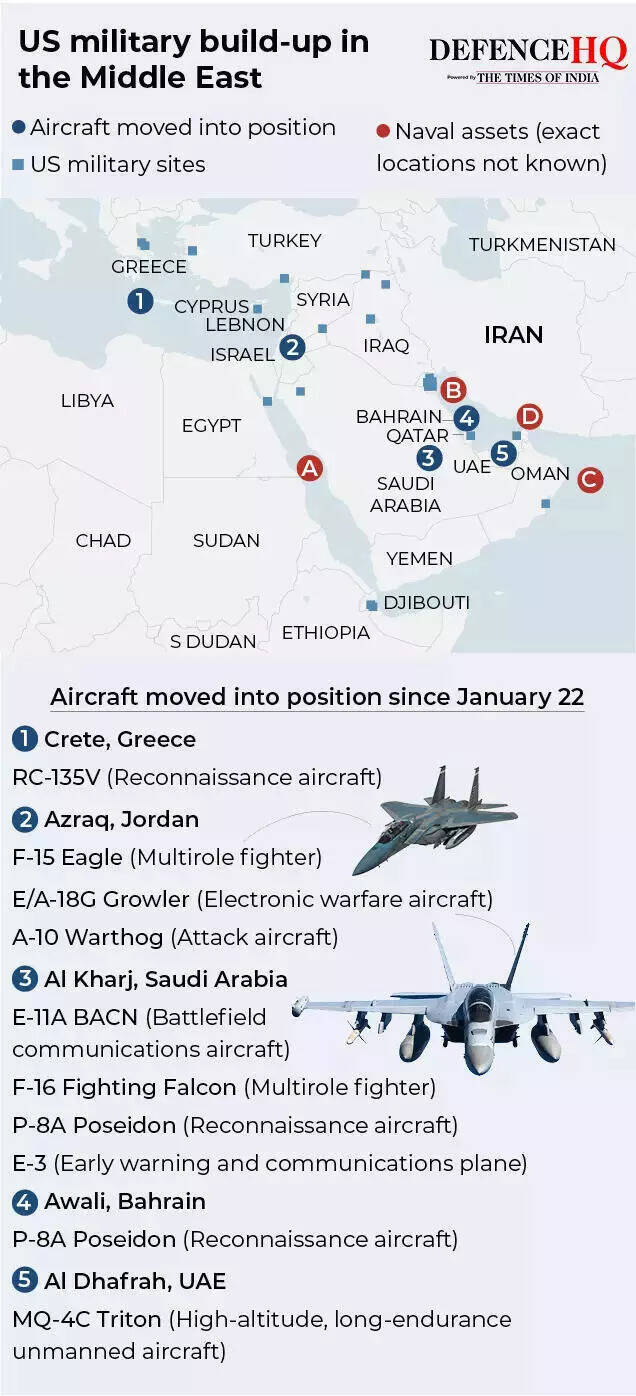
Alongside the naval build-up, Washington has quietly reinforced its most decisive advantage in modern warfare: air dominance. The forward movement of stealth fighters and electronic warfare aircraft has brought American strike capability significantly closer to Iranian airspace.At the centre of this shift is Muwaffaq Salti Air Base in eastern Jordan. Satellite imagery and open-source flight tracking indicate that 18 F-35A Lightning II stealth fighters redeployed from RAF Lakenheath to the Middle East, supported by multiple KC-135 refuelling tankers. With additional aircraft already stationed in theatre, the base’s potential order of battle now includes around 30 F-35As, alongside F-15E strike fighters, EA-18G Growler electronic warfare aircraft, A-10 ground-attack jets and MQ-9 Reaper drones.The F-35A is critical to any potential operation. Designed with low observable stealth features, advanced sensor fusion and precision strike capability, it can penetrate defended airspace, identify targets and coordinate with other aircraft in real time. Its ability to share targeting data across platforms makes it a force multiplier, especially in contested environments protected by layered air defence systems.
.
Electronic warfare assets add another dimension. EA-18G Growlers are equipped to jam radar, disrupt communications and degrade missile tracking systems. In a strike scenario, these aircraft would likely operate ahead of or alongside stealth fighters, blinding Iranian air defences and reducing risk to manned aircraft.Sustaining such deployments requires a vast logistical backbone. Aerial refuelling tankers create a bridge between Europe, the continental United States and forward bases, extending operational range and allowing continuous sorties. Cargo aircraft have also moved equipment, maintenance crews and munitions into the region, ensuring sustained readiness.This air posture complements naval forces at sea. While cruise missiles from destroyers can initiate strikes, stealth fighters provide flexibility, dynamic targeting and follow-on precision attacks. Together, they form a layered air campaign capability.The base’s potential order of battle includes:
- Around 30 F-35A stealth jets
- 24 F-15E strike aircraft
- 6 EA-18G electronic warfare aircraft
- A-10C attack aircraft
- MQ-9 Reaper drones
The Strait of Hormuz: Why the world is watching
The Strait of Hormuz lies between Iran to the north and Oman and the UAE to the south. At its narrowest point it is about 33 kilometres wide. Around 20 million barrels of oil pass through it daily.Nearly half of India’s crude imports and around 60 per cent of its natural gas imports transit these waters. China, Japan and South Korea are also heavily dependent.Iran’s temporary closure during live-fire drills was described as lasting only several hours. But even a short disruption sends signals to markets.
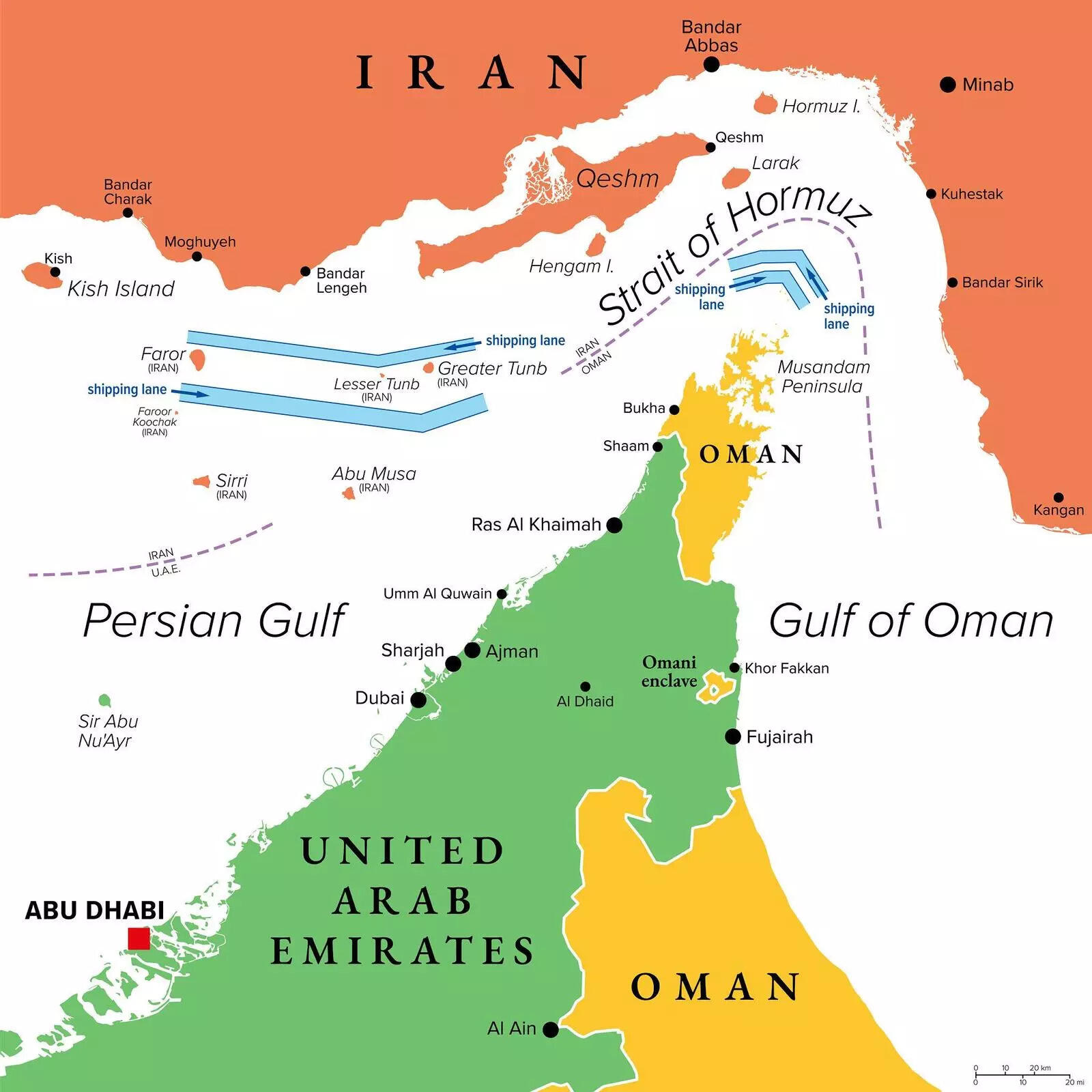
Iran’s parliament has backed closure measures, though the final decision rests with the Supreme National Security Council under Supreme Leader Ayatollah Ali Khamenei.Khamenei has warned that even the “strongest army in the world” could receive a blow it could not recover from.The risk calculus for Washington is clear: any strike on Iran risks missile retaliation not only on US bases, but on shipping lanes that anchor the global economy.
The shield and the vulnerability
Washington has reinforced Patriot and THAAD systems across key installations:
- Al Udeid Air Base
- Naval Support Activity Bahrain
- Al Dhafra Air Base
- Prince Sultan Air Base
- Al Asad Airbase
- Camp Arifjan
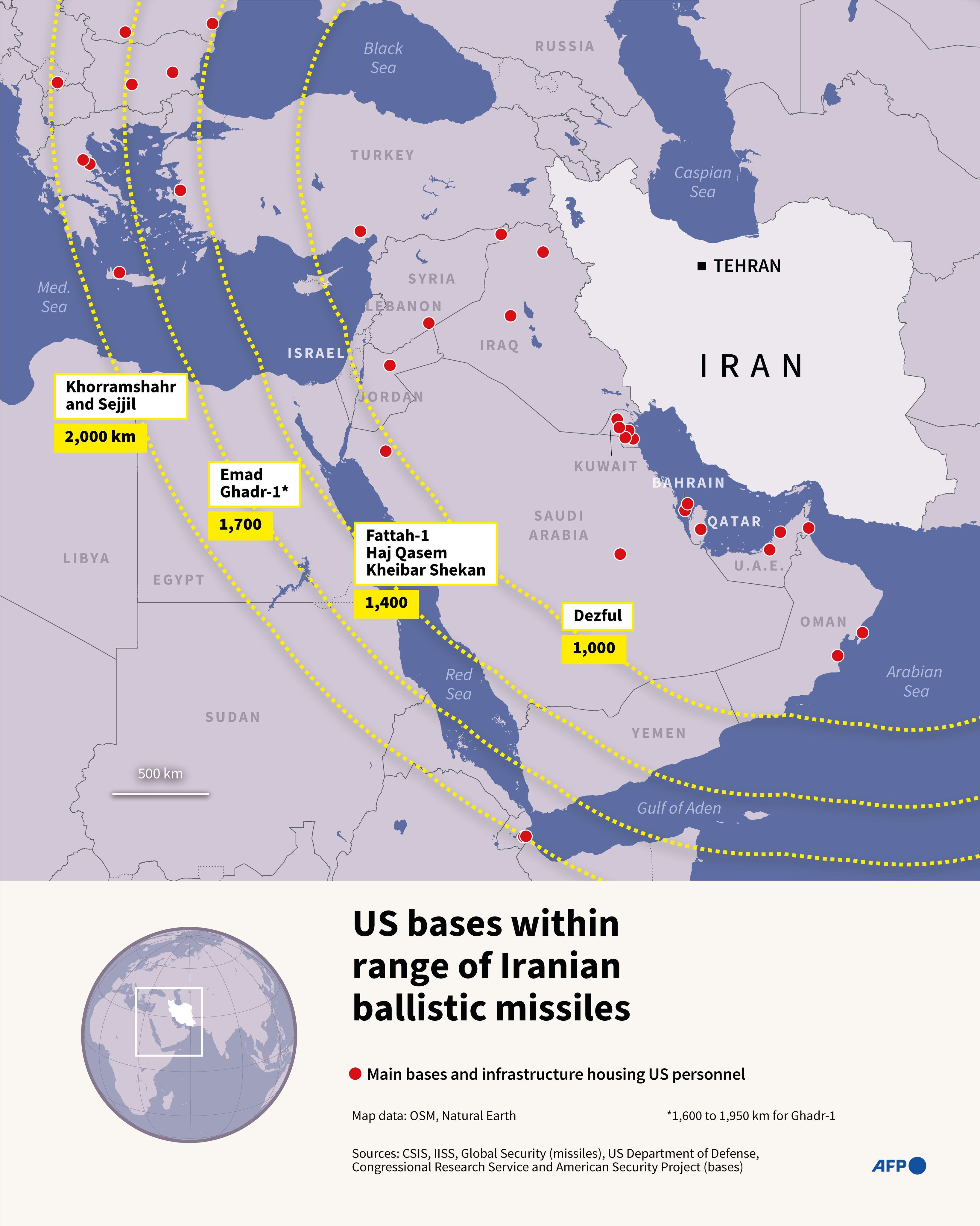
Yet most lie within range of Iran’s short- and medium-range ballistic missiles.Iran demonstrated that capability in 2020 after the killing of General Qasem Soleimani, when missiles struck US-linked facilities in Iraq.This asymmetry complicates any US decision to escalate. While Washington has overwhelming conventional superiority, Iran’s geographic proximity allows it to strike quickly and widely within the region.
Military imbalance, strategic uncertainty
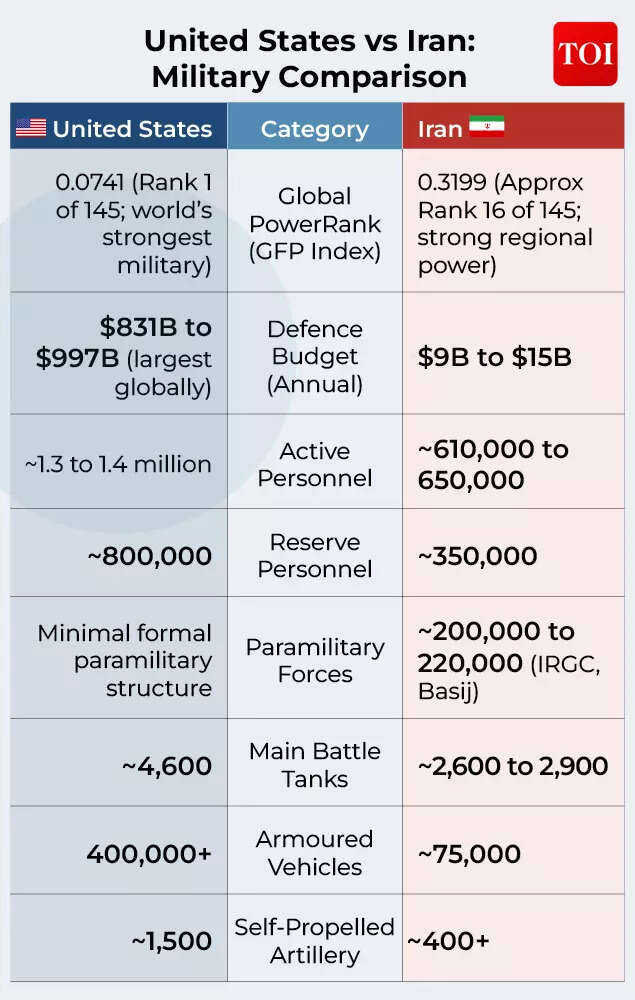
On paper, the balance of power between the United States and Iran is heavily tilted in Washington’s favour. The US military possesses unmatched global reach, advanced surveillance networks, stealth aviation, nuclear-powered naval fleets and integrated command systems capable of coordinating operations across continents. Its forces are trained for expeditionary warfare, sustained campaigns and precision strikes supported by satellite intelligence, cyber capabilities and layered missile defence systems. In conventional terms, the gap is undeniable.Yet military superiority does not automatically translate into strategic certainty.
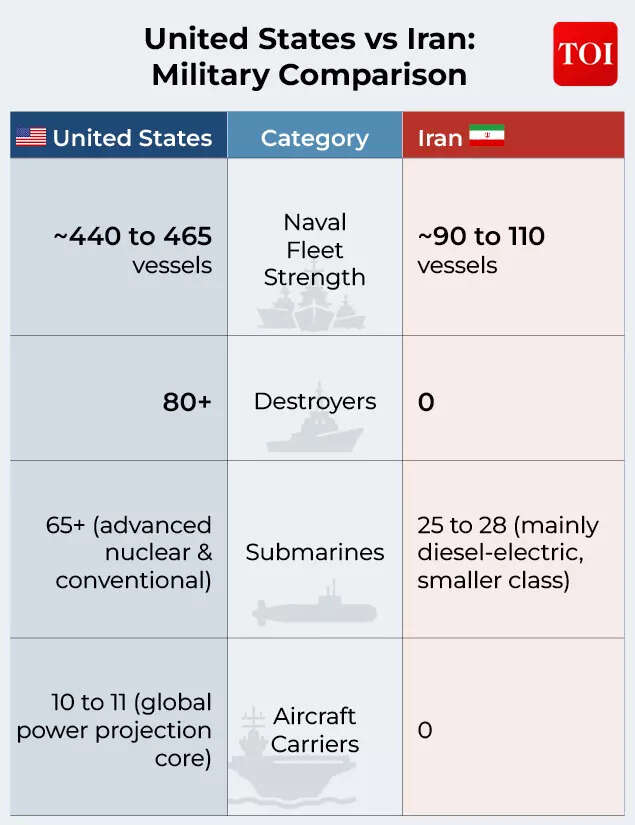
Iran’s strength lies not in matching American power symmetrically, but in shaping the battlefield asymmetrically. Geography is its first advantage. Positioned along the northern edge of the Strait of Hormuz and deeply entrenched across mountainous terrain, Iran’s territory provides natural defensive depth. Key military and nuclear installations are dispersed, hardened, buried underground or reinforced against aerial attack. This complicates any attempt at quick, decisive strikes.Missile capability forms the backbone of Iran’s deterrence strategy. Tehran has invested heavily in short- and medium-range ballistic missiles, cruise missiles and increasingly sophisticated drones. These systems are mobile, difficult to pre-emptively eliminate and capable of targeting US bases, naval vessels and regional infrastructure within minutes of launch. Even if interception systems such as Patriot or THAAD are deployed, no missile shield offers perfect protection against saturation attacks.
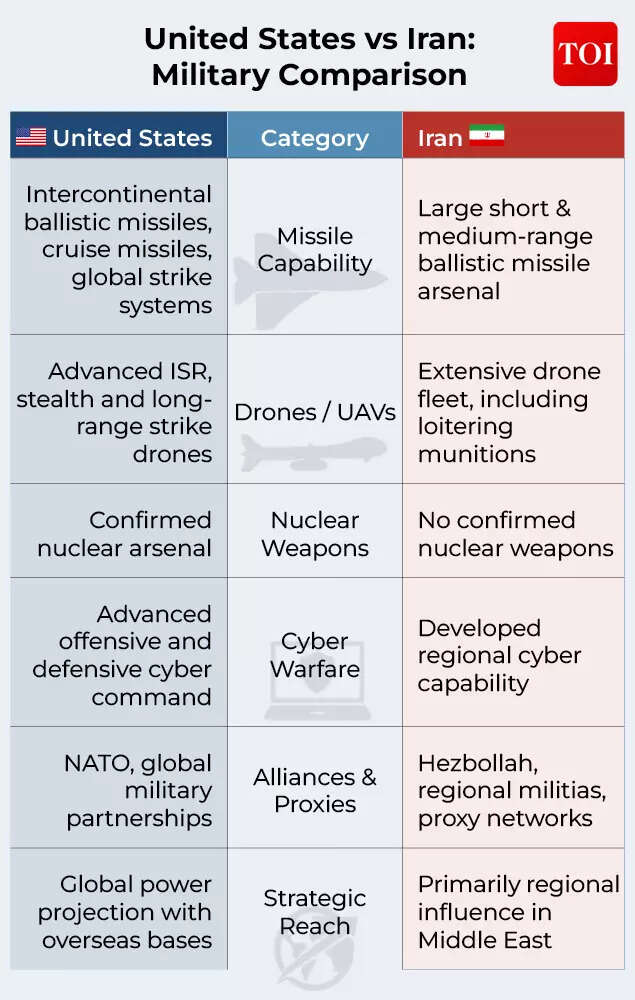
Iran also relies on layered defence rather than direct confrontation. Its Revolutionary Guard naval units operate fast-attack craft and swarm tactics designed to challenge larger warships in confined waters. Its network of allied militias and proxy forces across Iraq, Syria, Lebanon and Yemen creates additional pressure points. In the event of a direct US strike, Tehran’s response may not be limited to its own territory. It could unfold across multiple fronts simultaneously.This is where strategic uncertainty emerges. The United States may hold overwhelming conventional superiority, but escalation control is far less predictable. Limited strikes can spiral. Retaliation can be indirect. Markets can react faster than missiles.
Diplomacy under pressure
Indirect talks continue in Geneva, with both sides acknowledging limited progress but deep differences. Washington insists any deal must curb uranium enrichment and address elements of Iran’s missile programme. Tehran maintains enrichment is a sovereign right and resists linking missiles to nuclear negotiations. Meanwhile, the US military build-up has sharpened leverage — but also narrowed the margin for error, as even a minor incident could derail diplomacy.What the US could do
- Launch targeted strikes on nuclear or missile facilities.
- Rely on missile defences to absorb retaliation.
- Use military pressure to force stricter negotiation terms.
What Iran could do
- Strike US bases across the Gulf using missile saturation tactics.
- Disrupt the Strait of Hormuz through naval or missile action.
- Activate proxy networks across Iraq, Syria, Lebanon and Yemen.
If Washington refrains from direct action, the show of force may still strengthen diplomatic leverage, allowing both sides to recalibrate without triggering wider conflict.If the United States were to launch strikes, the consequences would likely extend beyond immediate targets. Iran possesses the capability to retaliate against US bases across the Gulf, potentially overwhelming missile defences through saturation tactics. The Strait of Hormuz could face sustained disruption, either through missile threats, naval swarming tactics or mining operations. Tehran could also activate proxy networks across Iraq, Syria, Lebanon and Yemen, widening the conflict theatre. Energy markets would almost certainly react sharply, with oil prices spiking amid fears of prolonged instability.If Washington refrains from direct action, however, the military posture may still serve a strategic purpose. The visible concentration of force could reinforce diplomatic leverage, encouraging compromise without triggering open conflict. Iran, in turn, may choose calibrated responses — demonstrating deterrence without crossing red lines that invite escalation.
Why Washington must weigh the costs: A calibrated brinkmanship with global stakes
An attack on Iran would not resemble limited counterterror operations or short punitive strikes. It would mean confronting one of the Middle East’s most militarised states, positioned along the Strait of Hormuz — one of the world’s most critical economic arteries. Any escalation would unfold in a region where military assets, energy flows and geopolitical rivalries intersect in unusually compressed space.The United States has assembled overwhelming firepower. Two carrier strike groups, destroyers armed with cruise missiles, stealth aircraft forward deployed and layered missile defences reflect unmatched conventional superiority. Yet overwhelming power does not eliminate risk. It changes the scale of consequences.
The Gulf today resembles a tightly packed chessboard. Carriers and destroyers patrol strategic waters. Stealth aircraft operate within range of Iranian airspace. Missile systems on both sides remain locked and ready. Iranian ballistic missiles are positioned inland, capable of reaching US bases across the region. Meanwhile, oil tankers continue to navigate narrow shipping lanes that carry a significant share of global energy supplies.In such an environment, miscalculation becomes the greatest danger. A drone interception, a missile test, a naval encounter or an error in judgement could trigger a rapid and difficult-to-contain escalation. Iran retains the ability to disrupt not only military assets but also maritime trade and energy infrastructure, magnifying global economic fallout.
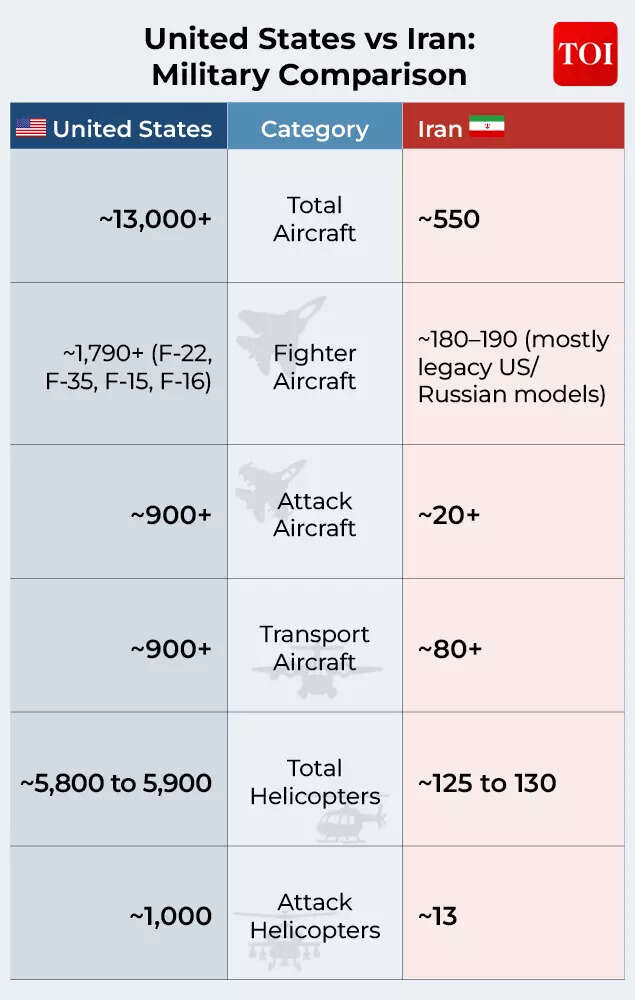
The current confrontation is therefore not a sudden flashpoint but a deliberate escalation shaped by nuclear negotiations, regional rivalries and strategic signalling. Washington’s message is clear: military options are operational. Tehran’s counter-message is equally direct: it can impose costs that extend beyond the battlefield.Whether this remains calibrated deterrence or shifts into direct conflict will depend on political decisions taken in the coming weeks. The stakes extend far beyond the Gulf, touching global energy markets, regional alliances and the broader balance of power in the Middle East. That is precisely why, despite its military advantage, Washington must weigh the costs carefully before taking the final step.