
Patna’s Gol Ghar stands without pillars: The 1770 famine-era secret behind the giant structure and the engineer who built it |
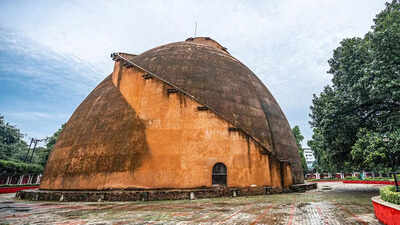
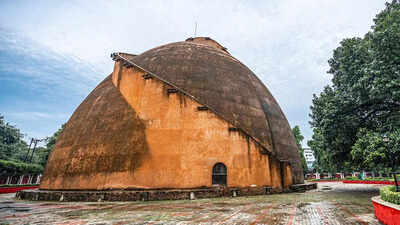
Patna is not a city that rushes to impress. Narrow lanes, crowded markets, river breezes, and sudden glimpses of history tucked between modern buildings. Somewhere in this mix stands Gol Ghar, a structure so unusual that it almost feels misplaced. A massive dome, but with no pillars, interestingly, with just stone and silence. Built in the late 18th century, this granary now doubles as one of the most recognisable landmarks of Patna. Climb its winding staircase, and the city spreads out beneath you. Old rooftops, busy streets, the distant Ganges. It looks less like a monument and more like a quiet storyteller, revealing fragments of colonial history, architectural ingenuity, and everyday city life all at once.Gol Ghar rarely stands alone in travel itineraries. A short distance away sits the Patna Museum, home to artefacts that trace Bihar’s layered past. Sculptures, coins, fossils, relics.
Gol Ghar history : How famine fears led to Patna’s iconic structure
Gol Ghar was not built for beauty. The devastating famine of 1770 across Bihar and Bengal left millions dead. In response, Warren Hastings reportedly ordered the construction of a massive granary to prevent future shortages. British engineer Captain John Garstin designed the dome in 1786 with a bold ambition: store huge quantities of grain for emergencies. The structure could hold around 140,000 tons. The inward-opening door made unloading grain difficult. It appears this flaw meant the granary was never filled. Still, the monument survived, and history lingered within its walls.
Towering dome built without a single pillar
The building rises about 29 metres high and spans roughly 32–35 metres in diameter. Its stupa-like silhouette gives it a spiritual vibe, though it was purely functional. Built entirely from brick and lime mortar, the structure contains no interior pillars or beams. Experts say this makes it a remarkable feat of colonial engineering.One hundred and forty-five steps winding gently around the dome. Small windows punctuate the ascent, originally used for grain loading. At the top, a circular opening ventilates the hollow chamber below.
Gol Ghar gardens where history meets everyday life
Gol Ghar today feels more like a public space than a relic. Families wander the gardens. Children chase each other around the fountain. The surrounding lawns are neat, green, and almost calming amid city chaos. A light and sound show reportedly narrates the monument’s story through colour, music, and voice. It lasts around thirty minutes, yet seems to leave visitors lingering afterwards. Perhaps just enjoying the night breeze.Street food nearby adds another layer. Dahi bhalla, dahi vada, and local snacks appear to complete the experience in an unexpectedly delightful way.