‘Reforms undertaken to strengthen data quality’
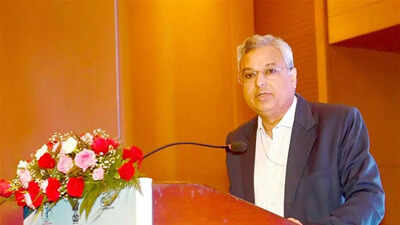
Statistics and programme implementation secretary Saurabh Garg has spent the last couple of years addressing data gaps and working on revamping critical macro-economic indicators – GDP, retail inflation and industrial sector activity. Ahead of new GDP series launch on Friday, he discusses the changes with TOI. Excerpts:New GDP series will be launched on Feb 27. How will it differ from the current series?In terms of new features, the new series will have better and dynamic coverage of household or unorganised sectors on account of the unincorporated sector survey and the PLFS (periodic labour force survey), as opposed to the indicator-based extrapolation approach followed in the existing series. It will also use administrative data from different sources, primarily GST, Vahan data, Public Financial Management System, petroleum and gas sector. Currently, in the case of multi-activity enterprises, the entire contribution is allocated as per its major activity. While re-basing, attempt has been made to segregate economic activities and consequently the value added by each business activity of the enterprise. With the availability of frame of active limited liability partnerships (LLP), they will be covered comprehensively in the new series. The revised series will also do away with single deflator entirely for manufacturing and agriculture. Wherever double deflation is not feasible in services sector, single deflator or volume extrapolation method will be used.Govt is planning to capture seasonality in the new GDP series. How will it be more robust and representative of the industrial sector?Industrial activity in India is influenced by seasonal factors like monsoon patterns, festivals and year-end expenditure. Without proper seasonal adjustment, quarterly growth may reflect temporary effects rather than underlying economic momentum. A seasonally adjusted series allows for better quarter-to-quarter comparability, clearer identification of cyclical turning points and reduced short-term volatility. However, running the model for seasonally adjusted quarterly GDP requires at least five years of historical data. Further, these estimates may undergo revision whenever annual benchmarks are revised. Therefore, the release of seasonally adjusted quarterly GDP estimates will be attempted, following the release of the back-series estimates. After that, we will also aim for the annual series.What is the feedback on the new CPI series and when can we expect comparable back-series data?The new series is broadly welcomed by various stakeholders including RBI, academicians, and businesses for using latest consumption data and expanding the basket from 299 to 358 items. Stakeholders noted improvements like the inclusion of rural house rent, better service representation and integration of administrative data for fuel and fares. We have already released the headline back-series and official linking factor. However, the adoption of COICO (a UN statistical series to classify individual consumption according to its purpose) makes direct item or division-level linking technically complex.Has enough been done in recent years to restore the credibility of Indian national accounts data and silence the sceptics, especially with regards to the employment data?Over the past two-three years, several reforms and improvements have been undertaken to strengthen the quality, transparency and reliability of official data. We are currently undertaking base year revision for major macro-economic indicators. We have also published an advance release calendar for the upcoming fiscal to ensure transparency and timeliness. With regards to PLFS, it broadly follows the concepts and definitions of the 13th ICLS (International Conference of Labour Statiscians) recommendations for measuring labour force participation, employment and unemployment. Differences in perception may often arise from how one defines employment, not from weaknesses in the survey methodology itself, as PLFS follows an internationally accepted definition to classify employment and unemployment.