Russian crude here to stay? Why India-US energy ties may be more about LPG, LNG than oil despite Trump’s push
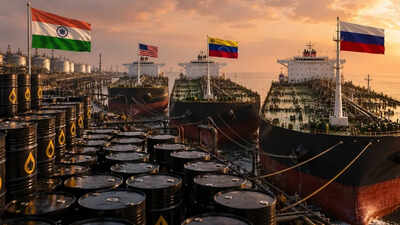
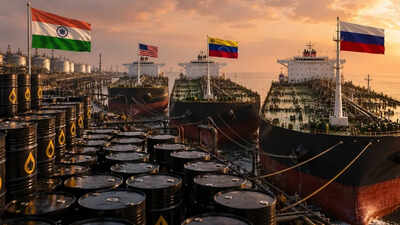
US President Donald Trump announced in February that India would stop buying Russian crude oil and step up energy ties with the United States of America. Four months after that, India’s Russian oil imports are near record highs and the US still doesn’t feature among India’s top five crude suppliers. But notably, India has stepped up LPG and LNG imports. And, Venezuela has become an important supplier of crude, substituting constrained supplies from the Middle East. Venezuela’s acting President Delcy Rodríguez was recently in India with a focus on expanding energy ties. US Secretary of State Marco Rubio too was in India in late May where he emphasised energy ties between the two countries in a meeting with PM Narendra Modi. Geopolitical developments in the last few months have dictated India’s energy supplies. Be it crude oil, LPG or LNG, India is largely dependent on the world to meet its needs, and the US-Iran war has disrupted supplies via the Strait of Hormuz.But the picture is not just short-term, experts are of the view that Russian crude oil will stay as a major contributor to India’s energy imports. However, they see a huge scope of expansion in India-US energy ties via the LPG and LNG route.
Top crude oil suppliers for India amid US-Iran conflict
In the three months since the conflict began, Russia has continued to be the dominant player in India’s crude oil imports. The numbers from the US have actually come down, though notably Venezuela has emerged as an important supplier. In fact, it ranks among the top five suppliers in the three month period. Since the US is de facto overseeing crude supplies from Venezuela, that assumes significance.According to data by Kpler, a global real-time data and analytics provider, Russia continued to be the largest supplier of crude oil for India in May as well. With a US sanctions waiver in place, Indian refiners stepped up procurement aggressively, with the daily numbers nearing levels seen in 2023 when Russian imports hit highs of around 2 million barrels per day.Another noteworthy development for May was that the oil imports from the UAE ranked the second highest with an average 5,61,000 barrels per day. Saudi Arabia, which had been the second largest supplier in April with 6,70,000 barrels per day, dropped to the third position with imports averaging at 3,50,000 barrels per day. Even when the US sanctions came into place in late November, Russia continued to be the biggest contributor to India’s crude oil imports. Though, admittedly, the levels fell drastically. However, before a sustained fall was visible, the US-Iran conflict started, prompting India to procure crude from all available sources as Middle East supplies via the Strait of Hormuz took a hit.India has always said that its crude oil procurement decisions are driven by energy security needs. However, the ongoing US sanctions waiver for Russian crude on sea has helped make the oil financially viable.Experts note that Russian crude itself is not sanctioned. It is Lukoil and Rosneft – two Russian oil majors that are sanctioned by the US. As such, non-sanctioned Russian crude continues to flow to India and the trend will likely continue even after the US sanctions waiver lapses.
Can the US replace Russian oil in India’s crude imports?
Experts point out that India’s crude purchasing strategy is majorly economics-driven, which makes it unlikely that US crude oil will become a more prominent player in India’s crude import mix than Russia.Ivan Mathews, Head of APAC Analysis at Vortexa says, “Unless the US and India have a formal trade deal, India is unlikely to purchase more US crude. This is due to the high freight costs involved in importing from the USGC.” Moreover, Mathews points out that the US crude is mainly light/medium sweet, whereas the Indian refining system is configured toward processing medium/heavy sour crude grades. “Since transits through the Strait of Hormuz remain constrained at the time of writing, medium-sour Russian Urals is a close quality replacement for Middle Eastern crude and is more economical than US crude,” Mathews tells TOI.As Prashant Vasisht, Senior Vice President and Co-Group Head, Corporate Ratings, ICRA Ltd notes: Usually for crude and other commodities freight costs make purchases from the US more costly than other regions that have proximity to India like West Asia.
Venezuela crude emerges as a factor
But, crude from Venezuela is likely to be an important factor in this equation. According to Mathews, Venezuelan crude suits India’s refining system. “We could see more imports of Venezuelan crude if pricing is favourable and transits through the Strait of Hormuz remain constrained,” he adds.“India has been buying crude oil from Venezuela. Venezuelan crude is heavy and sour and therefore cheaper so it makes economic sense to purchase for refineries,” ICRA’s Prashant Vasisht says.Though, if one were to add up the crude supplies from US and Venezuela, they are still nowhere close to what India procures from Russia, even in times when sanctions were in place and Russian crude volumes were on the decline.
Not crude, but LPG and LNG in focus
Interestingly, while crude oil is always in focus, it is actually LPG and LNG supplies that form a more natural fit in India-US ties, feel experts. Import numbers convey a telling story – India, which gets a big chunk of its LPG and LNG supplies from the Middle East, has switched to imports from the US during the ongoing West Asia crisis.Experts believe that the future of India–US energy trade is increasingly about gas, not crude oil. Sumit Ritolia of Kpler says that while crude often dominates the headlines, the strongest growth in bilateral energy trade is likely to come from LNG, LPG, and ethane.“Recent import trends highlight this shift. India’s purchases of these products from the US have grown steadily, supported by rising domestic demand, expanding petrochemical capacity, and the country’s push to diversify energy supplies,” he says.Ivan Mathews notes that India could purchase more LPG from the US in the near-term to replace lost supplies from the MEG. Few alternative LPG suppliers exist besides the US.To ICRA’s Prashant Vasisht, LPG procurement from the US, which is a large LPG producer, makes sense from a diversification standpoint. “LNG exports from the US are usually pegged to Henry Hub which has been cheaper than Brent linked LNG imports. Accordingly, LNG imports from the US can be economically viable,” he tells TOI. Sumit Ritolia is of the view that for India, US gas is becoming increasingly important—not just for energy security, diversification push, trade deals, but also for powering industrial growth, petrochemicals, and the energy transition.“As the India–US relationship deepens, expect the next chapter of energy trade to be driven less by barrels of crude and more by LNG cargoes, LPG shipments, and ethane exports,” he says.
Future of Russia, US in India’s crude energy mix
For now, the Strait of Hormuz disruptions, tighter Middle Eastern flows, and growing geopolitical fragmentation are forcing India to rethink supply security and reduce overdependence on any single region.India has diversified its crude oil procurement basket to include over 40 countries. But since Russian crude itself is not sanctioned, it is likely to remain an important part of India’s procurement – albeit with reduced volumes once the sanctions waiver is removed.However, as Sumit Ritolia notes, there are natural limits to how much US crude can realistically fit into India’s refining slate. Most US export barrels are relatively light, whereas India’s complex refining system remains largely optimized for medium and heavier grades from Russia, the Middle East, and Latin America.“While Russian / Middle East crude is expected to remain central to India’s import slate for now due to pricing, scale, and logistics, the US increasingly sees an opportunity to strengthen its role in India’s future energy mix, particularly through LNG and LPG,” says Sumit Ritolia.“India’s gas demand is expected to rise rapidly as the economy expands, supported by industrial growth, city gas expansion, petrochemicals, and cleaner-fuel policies,” he adds.