Salesforce CEO Marc Benioff on AI layoffs: Most people don’t really understand what is going on, it is…
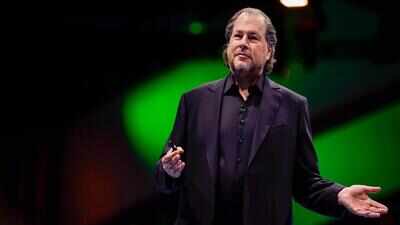
Marc Benioff thinks the tech industry is telling the wrong story about AI and jobs—and he’s tired of it. The Salesforce CEO isn’t losing sleep over a white-collar wipeout. He’s actively hiring, approaching $50 billion in revenue, and arguing that the current wave of layoffs sweeping Silicon Valley is being badly misread by almost everyone watching it. “Even though I’ve spoken about this somewhat aggressively, I don’t think most people really understand what is going on,” Benioff said on The Future Live this week. “It’s too easy to basically make AI the scapegoat.”His argument: companies are cutting jobs for three very different reasons—costs that got out of hand, data center financial commitments, and genuine AI-driven rebalancing. Treating them as one story is a mistake, he said. And for some CEOs pinning everything on AI? “I think it’s the lazy way out.”
Salesforce CEO is betting on more salespeople, fewer engineers—and says demand has never been higher
At Salesforce, the rebalancing looks deliberate rather than reactive. Benioff said he held engineer hiring flat last fiscal year because coding agents gave him the capacity he needed. Service headcount was trimmed slightly as AI agents absorbed the load. But sales? He went the other direction entirely—hiring close to 20% more account executives, because demand across small, medium, and large customers kept climbing.“I’m going to try to get to 20,000 account executives this year,” he told TBPN. Salesforce now employs over 83,000 people—a company record, Benioff noted—with a quarter of that workforce dedicated to helping customers use its products.The underlying logic is that AI handles coordination and execution, but humans still close deals. “AI doesn’t have a soul. It’s not that human connectivity,” he said.
Marc Benioff says the companies cutting deepest are the ones that grew too fast, not too slow to adopt AI
His sharpest comments came in response to Jack Dorsey’s decision to cut roughly 4,000 employees at Block—about 40% of its workforce—framed as an AI-era restructuring. Benioff wasn’t convinced by the framing. “Obviously, that company has its own unique issues. We all know that, so let’s put that aside,” he told CNBC.His sharpest comments came in response to Jack Dorsey’s decision to cut roughly 4,000 employees at Block—about 40% of its workforce—framed as an AI-era restructuring. Benioff wasn’t convinced by the framing. “Obviously, that company has its own unique issues. We all know that, so let’s put that aside,” he told CNBC. Block grew from 4,000 employees in 2019 to nearly 13,000 by end of 2023, before going through multiple rounds of cuts. Atlassian followed suit weeks later, announcing a 10% workforce reduction—around 1,600 employees—also citing a pivot to AI and enterprise sales. The pattern hasn’t gone unnoticed. OpenAI CEO Sam Altman acknowledged earlier this year that there’s “some AI washing where people are blaming AI for layoffs that they would otherwise do”—adding that he expected genuine AI displacement to grow over time. Mizuho Americas analyst Dan Dolev was blunter about Block specifically: “The vast majority of these cuts were probably not due to AI.”Dorsey, for his part, isn’t backing down. In a blog post co-authored with Sequoia partner Roelof Botha this week, he outlined Block’s AI-restructured future: no middle management, replaced by individual contributors, directly responsible individuals, and “player-coaches” who develop talent while still building. “There is no need for a permanent middle management layer,” they wrote. “Everything else the old hierarchy did, the system coordinates.“Benioff sees it differently. The companies restructuring most aggressively aren’t necessarily the most AI-forward—they’re often the most overstretched. His prescription for CEOs is straightforward: be honest about what’s actually driving cuts, take the criticism that comes with it, and move on.“You’re gonna take bullets no matter what because that’s your role as CEO,” he said. “Then you have to get forward, put everything back together.”