
Sheikh Hasina sentenced to death: Can exiled Bangladesh ex-PM challenge the verdict? What the law says
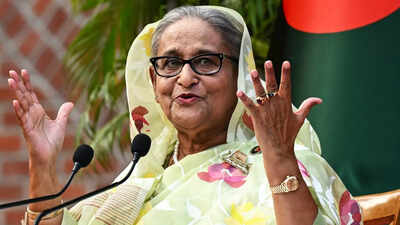
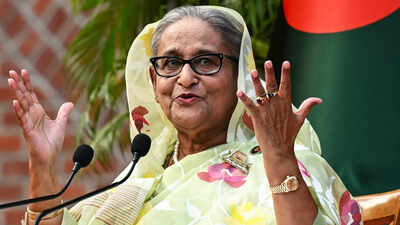
Bangladesh’s International Crimes Tribunal (ICT) on Monday sentenced ousted prime minister Sheikh Hasina to death after finding her guilty of “crimes against humanity”.The tribunal ruled that Hasina had ordered killings, incited violence and failed to prevent the atrocities committed during the July and August 2024 “student uprising”, after which escaped to India and remains reportedly in New Delhi since.
Judge Golam Mortuza Mozumder told the crowded courtroom that she had been found guilty on three counts and that the court had decided to impose a single punishment which was the sentence of death.Hasina defied the International Crimes Tribunal’s decision, claiming that the ruling, linked to the student-led protests of August 2024, was “biased and politically motivated.”She acknowledged the government had lost control of the situation at the time but maintained that the unrest did not amount to a “premeditated” assault on civilians.“We lost control of the situation but cannot characterise what happened as premeditated assault on citizens,” Hasina said.Hasina said she is willing to face the charges against her before a legitimate court, insisting she has no fear of a fair, evidence-based trial.Hasina criticised the verdicts, calling the process “rigged” and driven by an unelected interim government. She claimed the push for a death sentence showed a deliberate attempt by hardline officials to remove her from politics and weaken her party, Awami League.
Can Hasina challenge the death verdict?
Whether Hasina can challenge the verdict is now a central question. Under the International Crimes Tribunals Act of 1973, a convicted person has the right to appeal directly to the Appellate Division of the Supreme Court of Bangladesh. This is provided in Section 21(1), which states that any person convicted under Section 3 of the Act may appeal to the highest court.The law gives the convicted thirty days to file the appeal, as laid out in Section 21(2). Although Hasina is in India, the Act does not prevent her from appealing through authorised counsel or diplomatic channels.The Act does not allow appeals against interim or procedural orders issued by the tribunal during the trial. This means Hasina could not have challenged earlier rulings before the final judgment. After her appeal is decided, any order passed by the Appellate Division may still be reviewed under Section 22 of the Act, which allows the Supreme Court to reconsider its own decisions if an error is shown or new material emerges.Apart from the judicial process, the Constitution of Bangladesh gives the President the power to pardon, commute or remit any sentence, including a death sentence.
Will Hasina be extradited?
If Bangladesh renews its effort to extradite Hasina, New Delhi would not be automatically bound to comply. The India-Bangladesh Extradition Treaty of 2013 allows refusal if the alleged offence is considered political in nature, a provision reflected in Article 6 of the treaty.The treaty also permits refusal if extradition would be “unjust or oppressive” in the circumstances, as stated in Article 8. India would therefore be within its legal rights to decline any request if it believes the charges or trial have political overtones.Hasina was removed from office on August 5 last year and fled to India shortly after. Nobel Peace Prize winner Muhammad Yunus was installed as head of an interim government three days later, vowing to bring her to justice and prohibiting the Awami League from carrying out any political activity.Both Hasina and her party have dismissed the trial as a political setup and accused the state of appointing a lawyer to represent her without her consent.Yunus has said his interim government plans to hold elections in February and that the Awami League will not be allowed to take part. Bangladesh’s politics under Yunus has remained at a crossroads with limited signs of stability, and the legal battle over Hasina’s conviction is now set to become another defining chapter in the country’s turbulent transition.


