South America, Africa and Europe were once connected by land routes: 120-million-year-old dinosaur fossil reveals ancient bridge |
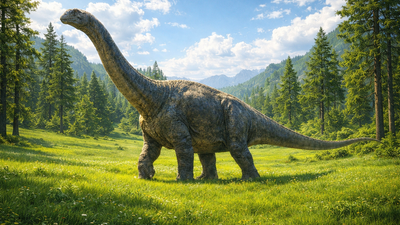
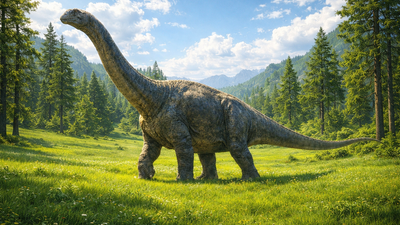
A newly identified dinosaur fossil from Brazil is offering fresh clues about how ancient animals once moved across continents that are today separated by vast oceans. The remains belong to a previously unknown species of giant long-necked dinosaur that lived around 120 million years ago during the Early Cretaceous period. What makes the discovery particularly significant is its close evolutionary relationship to a dinosaur species discovered in Spain, suggesting that distant regions of the planet were once connected by land routes.The finding strengthens a long-standing scientific idea that South America, Africa and parts of Europe were linked by land corridors before the Atlantic Ocean fully opened. These connections would have allowed large animals such as sauropod dinosaurs to migrate between continents. The fossil evidence now provides one of the clearest biological clues yet that these ancient migration routes once existed.
A giant dinosaur from Brazil
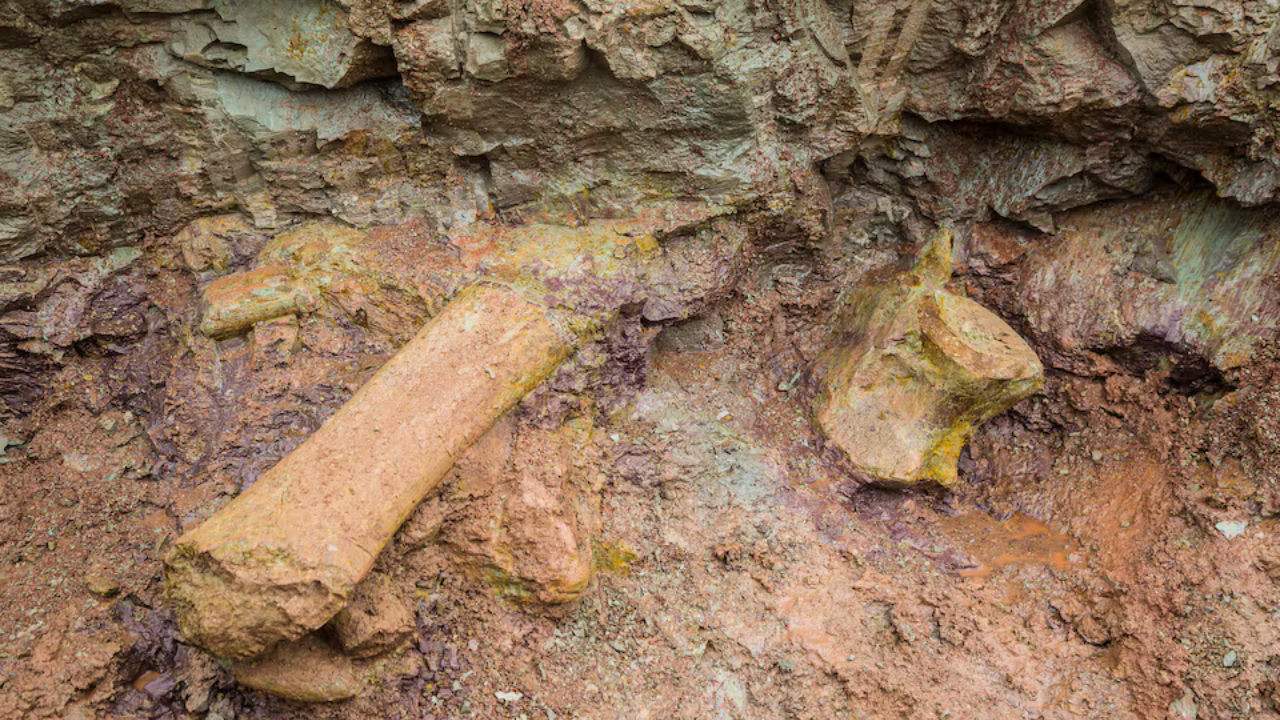
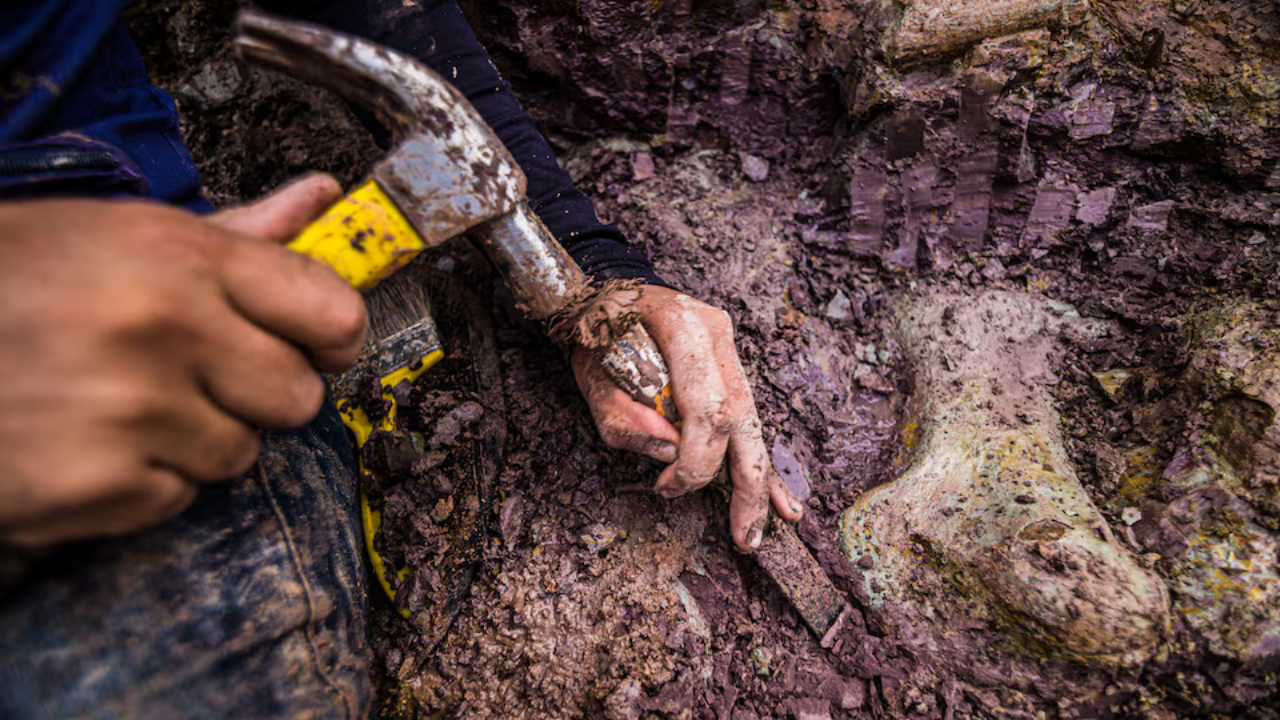
The newly described species, Dasosaurus tocantinensis, was discovered in northeastern Brazil in the state of Maranhão near the Tocantins River basin. The dinosaur belonged to a group of massive herbivorous sauropods known for their long necks, long tails and enormous body sizes.Based on the fossil remains, scientists estimate the animal measured around 20 metres in length, making it one of the largest dinosaurs identified from that region. Among the bones recovered from the site was a 1.5-metre-long femur, which helped researchers determine the animal’s overall size and structure.The fossils were uncovered during construction work near the town of Davinópolis, where workers noticed large bones embedded in sedimentary rock. Palaeontologists were later called in to examine the site and confirm the remains belonged to a previously unknown dinosaur.Researchers involved in the study included scientists from several Brazilian universities, who carefully analysed the bones and compared them with known sauropod fossils from around the world. Their findings were eventually published in the Journal of Systematic Palaeontology, where the species was formally described.
A surprising link to a dinosaur in Spain
What made the discovery particularly remarkable was its unexpected connection to a European dinosaur. When researchers examined the fossil anatomy, they found striking similarities between the Brazilian dinosaur and a species discovered in Spain called Garumbatitan morellensis.Both dinosaurs share distinctive skeletal traits, especially in the vertebrae and thigh bones. These similarities suggest that the two species belonged to the same evolutionary lineage within the broader group of titanosauriform sauropods.According to palaeontologists, such close anatomical connections between dinosaurs from two continents separated by an ocean would be extremely unlikely unless land routes once allowed animals to move between them.Researchers believe this lineage may have originated in Europe before spreading southwards across North Africa and eventually into South America.
The world 120 million years ago
To understand how such migrations were possible, scientists look to the ancient geography of Earth during the Early Cretaceous period. Around 120 to 130 million years ago, the continents were still in the process of breaking apart from earlier supercontinents.At that time:
- South America and Africa were still partially connected
- North Africa maintained links with southern Europe
- The Atlantic Ocean had only begun forming
These geological conditions likely created a chain of land corridors stretching from Europe into Africa and eventually into South America. Large herbivores such as sauropods could have gradually migrated along these routes over many generations.As tectonic plates continued to shift, the Atlantic Ocean widened and these land bridges disappeared, isolating dinosaur populations on separate continents.
Unique features of the new species
The fossils revealed several characteristics that helped scientists identify the dinosaur as a completely new species rather than a previously known one.Among its most distinctive traits were unusual structures in the tail vertebrae, including elongated ridges and grooves not seen in other related dinosaurs. The thigh bone also displayed a distinctive lateral bulge that further separated it from known species.These anatomical differences allowed researchers to classify the dinosaur within the Somphospondyli, a subgroup of titanosauriform sauropods that later evolved into the enormous titanosaurs that dominated the Late Cretaceous.The name Dasosaurus tocantinensis reflects both the region where the fossil was found and the river system near the discovery site.
What the discovery tells scientists
Beyond identifying a new dinosaur, the discovery has important implications for understanding ancient ecosystems and continental evolution.First, it provides new evidence that dinosaur species were able to spread between continents before the Atlantic Ocean fully separated them. Fossils like these act as biological markers that help scientists reconstruct ancient migration patterns.Second, the discovery adds to the growing evidence that northern South America hosted a diverse population of giant herbivorous dinosaurs during the Early Cretaceous.Finally, the fossil helps refine scientists’ understanding of how continents separated during one of the most dynamic periods in Earth’s geological history.As palaeontologists continue studying fossils from Brazil and other parts of the world, discoveries like this one are gradually revealing how dinosaurs once roamed across landscapes that are now divided by entire oceans.