
Study abroad plans? Falling might pinch pockets


MUMBAI: The depreciation of the rupee has pushed up the cost of funding overseas education for middle class Indian households, nudging many students to defer their higher education plans by a couple of years or opt for shorter duration courses; some students looking for undergraduate courses are also actively evaluating the prospect of getting enrolled in local institutions, consultants said.
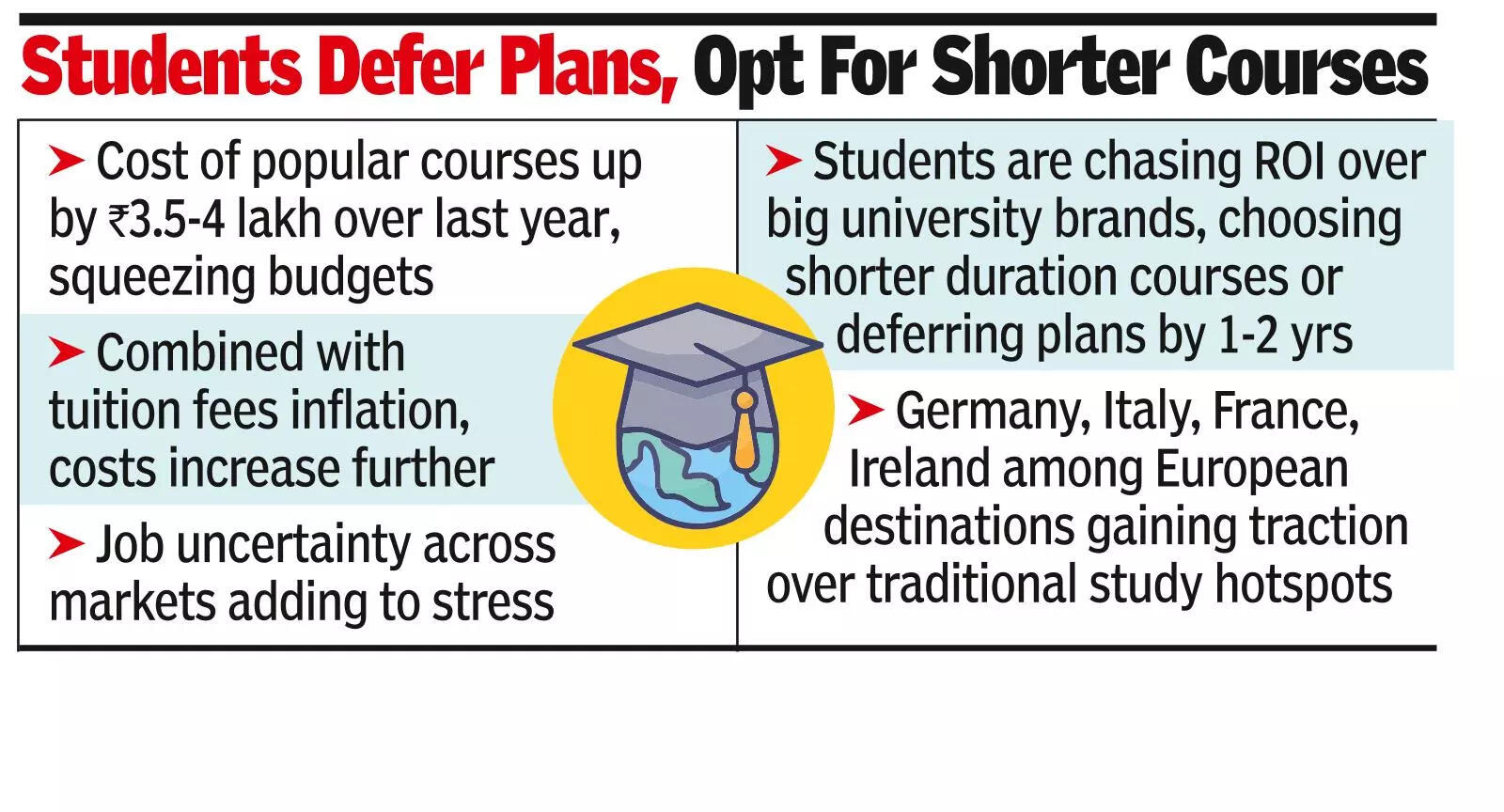
The total cost of the more popular courses, for instance, has jumped by about Rs 3.5-4 lakh over the last year, squeezing budgets and increasing the projected burden for families, said Arnav Kumar, co-founder at study abroad platform Leap, adding that competition for scholarships will intensify.“Indian students are adjusting their strategies by either deferring their plans by a year or two or by finding the right financial strategy, be it through loans, scholarships etc,” said Piyush Kumar, regional director, South Asia, Canada and Latin America (LATAM), IDP Education. Foreign education loans taken from Indian banks are sanctioned in Indian rupees based on the exchange rates prevalent at the time. Although there is an option to take loans from foreign banks, most people tend to take it from India as overseas loans need a local co-signor or a collateral, experts said. The rupee has depreciated 4.9% against the US dollar, nearly 2.5% against euro and 3.3% against the pound so far this year, data from ETIG showed. The rupee has weakened by about 5%-6% against USD in FY2024-25 but when combined with global tuition (fees) inflation, the actual cost increase is about 7%-11% annually in rupee terms. In absolute terms, students may be paying Rs 5 lakh-10 lakh more per year compared to 2023 depending on the programme and the country they choose, said Pankaj Kapoor, assistant professor, School of Commerce at NMIMS. “Middle class households are most affected, with long-term savings getting diverted towards education expenses,” Kapoor said.Overall, there’s been a dip in the number of students choosing to go abroad for higher education this year over the last year, said study abroad consultant Meenal Damani. Besides, many students who want to go abroad are instead opting for Europe over the US. “The broader issue is that earlier students were getting ROI (return on investment). Now, there is job uncertainty across markets but in India, options for specialised masters are limited which is why students prefer to go abroad,” said Damani.Remittances are being aligned more deliberately with fee milestones, and loan structures are being chosen not just for access, but for predictability over a multi-year horizon, said Akshay Chaturvedi, founder & CEO at Leverage Edu, adding that Indian students are looking beyond traditional markets towards destinations such as Germany, Italy, France, Ireland, and other parts of continental Europe. For students, focus has completely shifted from chasing big-name university brands to ROI.