Earth may be observed from the moon instead of orbital satellites in the future ai generated.jpg

Earth may be observed from the moon instead of orbital satellites in the future |

Earth may be observed from the moon instead of orbital satellites in the future (AI-generated) Scientists are beginning to read Earth in a different way, not from orbit, but from the surface of the moon. A recent study, “Spherical Harmonic Fingerprints Characterize Moon-Based Disk-Integrated Earth’s Emitted Radiation Signatures”, outlines how lunar-based observations can capture a…

Read More
How orbital satellite megaconstellations could change astronomy forever.jpg

How orbital satellite megaconstellations could change astronomy forever

Observing the universe has always depended on dark skies, long exposures, and instruments designed to capture signals that are often barely distinguishable from background noise. This delicate balance is beginning to shift as satellite megaconstellations expand across low Earth orbit, increasing both in number and operational complexity. These networks support global communication services, navigation systems,…

Read More
1764838727 unnamed file.jpg

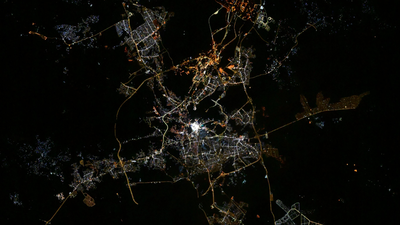
‘Visible from space’: Astronaut shares orbital view of Mecca from 400kms above earth; picture goes viral

Nasa astronaut Don Pettit has captivated the internet with a striking photograph taken from space, showing the Saudi Arabian city of Mecca shimmering against the night. The orbital image reveals a brilliant central glow visible distinctly even from 400 kilometres above Earth.Don Pettit shared the image highlighting “Islam’s holiest city” being visible even from space….

Read More
A second moon for earth nasas quasi moon begins its 50 year orbital journey around our planet until 2038.jpg

A second moon for Earth? NASA’s quasi-moon begins its 50-year orbital journey around our planet until 2038 |

Astronomers have found that Earth has acquired a new cosmic partner, a tiny asteroid named 2025 PN7, which will orbit with our planet for approximately 50 years. Though described by some as a “mini-moon,” scientists clarify that it is not actually a satellite like our Moon. Rather, it’s a quasi-moon, an uncommon variety of asteroid…

Read More