US-Israel strike target Khamenei’s offices; who are potential successors of Iran’s supreme leader
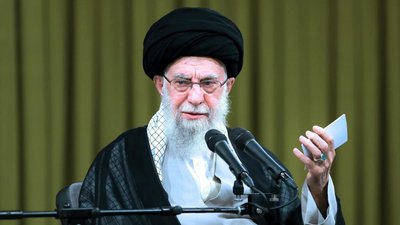
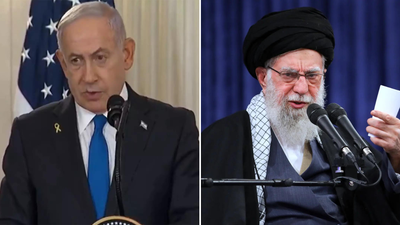
US and Israel launched strikes on Iran early Saturday, with the first apparent explosion reported near the offices of Iran’s supreme leader Ayatollah Ali Khamenei, according to Iranian media cited by AP. Smoke was seen rising from downtown Tehran, and multiple blasts were reported across the capital. Witnesses said the first explosion was heard near Khamenei’s office compound. Iranian state television confirmed a blast but did not specify its cause. Roads leading to the supreme leader’s compound were shut down by authorities, the country’s airspace was closed and mobile phone services were disrupted.
Reuters citing sources claimed, the 86-year-old Khamenei was not present at his office at the time of strikes, and has been taken to a secure location outside Tehran. He has not been seen publicly in recent days as tensions with the United States escalated. According to AP, targets in the Israeli campaign included military installations, government symbols and intelligence facilities. The attack comes amid a significant US military build-up in the region and heightened tensions over Iran’s nuclear programme.Khamenei, who has led Iran since 1989, is the Middle East’s longest-serving head of state. His removal, incapacitation or death would trigger only the second leadership transition since the 1979 Islamic Revolution and could mark a pivotal moment for the Islamic Republic.Here is a look at how succession works in Iran and the names most often mentioned as potential contenders.
How succession is decided
Under Iran’s constitution, the assembly of experts, an 88-member clerical body elected through a tightly controlled process, selects and oversees the supreme leader. Candidates for the assembly are vetted by the Guardian Council, whose members are directly or indirectly appointed by the supreme leader.Following the death of the Islamic Republic’s founder, Ruhollah Khomeini, in 1989, Khamenei was elevated from the presidency to the supreme leadership. Since then, succession planning has remained a closely guarded process within the regime’s inner circle.US thinktank Council on Foreign Relations in a recent assessment laid out some possible names who can succeed Ayatollah Khamenei.
Potential successors
Ayatollah Alireza Arafi
Alireza Arafi is a senior figure within Iran’s religious establishment. He is a member of both the Guardian Council and the Assembly of Experts and currently leads Iran’s nationwide seminary system.CFR notes that Arafi has held influential administrative and theological posts, positioning him within the regime’s inner circle. His elevation would represent continuity within the existing clerical structure.
Hojjat-ol-Eslam Mohsen Qomi
Mohsen Qomi serves as a key adviser in Khamenei’s office. As a long-time insider with proximity to the supreme leader, Qomi is seen as part of the trusted network that could be considered in a succession process designed to preserve stability within the system.
Ayatollah Mohsen Araki
Mohsen Araki is a long-time member of the Assembly of Experts. With established religious credentials and institutional experience, Araki is among senior clerics whose names have circulated in media speculation around succession.
Ayatollah Gholam Hossein Mohseni Ejei
Gholam Hossein Mohseni Ejei currently heads Iran’s judiciary and is one of the most prominent officials within the state apparatus. CFR notes that, unlike several other potential contenders, Mohseni Ejei has exercised national security responsibilities and held high-profile posts.His administrative experience could be seen as an asset in a period of instability.
Ayatollah Hashem Hosseini Bushehri
Hashem Hosseini Bushehri serves as the Friday prayer leader in Qom and is a member of the Assembly of Experts. As a senior cleric with standing in religious institutions, he is also part of the pool of possible successors within the establishment.Their are also concerns that promoting one of Khamenei’s favoured clerical functionaries would likely preserve the existing balance of power, effectively extending the current system beyond his tenure. However, most potential candidates are in their mid-to-late sixties and lack Khamenei’s decades-long consolidation of authority, raising questions about how smoothly a transition could unfold.With strikes reported near the supreme leader’s offices and uncertainty surrounding his status, the issue of succession, long debated within policy circles, has taken on renewed urgency. Any shift at the top of Iran’s system would have significant implications for the country’s internal politics and its regional posture.