US-Israel War with Iran: How it hit Indian stock markets | India Business News


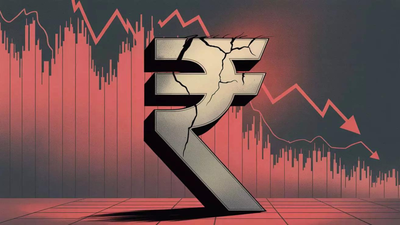
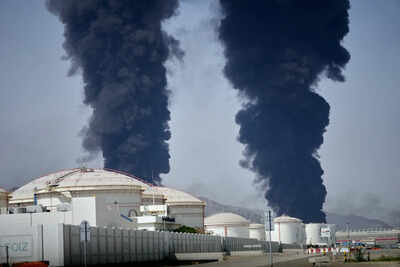
India’s stock markets have suffered a sharp setback as escalating conflict in West Asia triggered a wave of global financial uncertainty, sending investors rushing out of riskier assets and wiping out billions of dollars in market value.Estimates based on changes in the combined market capitalisation of companies listed on the Bombay Stock Exchange suggest that roughly $240 billion in investor wealth was erased in about a week as the crisis intensified. The sell-off reflects how quickly geopolitical shocks can ripple through financial markets, particularly in economies such as India that are closely tied to global trade flows, energy markets and foreign capital.The turmoil has shaken Dalal Street, with benchmark indices sliding sharply and investors reassessing the risks posed by rising oil prices and the possibility of a wider regional conflict.A sudden shock to investor wealthThe latest market slump has erased billions of dollars from the value of companies listed on Indian exchanges. The decline reflects a broad shift in investor sentiment as global funds move toward safer assets during periods of geopolitical stress.Stock markets typically react quickly to international crises, and the current downturn has been no exception. Institutional investors and traders have adopted a cautious stance, triggering widespread selling across sectors including financials, automobiles, infrastructure and aviation.The sell-off also pushed Indian benchmark indices into correction territory, meaning they fell more than 10% from recent highs, underscoring the scale of the market’s reaction to global developments.Oil prices surge as conflict escalatesAt the centre of the market turbulence is the escalating conflict involving Iran, Israel and the United States, which has heightened fears about disruptions to global energy supplies.Crude oil prices surged sharply as traders worried about the possibility of supply disruptions in the Middle East. Brent crude briefly moved above $100 per barrel, intensifying concerns about inflation and economic stability in oil-importing countries.For India, the implications are significant. The country is the world’s third-largest importer of crude oil, and roughly one-fifth of global oil supplies pass through the Strait of Hormuz, a narrow shipping route near Iran that is critical to global energy trade.Any disruption to tanker traffic through the strait could push oil prices even higher, raising costs for transportation, manufacturing and power generation in India.Higher energy prices also risk widening India’s current account deficit, weakening the rupee and increasing inflationary pressures across the economy.Sensex and Nifty slide amid risk-off sentimentThe impact of these developments has been clearly visible in India’s major stock indices.Both the BSE Sensex and the Nifty 50 have recorded steep declines, with the Sensex falling more than 1,300 points in a single trading session during the sell-off. The decline pushed the benchmark indices close to their lowest levels in about a year.Market strategists say such volatility is typical when geopolitical tensions escalate, particularly when those tensions affect energy markets.Rising oil prices tend to weigh heavily on investor sentiment because they increase inflation risks and reduce corporate profit margins in sectors that rely heavily on fuel and transportation.Foreign investors pull money from Indian equitiesAnother major driver of the downturn has been the withdrawal of foreign portfolio investment from Indian equities.Foreign investors pulled out roughly ₹52,704 crore (about $5.7 billion) from Indian stocks during the first half of March as global uncertainty intensified. Such capital outflows can amplify volatility because foreign institutional investors hold significant positions in Indian equities.When global investors reduce exposure to emerging markets during geopolitical crises, stock prices in those markets can fall quickly.The outflows have also put pressure on the Indian rupee, which typically weakens when foreign capital exits domestic markets.Losses spread across sectorsThe market downturn has not been confined to a single segment of the economy.Losses have been widespread across multiple sectors, reflecting a broad shift toward risk aversion among investors. Financial stocks, which account for a large share of Indian indices, have declined along with companies in automobiles, infrastructure, aviation and other cyclical sectors.Smaller companies have also faced heavy selling pressure as investors move money into relatively safer assets.Market data show that hundreds of listed stocks have fallen sharply during the sell-off, highlighting the breadth of the decline across the market.Global markets feeling the pressureIndia’s market volatility mirrors a broader pattern across global financial markets.Geopolitical conflicts often trigger a “risk-off” environment in which investors move money into traditionally safer assets such as gold, US government bonds and the US dollar.Emerging markets typically experience capital outflows during such periods, making their stock markets particularly vulnerable to sudden swings in investor sentiment.Domestic investors provide some supportDespite the heavy selling by foreign investors, domestic institutional investors, including mutual funds and insurance companies, have continued to purchase equities during the downturn.Their buying activity has helped moderate the pace of the decline, although analysts note that sustained foreign outflows could continue to create volatility in the near term.Retail investors, who have played a growing role in India’s market rally in recent years, are also closely watching developments in the Middle East before making new investment decisions.Investors urged to focus on long-term fundamentalsMarket experts say that geopolitical crises often trigger sharp but temporary corrections rather than long-term structural declines in stock markets.Much will depend on how the conflict evolves in the coming weeks. If tensions ease and oil prices stabilise, investor confidence could return quickly. However, a prolonged escalation in the Middle East could keep markets volatile, especially if energy supply routes are disrupted.For now, the sharp fall in market capitalisation serves as a reminder of how interconnected the global economy has become. Conflicts thousands of kilometres away can rapidly influence financial markets in countries like India, where energy imports, trade flows and global investment remain deeply intertwined with geopolitical developments.(Disclaimer: Recommendations and views on the stock market, other asset classes or personal finance management tips given by experts are their own. These opinions do not represent the views of The Times of India)