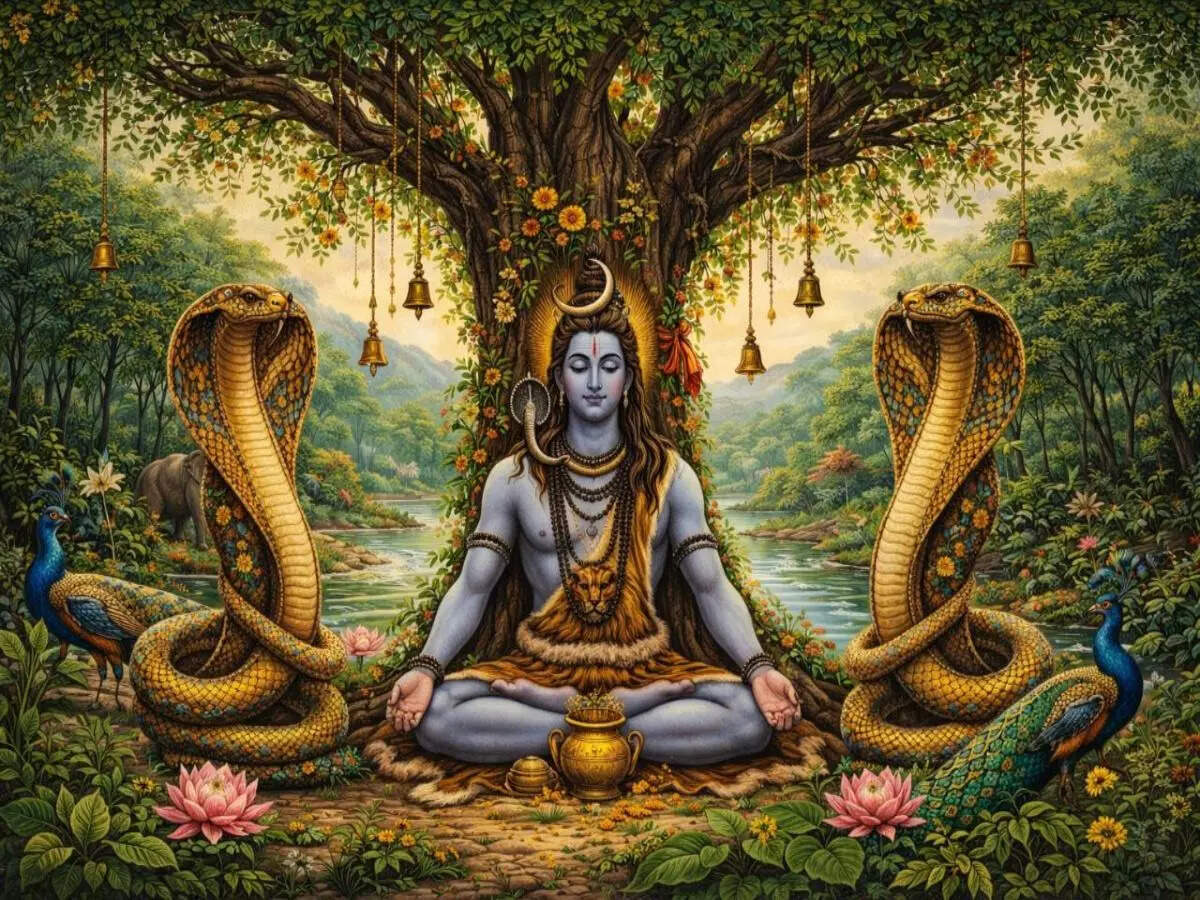
Vasuki Lord Shiva’s Snake: Why Lord Shiva wears the serpent king ‘Vasuki’ around his neck: Understanding the deeper symbolism and meaning in Hinduism |

The Trimurti of Hinduism represents the divine cycle of life and existence. We have always been taught about the creator, preserver, and destroyer of the universe with names Brahma, Vishnu, and Mahesh. That is, Brahma (creator), Lord Vishnu (preserver), and Mahesh or Lord Shiva (destroyer). These all combine with one divine force regulating the rhythm of life.Lord Shiva, who is known for his intense nature, symbolises both good and evil. Hindus have a strong belief in Lord Shiva’s powers of destruction and recreation; destroy the imperfections of the world and bring beneficial change to the Earth. People who believe in and worship Lord Shiva would definitely have a question about his appearance, and especially why he wears ‘Vasuki’, the serpent king around his neck.
Significance of Lord Shiva wearing the serpent king around his neck
In Hindu tradition, the snake around Shiva’s neck is not just there for effect. But it carries a deeper meaning. The serpent is often said to be Vasuki, a powerful snake from ancient stories. Snakes are symbolised with fear and are the deadliest creatures on Earth, and are linked with danger, even death. When Shiva wears one calmly around his neck, it shows control, strength, and the sense that he stands above fear.There’s also a simpler meaning. When snakes shed their skin, they look new again, and so they are often seen as a sign of change and new beginnings. Shiva is also known for destroying, creating a symbol of renewal. The snake cycle matches that idea.In simple words, the serpent around his neck symbolises:
- Fearlessness
- Renewal from destruction
- Self-control
Understanding Lord Shiva’s iconic form
When people picture Shiva, they often imagine him with a blue throat and face. Ancient descriptions say his body is fair or ash-white, but over time, artists began showing him in shades of blue, and that image has stayed. One of the first things people notice is the third eye on his forehead. This stands for awareness that goes beyond the ordinary. There’s a well-known story: in a moment of anger, Shiva opened this third eye, and the fire that came from it destroyed Kama. Only later, after Parvati’s request, was he brought back.Around Shiva’s neck sits a serpent king. Rather than looking threatening, it rests there calmly. Across his forehead are three lines of ash, called vibhuti. These marks point to detachment from worldly desires. He also carries a trident, known as the trishul. Its three prongs are often understood to represent creation, preservation, and destruction forces that keep the universe in balance.