Who was Alan Turing: The man who broke German codes in World War II but was later treated as a criminal | World News
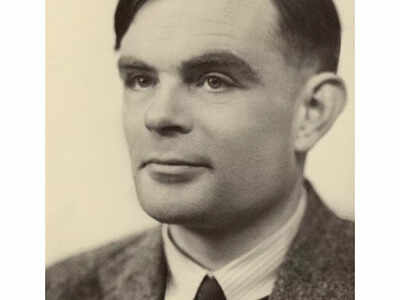
War rarely turns on one person alone, yet certain names continue to surface when the history of World War II is revisited. Alan Turing is one of them. Born in London in 1912, he was trained as a mathematician and logician, with work that moved between theory and machinery. When Britain entered the war in 1939, he joined the Government Code and Cypher School at Bletchley Park, where secret efforts were underway to read encrypted German military signals. His contribution to codebreaking, especially against the Enigma system used by Germany, later came to be seen as decisive. Historians continue to assess the scale of that impact, but few dispute that his work altered the pace and direction of the war.
Alan Turing, ‘The father of modern computer science ’, built the foundations of modern computing
Before the war, Turing had already set out ideas that would shape computer science. At King’s College, Cambridge, he wrote a paper describing a universal machine capable of carrying out any computable task, given the right instructions. The device itself was theoretical. It was never meant to be built in that form. Still, the concept settled into the discipline.He later studied at Princeton University, completing a doctorate in mathematics in 1938. By then, his interest in logic and machines had sharpened. These early ideas would quietly underpin practical wartime work. They also earned him the label of ‘ The father of modern computer science’, a phrase often repeated, sometimes without much pause.
Bletchley Park became the centre of Britain’s secret war
When Germany invaded Poland in September 1939, Britain’s codebreaking operation expanded quickly. Bletchley Park, a country estate in Buckinghamshire, became a hub for mathematicians, linguists, and engineers. The aim was simple to state and hard to achieve. Read Germany’s encrypted messages.The German military relied on the Enigma machine, a device using rotating wheels to scramble text into shifting patterns. Billions of combinations were possible. Polish mathematicians had earlier made progress against Enigma and shared their findings with Britain. Even so, German operators changed settings daily, tightening security at the outbreak of war. Turing joined this effort full-time. The work was secret, routine, and often repetitive. Long hours, little public recognition.
The ‘Bombe’ machine accelerated the breaking of Enigma
To tackle Enigma at scale, Turing and colleague W G Welchman designed an electromechanical device known as the Bombe. It worked by testing possible settings at speed, narrowing the field for human codebreakers. The first versions were installed in 1940.They were not magical boxes. They still relied on educated guesses about German message habits. Yet the machines reduced weeks of labour to hours. By the middle of the war, signals from the German Air Force were being read with some regularity. Intelligence drawn from those messages informed naval convoys and military planning.Estimates suggest that information produced at Bletchley Park shortened the war by between two and four years. People debate these figures, but they widely accept their broad influence.
Alan Turing’s war work saved lives across Europe
The effect of decrypted messages was often indirect. Convoys avoided U-boat patrols. Aircraft were redirected. Operations were adjusted in quiet ways. Not every decision was shaped by codebreaking, but enough were.Turing did not work alone, and he did not command armies. His role was technical and focused. Still, colleagues later described him as central to the Enigma effort. At Bletchley, he was known simply as ‘Professor’.The hero label sits awkwardly on a mathematician at a desk. Yet in the context of World War II, his work contributed to outcomes measured in lives.
Post-war computing extended his influence
After 1945, Turing turned back to computing. At the National Physical Laboratory, he worked on the Automatic Computing Engine, an early design for a stored-program computer. In 1949, he moved to the University of Manchester, contributing to software development for the Manchester Mark 1. His interests widened to artificial intelligence and the question of whether machines could think. The ideas were speculative, sometimes controversial. They were also ahead of their time.In 1952, Alan Turing’s scientific career was abruptly cut short after police investigating a burglary at his home uncovered his relationship with Arnold Murray. At the time, homosexuality was illegal in Britain, and both men were charged with gross indecency. On June 8, 1954, Turing’s cleaner discovered him dead in his bed, with a partially eaten apple beside him. He died by cyanide poisoning the day before, and his death was ruled as a suicide.In discussions of World War II heroes, soldiers and statesmen are often named first. Turing’s work was quieter, less visible. It happened in rooms filled with paper and wires. Even so, the results travelled far beyond them.