Why Khamenei Is Preparing Iran for War With the US to Protect Regime Survival | World News
As American warships mass in the Middle East and negotiations limp forward in Geneva, Iran’s leadership is behaving less like a government seeking compromise and more like one bracing for impact.Driving the newsIran is moving like a country that expects war – even as it keeps one foot in diplomacy.
US President Donald Trump warned on Monday that if no nuclear deal is reached, “it will be a very bad day for that Country and, very sadly, its people.” That warning is landing in Tehran amid a US military buildup that US officials and outside analysts describe as increasingly strike-ready, alongside Iranian preparations designed to absorb blows, retaliate fast, and keep the Islamic Republic standing even if top leaders are killed.The diplomatic track is still alive. Oman’s foreign minister said US-Iran talks are set for Geneva on Thursday, with both sides still sharply divided over uranium enrichment, sanctions relief and whether the talks should expand to cover missiles and Iran’s support for regional armed groups.But the parallel military posture is accelerating. Reuters has reported US planning has reached an “advanced stage,” including options that could target individuals and even pursue leadership change if Trump orders it. Iran, in turn, is warning that US bases would be fair game if it is attacked – and is repositioning forces and tightening internal controls to prepare for the day diplomacy collapses.This is the central paradox of the moment: Tehran is negotiating, but preparing as if the negotiating table is mostly theater – a way to manage timing, narrative and readiness before the next strike.Why it matters
- Iran’s leaders appear to believe the survival of the regime is at stake – and that accepting the wrong deal could be just as fatal as losing a war.
- The Wall Street Journal reports Tehran is dispersing decision-making authority, fortifying nuclear sites, and expanding crackdowns on dissent – moves shaped by fears of decapitation strikes and domestic upheaval if bombs start falling again. The Journal quotes Farzan Sabet of the Geneva Graduate Institute warning: “Iran is facing its worst military threat since 1988,” and adds that Tehran is trying to protect its nuclear facilities and leadership from being taken out in the opening hours.
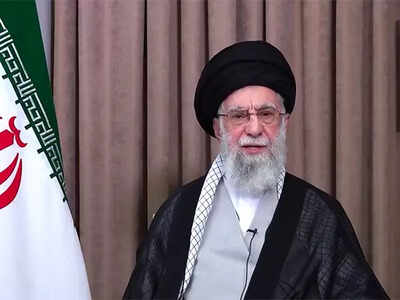
- The New York Times describes a leadership architecture built for continuity under fire, reporting that Supreme Leader Ayatollah Ali Khamenei has turned to Ali Larijani – a veteran power broker and current head of the Supreme National Security Council – to manage crisis governance, suppress unrest, coordinate with foreign partners and oversee nuclear negotiations while also planning for war. The Times reports Khamenei has instructed senior officials to build “four layers of succession” across key roles and to delegate authority to a tight circle in case communications are cut or he is killed.
- That’s not normal peacetime bureaucracy. That’s wartime succession planning.
- A core driver is mistrust of Trump’s intentions. Vali Nasr in the Financial Times argues Tehran sees negotiations less as a pathway to safety than a trap that ends in disarmament without guarantees, with Iran pressured to give up not only nuclear capabilities but also missiles and regional leverage – while sanctions and the threat of attack remain. In Nasr’s telling, the regime fears a “quick collapse or a slow death” if it accepts terms that strip deterrence without ensuring security.
- That logic helps explain why Tehran may be “raring to go” in a specific sense: not eager for destruction, but increasingly convinced war is inevitable – and increasingly determined to shape its opening conditions, duration and political consequences.
The big pictureIran’s preparation for conflict is built around three goals: prevent a leadership knockout, keep a retaliatory punch, and keep the streets from exploding.1. Don’t get decapitatedThe June strikes last year – the 12-day Israel-US campaign- are treated inside Iran as a lesson in vulnerability. The Times reports Israel’s surprise attack wiped out Iran’s senior military command chain in the first hours, pushing Tehran to redesign how authority flows during crisis.As per the WSJ, the Islamic Revolutionary Guard Corps is reviving its “mosaic defense” approach, giving commanders more autonomy to issue orders. The theory is straightforward: if senior leaders or central communications are hit, units can still fight.Tehran’s New Prime Minister, without the titleIran’s constitutional order still exists on paper: a president, a cabinet, a parliament. But power, in moments of acute threat, tends to condense into the hands of the people trusted to keep the system alive.The New York Times, in a deeply reported piece by Farnaz Fassihi, describes how Supreme Leader Ayatollah Ali Khamenei has leaned on Ali Larijani, the head of the Supreme National Security Council, to steer the country through a crisis that is simultaneously external and internal. Larijani, a veteran of the Revolutionary Guard and a hardened insider, has risen as President Masoud Pezeshkian’s authority wanes. Pezeshkian, the Times notes, has tried to lower expectations with a line he repeats publicly: “I’m a doctor, not a politician.”Larijani’s remit, per the Times, is not subtle. He has overseen the suppression of protests, managed diplomacy, and planned for war.“We are ready in our country,” Larijani said in an interview with Al Jazeera, as quoted by the Times. “We are definitely more powerful than before, we have prepared in the past seven, eight months, we found our weaknesses and fixed them. We are not looking for war, and we won’t start the war. But if they force it on us, we will respond.”This is the language of a state that believes the forcing is already underway.2. Keep the ability to hit back – and hurtIran’s deterrence is built less on airpower than on missiles, maritime disruption and regional reach.Iran conducted live-fire drills in the Strait of Hormuz and has signaled it could target “bases, facilities, and assets” in the region if attacked, language echoed in Iran’s letter to the UN cited by Reuters: “All bases, facilities, and assets of the hostile force in the region would constitute legitimate targets.”The Journal details Iranian naval deployments and surveillance around Hormuz, including remarks attributed to Guard navy commander Alireza Tangsiri that the waterway is under constant watch. It describes Iranian cruise missile launches from trucks and boats, framed as a warning that Tehran can threaten global oil flows and US interests.The Times reports Iran has positioned ballistic missile launchers along its western border near Iraq – close enough to strike Israel – and along southern Gulf shores within range of US bases and other targets. It also reports Iran periodically closed airspace to test missiles and even briefly shut Hormuz during exercises – a signal to global markets and regional capitals.Khamenei’s rhetoric is designed to reinforce that deterrence narrative. The Times quotes him warning: “The most powerful military in the world might receive such a slap that it won’t be able to get on its feet,” and notes he threatened to sink US warships in nearby waters. The Journal similarly quotes him: “More dangerous than the American warship is the weapon that can send it to the bottom of the sea.”From Tehran’s perspective, the point isn’t to defeat the US outright. It’s to raise the cost – across bases, shipping lanes and allied targets – enough to shape Washington’s political calculations and potentially shorten US appetite for escalation.
The experiences of the past year seem to have persuaded Trump of the virtues of war. The bombing of Iran’s nuclear installations in June and the capture of Nicolás Maduro, the president of Venezuela in January, went well. In their aftermath, Trump was exultant.But success can breed overconfidence. If Trump keeps deploying US troops in the search for quick wins, eventually he may get a prolonged defeat instead.
An article in the Financial Times
3. The war plan is also a domestic security planIf Iran were only preparing to fight the US its measures would look purely military: missile dispersal, naval exercises, hardened sites. But the clearest signal that Tehran expects a crisis of state survival is how much of its “war readiness” is actually aimed inward.A new wave of student protests has rocked Tehran, with demonstrations at Sharif University and the University of Tehran, chants of “women, life, freedom,” and calls for the overthrow of Khamenei. At Al Zahra University, AP verified videos showing female students chanting pro-Pahlavi slogans. At Sharif, a student described scuffles with the Basij militia.This unrest is not incidental. It is part of the battlefield in the regime’s mind.The Wall Street Journal reports that Iranian security forces have expanded monitoring, arrests, and intimidation to prevent another mass uprising if the country is struck. The Journal describes a campaign of preemption: hunting down protest participants, tightening surveillance, and arresting dissidents. It cites rights groups reporting tens of thousands of arrests and thousands of deaths, though the government has offered a lower death toll.A regime that expects to be bombed and overthrown does not merely protect bases. It protects street corners.In short: Tehran’s war preparation is inseparable from regime security.Zoom in: Why Tehran’s war logic is hardening nowFour dynamics are converging – and each pushes Iran toward a “ready for war” posture even as talks continue.1) Trump’s clock vs Iran’s bargaining instinctsForeign Policy describes a “velocity gap” – with a regional diplomat warning Trump seeks quick, visible wins and has limited tolerance for drawn-out negotiations. If Tehran believes it can slow-roll talks toward US midterm politics, that diplomat warns, it may be misreading how this White House operates.2) The deal terms look existential in TehranReuters reports a central friction is Washington’s demand that Iran end enrichment inside Iran, which the US views as a pathway to nuclear weapons. Iran insists on its right to “peaceful nuclear enrichment” and wants sanctions relief. Nasr’s FT essay argues Tehran sees demands expanding beyond nuclear constraints – missiles and regional proxies – as conditions that would increase vulnerability and make regime change more likely.3) Iran’s leaders think deterrence worked “enough” last timeNasr notes that Tehran did not treat the 12-day war as a straight defeat; it believes it absorbed severe strikes and retaliated until a ceasefire arrived short of total objectives. That interpretation matters because it nurtures confidence that a longer war could pressure the US and its partners – especially if energy routes and regional stability are strained.4) Iran is building continuity mechanisms for a decapitation scenarioThe Times reporting on layered succession and delegated authority is the clearest indicator Iran expects assassination risk and communications disruption. That’s not abstract planning – it’s the architecture of a state anticipating shock.What’s nextThree near-term paths are visible – and none are stable.1. A narrow nuclear deal, thin but face-savingReuters reports Iran is considering sending half of its highly enriched uranium abroad and diluting the rest, in exchange for sanctions relief and recognition of peaceful enrichment. If that framework becomes the spine of a deal, both sides could claim victory: Trump gets constraints; Tehran gets economic oxygen and a symbolic recognition of rights.2. Limited strikes to “shock” Tehran into concessionsAs per reports, the US planning is advanced, with options including targeting individuals. AP notes the US buildup bolsters Trump’s ability to strike if he chooses. A limited strike might be framed as coercive diplomacy – but regional officials warn it could backfire, potentially pushing Khamenei to abandon talks and widen the fight.3. A slide into a wider war shaped by retaliation cyclesIran’s explicit warning that US bases are targets raises the prospect of immediate regional spillover. Israel is preparing for missile responses, AP reports, and Prime Minister Benjamin Netanyahu has said: “We are prepared for any scenario,” adding that if Iran attacks, “they will experience a response they cannot even imagine.”The bottom line: Iran’s leaders increasingly appear to believe they may not be able to negotiate their way out of this – so they are building a state that can survive the first wave, strike back hard enough to change incentives, and police the streets long enough to outlast the shock.(With inputs from agencies)