World Happiness Report: Gujarat village stops cooking at home: How one shared kitchen in Chandanki is beating loneliness and boosting happiness through community living
Imagine a place where no one really bothers to cook in their own kitchen. Instead, every meal is lovingly prepared in one big, shared kitchen and then served in a cheerful community hall. Families, friends, and neighbours all come together, sit across from one another, and enjoy hot, traditional food while laughing, sharing stories, and sometimes even pouring their hearts out.It sounds like the kind of warm, close‑knit world you’d see in a feel‑good movie or read about in a novel, not something happening in real life. But in Chandanki, a small village in Gujarat, this is exactly how daily life looks for many residents. What might seem like a fairy‑tale setup is actually a thoughtful, practical, and deeply human experiment in community living, as per reports.
A village that eats together, stays connected
Chandanki’s unique food tradition began as a quiet response to a very real problem. Like many rural villages, Chandanki saw a wave of younger people moving to cities for jobs, leaving behind a growing number of elderly residents who often felt lonely and disconnected. With their children away and the routines of village life slowing down, days could feel long and isolating.That’s when the village head, Poonambhai Patel, took charge. Poonambhai, who had spent nearly two decades living in New York City before returning to Gujarat, decided to use his exposure to different ways of life to try something new. Instead of watching the elderly struggle alone, he proposed a simple but powerful idea: create one central kitchen and one community hall where everyone could come together—not just for food, but for connection, as per a TOI report.
The heartbeat of the village: One kitchen, one hall
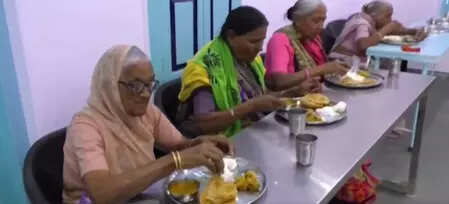
Today, Chandanki runs on a surprisingly simple system. The village has one central kitchen, usually managed by hired cooks, where traditional Gujarati meals are prepared every day.The food isn’t fancy or experimental; it’s the kind of familiar, comforting home‑style cooking that people grew up with—khichdi, roti, sabzi, chaas, and the occasional festive treat.Residents pay a small monthly fee—around ₹2,000 per person—and in return, they receive two nutritious meals every day. The cooks are paid a fixed salary, around ₹11,000 per month, making the whole setup both practical and sustainable.You get plenty of food but it is the warmth and love of home cooked food.The dining area is even more interesting. The community hall where everyone eats is air conditioned and run through solar panels, keeping it cool and modern but still close to village life. What makes this hall special is not just the food or the infrastructure but the conversations. As people sit together, sharing the same table, the hall gradually becomes a safe space. Women talk about family, elders share stories from the past, friends laugh at funny memories. People also open up about their worries, their health, and their loneliness. In a world where many families are scattered and people increasingly eat alone, Chandanki’s community meals are a quiet rebellion against isolation.
How people in Chandanki reacted to community kitchen: Overcoming doubts
No big change happens without resistance. Many villagers were skeptical when the idea of a central kitchen and community dining was first introduced in Chandanki. Some worried it would feel impersonal, others thought they’d lose the joy of cooking at home, and a few just resisted change. But slowly and steadily, the villagers opened up to this idea. The elderly realised that they no longer had to exert themselves cooking every day. Their daily chores reduced; and now they had more time to rest, chat, and simply be present. For everyone, the dining hall became more than a place to eat—it became a space to belong. Cooking may have moved from their kitchens, but the warmth of home moved into the hall. Laughter, concern, shared frustrations, and small celebrations all flowed where the meals were.
Why Chandanki’s story matters
Mehsana, Jan 25 (IANS) In his monthly radio programme, ‘Mann Ki Baat’, on Sunday, Prime Minister Narendra Modi mentioned Chandanki village in Bahucharaji taluka of Gujarat’s Mehsana district as an inspiring example of collective responsibility, highlighting its unique tradition of a community kitchen.
Chandanki isn’t just a cute village experiment; it’s a powerful reminder of what happens when communities prioritise people over protocol.By creating a shared kitchen and dining space, the village didn’t just solve the problem of loneliness.They also rebuilt a sense of collective care.They showed that meals don’t have to be eaten in silent, isolated corners. They can be shared, talked over, and woven into the fabric of social life. The ₹2,000 fee isn’t just for food; it’s an investment in connection. And the central kitchen isn’t just about efficiency; it’s about dignity—letting the elderly age with support, not solitude.
The importance of community and social relationships
Strong community and social relationships are one of the most important ingredients for happiness.When you feel seen, heard, and held by people around you, life feels lighter, even when things get tough. Friends, family, and neighbours give you a sense of belonging, lower anxiety, and make stress feel more manageable because you’re not carrying it all alone.The World Happiness Report shows that social connection, trust, and community belonging are important to how happy people feel across the world.A 2022 review in PLOS ONE highlights that social connectedness is a clear protective factor against depression and anxiety in the general population. Another large‑scale report on adult development at Harvard, which was conducted for 80 years, highlighted that good relationships and a sense of belonging are among the strongest predictors of long‑term happiness and even physical health.All of this shows one thing– our relationships hold the key to our happiness and longevity.In a fast‑paced, often lonely world, Chandanki offers a gentle suggestion: maybe a village that doesn’t cook at home is wiser than it looks. Maybe the real magic isn’t in the kitchen, but in the way a table gathered with neighbours can quietly heal hearts, one shared meal at a time.What are your views on the unique idea of a community kitchen in Gujarat’s Chandanki? Tell us in the comments below.