
After Nvidia share falls to zero in China, CEO Jensen Huang says: China should not have …
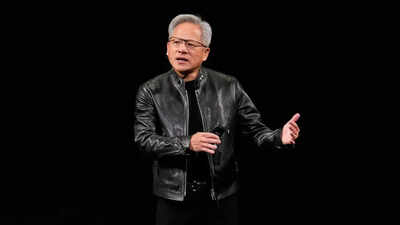
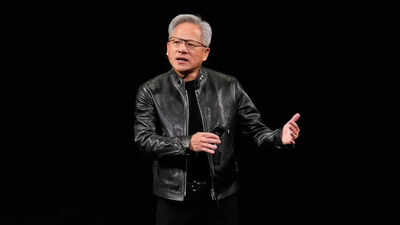
Nvidia CEO Jensen Huang has taken a firm stance on the global chip race, stating that for the company, America is the priority when it comes to selling its most advanced technology. Speaking at the Milken Institute Global Conference this week, Huang addressed the growing tension between national security and global trade. His comments come soon after the company’s market share of AI accelerators in China dropped to 0%.“By increasing our tax revenues, we improve our economic security and [that] contributes to national security,” Huang told the conference, which was attended by thousands of bankers, investors, policymakers and business executives.
Prioritising American lead in AI
When asked directly if China should have access to the “latest and greatest chips,” Huang’s answer was a definitive “No”. He emphasized that the US should maintain its leadership in artificial intelligence (AI) by ensuring it has “the first, the most and the best” technology.This includes Nvidia’s newest chips, such as the Vera Rubin AI platform, which were not part of previous trade discussions.
US should not abandon the Chinese market entirely
Despite his support for export limits on top-tier tech, Huang urged Washington to allow US companies to remain competitive in China. He argued that selling to global markets actually strengthens American security for two reasons.First that maximising exports will help US tech companies dominate global sales. Second, increasing tax revenues will contribute to economic and national security.
Nvidia AI accelerator share in China falls to zero
Huang recently said in an interview with the Special Competitive Studies Project (via Tom’s Hardware) that “In China, we have now dropped to zero” – a notable drop, given that the company owned a majority share just two years ago.“Conceding an entire market the size of China probably does not make a lot of strategic sense, so I think that has already largely backfired. Maybe it made sense at the time, but I think the policy really needs to be dynamic and needs to stay with the times,” he said, adding, “I think it would be fairly safe to say that having American chip companies and other companies in China makes a lot of sense.”Huang also warned that even without leading AI GPUs and software stacks developed in America, China remains a formidable competitor.“American companies win around the world. The argument there is that across the five-layer cake, there’s one particular layer that is too important because in the others, China can get ahead. They have cheaper energy. They have incredible talent. So, they [have] the number of science and math experts, and as a result of that, the number of AI researchers in China is quite extraordinary, it’s one of their national treasures,” Huang said.