History-maker at 12, how Argentine Faustino Oro became ‘Messi of Chess’ | Chess News
NEW DELHI: “Lionel Messi has shaken hands with paradise. The little boy from Rosario, Santa Fe, has just pitched up in heaven. He climbs in a galaxy of his own… as he falls in love with the object in the world that his heart most desired, it is hard to escape the supposition that he has rendered himself today, ‘the greatest of all time.‘”As the swift-footed, diminutive Argentinian stamped his lip mark on the FIFA World Cup trophy four years ago, these were the very fortunate words bestowed upon him by the melodious voice of renowned English commentator Peter Drury. Listening to these lines may take you back to that day when the “greatest” finally tasted his most coveted glory. Close your eyes and remember, the goosebumps may not be too far away, my friend.
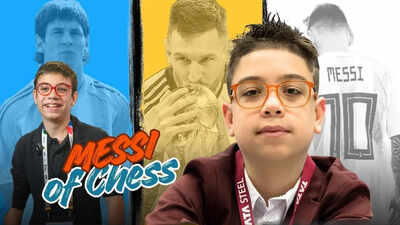
Over the years, the word “Messi” has grown into something far greater than merely a surname. It represents a rare breed of talent the world had never witnessed before. However, the term has been used so sparingly that whenever a talent is compared to this “Messi” phenomenon, it almost feels like an entry into an exclusive list of elites. Faustino Oro, a 12-year-old from the same South American land, is one of its latest entrants.This “Messi of Chess” became the talk of the town this week, as the boy with the round-shaped, colourful glasses finally became a Grandmaster (GM), the second-youngest player ever after USA’s Abhimanyu Mishra to attain the highest title in the game of 64 squares. And while ‘finally’ may sound almost absurd for someone who achieved the feat at just 12 years, 6 months, and 26 days, the hype surrounding him had existed for so long that the title itself had begun to feel overdue.And if not for a change in FIDE’s regulations that became effective in 2024, he would’ve done it much quicker, many feel so. “One of the greatest challenges was the rule change imposed by FIDE regarding Grandmaster norms,” Mario Petrucci, Executive Director of the Argentinian Chess Federation, told TimesofIndia.com during an exclusive conversation.
Where Oro stumbled in his pursuit
The path to the Grandmaster title is usually a marathon, but for Faustino, it was a race against a shifting finish line. Petrucci explained that the primary obstacle.“Previously, all three norms could be obtained in closed tournaments, but the new regulations required one of them to be achieved in open tournaments, where success depends not only on playing well but also heavily on pairings,” Petrucci noted.
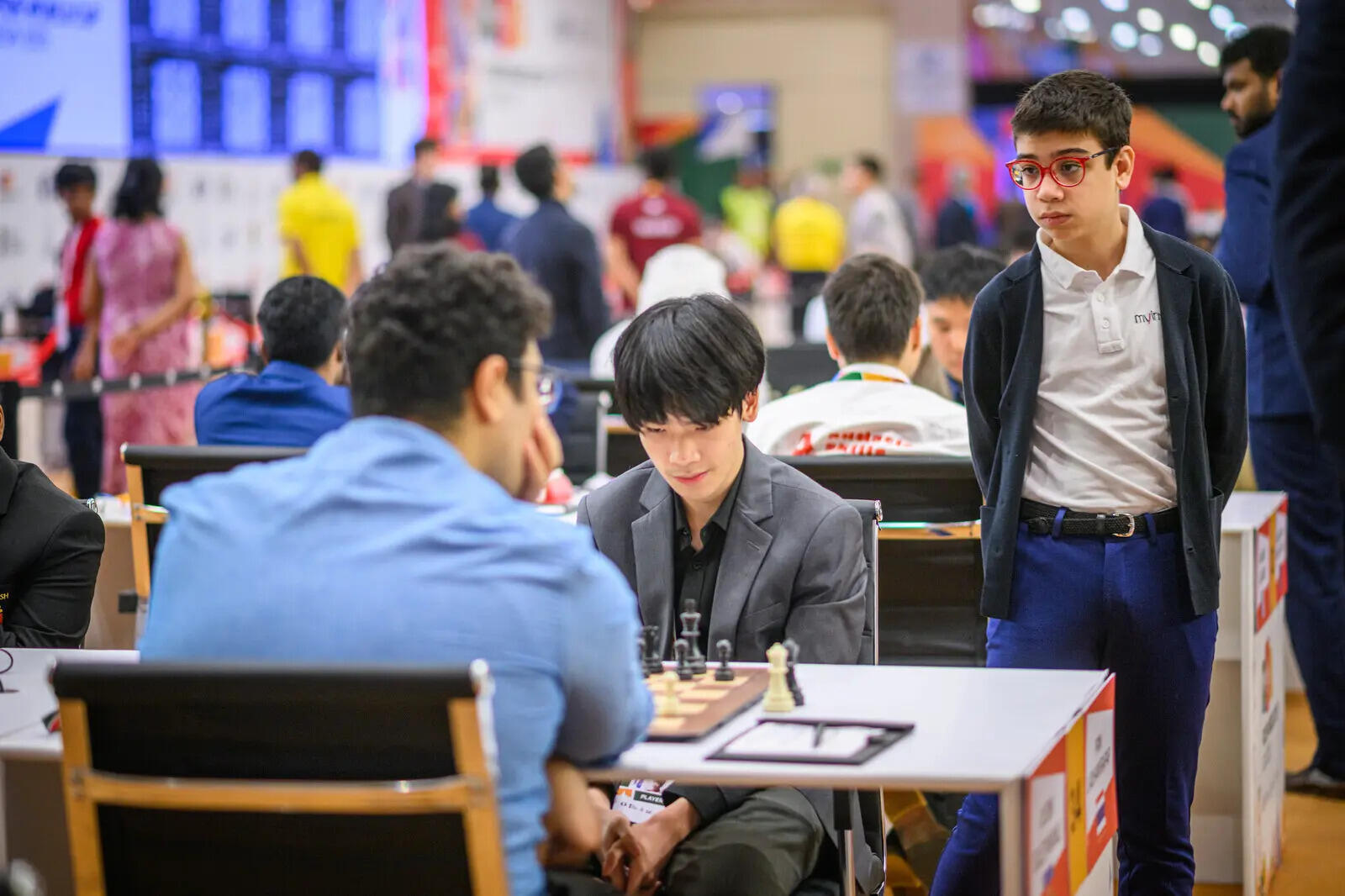
Faustino Oro in the FIDE World Cup last year in Goa, India (Photo by Michal Walusza/FIDE)
“For example, at the Menorca tournament (in April 2026), Faustino had scored 5 out of 6 points, but he was not paired against a Grandmaster, meaning he could no longer achieve the norm even if he won the remaining rounds,” he added.“Situations like that demonstrate how difficult it is to obtain norms, even for exceptionally talented players.”
From hallway football to the GM title
The legend of Faustino Oro began in the confined spaces of the COVID lockdown.Exactly six years ago, during the height of the pandemic, in an apartment in the San Cristóbal neighbourhood of Buenos Aires, Faustino spent much of his time playing football, breaking a few stuff in his home, while his parents decided to teach him a board game so the family could spend time together and perhaps save a few home decorations along the way. That board game was chess.“What began as simple entertainment quickly started turning into something extraordinary. Little by little, the results came: he defeated opponent after opponent, learned at an unusually rapid pace, and displayed a natural understanding of the game far beyond what would be expected for his age,” Petrucci recalled.
His routine is extremely demanding for a child his age. He studies chess approximately six hours a day
Mario Petrucci, Executive Director of the Argentinian Chess Federation
Know the Oro bloodline
While Faustino’s rise feels like a lightning strike, the “Oro” name already carried weight in the Argentine chess world. His grandfather, Luis Oro, was a strong player who, in his prime, played at the level of a modern-day FIDE Master.The connection is so profound that the very first game in Argentine GM Sergio Slipak’s book, “Fausti rumbo al oro mundial”, is a victory by his grandfather, illustrating what could be considered the family origins of this story.Even his father, Alejandro Oro, has an international rating, though Petrucci said, “he did not reach the chess strength that Faustino’s grandfather once had.”
Travelling to Barcelona three years ago
Recognising that they were harbouring a historic talent, Faustino’s parents, both high-level professionals at international companies, made the life-altering decision to move the family to Spain in December 2023. “Moving to Europe was a very important decision aimed at maximising his sporting development, since much of the world’s elite chess activity is concentrated there,” Petrucci explained.
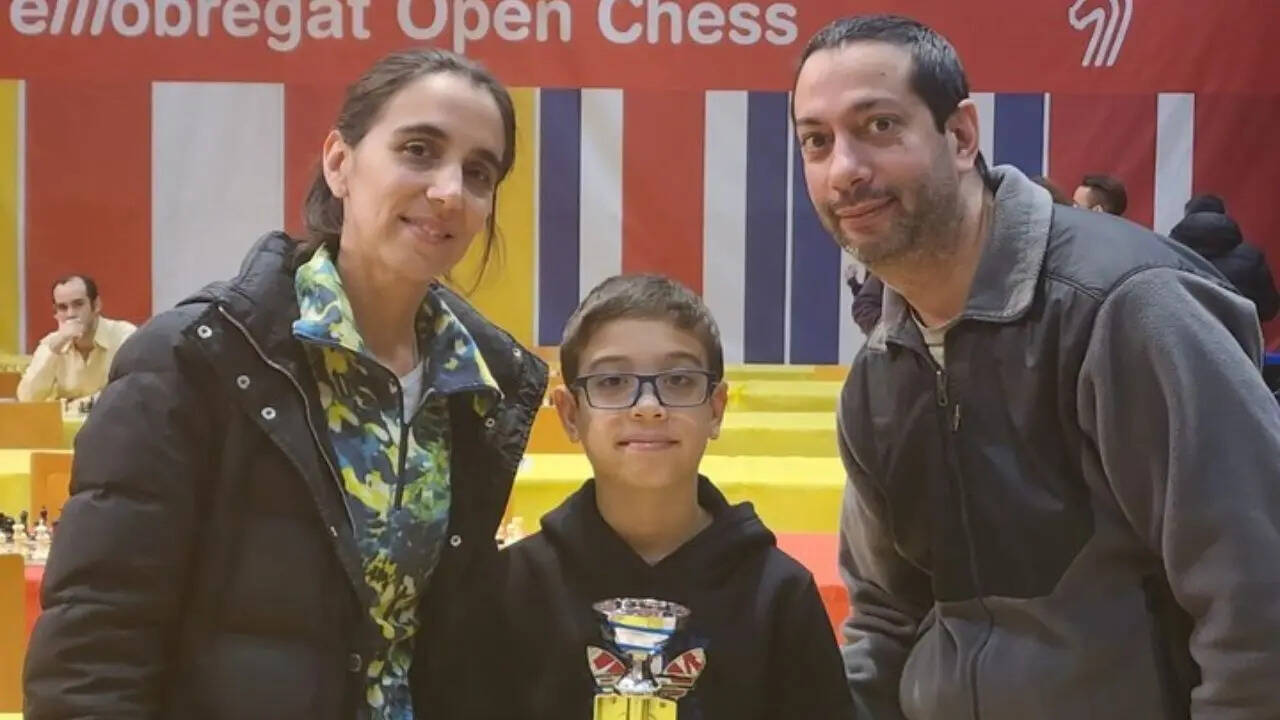
Faustino Oro with his mother Romina and father Alejandro (Special Arrangements)
Currently based in Barcelona, Faustino enjoys peace, security, and excellent opportunities.From there, he can effortlessly jump into professional leagues in Portugal, Italy, France, and Germany. Being an only child facilitated this transition, allowing him to stay highly active in the world’s most competitive chess environment.
Six hours of discipline, a lifetime of passion
Faustino’s schedule would break most adults. He attends school normally until midday, but the afternoon belongs to the board.“His routine is extremely demanding for a child his age: he studies chess approximately six hours a day, combining theoretical preparation, tactical training, game analysis, and online practice against very high-level players,” Petrucci revealed.He has been guided by various specialists over the years, starting with Jorge Rosito and moving through federation trainers who focused on specific phases.Nevertheless, the secret isn’t just the hours, it’s the love. “Faustino genuinely loves studying, analysing positions, and constantly playing games. He possesses a level of concentration and dedication that is highly unusual for someone his age,” he added.
Faustino is someone’s “Chessi “
When the world continued to call him “Messi of Chess”, it was six-time world chess champion Garry Kasparov who mentioned him publicly using the term “Chessi”, a fusion of “Chess” and “Messi”, earlier this year during the Tata Steel Chess tournament in Wijk Aan Zee, the Netherlands. For a 12-year-old, the weight of being compared to Lionel Messi could be crushing, but Faustino is built differently.“He handles it very naturally and with a good sense of humour. Faustino has been accustomed to enormous expectations from a very young age, yet he has maintained a very healthy and balanced personality. He also enjoys the nickname because Lionel Messi is one of his greatest sporting idols,” Petrucci remarked.If you want to know the true character of Faustino Oro, don’t look at his wins. Look at his losses. Petrucci points to an anecdote from Villa Martelli when Faustino was just nine years old.Competing for an International Master norm, the boy faced a nightmare start. “He did not have a good start and began by losing his first four games. Incredibly, showing resilience highly unusual for his age, he managed to recover and finish the tournament with 4 out of 9, scoring 3 wins and 2 draws in the final five rounds,” Petrucci said, quoting Slipak’s book, “Fausti rumbo al oro mundial”.As he prepares to debut for Argentina’s Olympiad team in Samarkand, Uzbekistan, an extraordinary feat for a 12-year-old, later this year, the world watches to see where the limit lies.His entourage feels that the goal is to hit a 2600 Elo rating and cement his place among the global elite. But Faustino Oro isn’t playing for ratings, he’s playing for the crown.ALSO READ: With Judit Polgar, D Gukesh’s coach as followers, 12-yo Aarav Sarbalia reshapes chess as contentAs Petrucci concludes, the boy with the colourful glasses has never wavered on his ultimate destination. “His greatest dream, something he has said throughout his short life, is to one day become World Chess Champion,” he signed off.