Iran fires 11 missiles at Israel in first attack since April truce; regional airspace restrictions widen
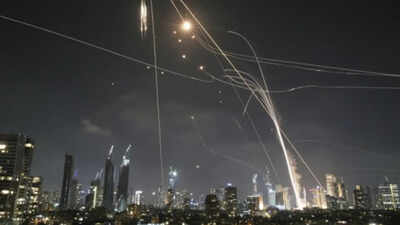
Iran launched 11 missiles towards Israel on Sunday in its first direct attack since a regional truce was announced on April 8, drawing a sharp response from Israeli leaders and prompting several countries to impose airspace restrictions. The Israel Defence Forces (IDF) said it intercepted all the missiles and warned that Iran would face a forceful response, with military chief Lieutenant General Eyal Zamir vowing to act “as soon as the green light is given”.The exchange heightened regional tensions, with Iran, Iraq and Syria among the countries that moved to close parts or all of their airspace as a precautionary measure.Air raid sirens sounded across large parts of northern and central Israel, including Haifa, Caesarea and Hadera, as residents were instructed to seek shelter. Israel’s emergency service Magen David Adom said no direct casualties were reported from the missile attacks, although several people sustained injuries while rushing to protected areas.Iranian state media reported an initial second wave of missiles towards Israel, while the IDF separately confirmed that additional launches had been fired towards the country.Tehran said the missile launches were intended as a warning following an Israeli strike on Beirut’s southern suburbs earlier in the day. Iran’s Foreign Ministry later described the operation as a defensive action conducted under Article 51 of the United Nations Charter and warned that any further Israeli action against Iran or Lebanon would be met with a stronger response.The Islamic Revolutionary Guard Corps (IRGC) also warned Israel against expanding its operations in Lebanon, saying it would face “more crushing and regretful blows” if it widened the conflict or responded militarily to Iran’s actions.Israeli officials strongly condemned the attack. Military spokesman Brigadier General Effie Defrin said: “The Iranian terrorist regime has made a grave mistake by once again choosing the path of terror.”Israeli military chief Lieutenant General Eyal Zamir vowed retaliation, saying the military would “strike the enemy with force as soon as the green light is given”, according to the IDF.Israel said its earlier strike in Beirut had targeted a Hezbollah command centre. Defrin said: “We struck in Dahiyeh in response to Hezbollah’s relentless attacks on the communities of northern Israel.”He added: “The IDF will continue to operate throughout Lebanon and will intensify its actions against the Hezbollah terrorist organisation.”The escalation also prompted security measures inside Israel. The government agency COGAT announced the closure of all crossings into the Gaza Strip, including the Kerem Shalom and Rafah crossings, until further notice.
Strike prompts air space closure in the region
Meanwhile, countries across the region imposed aviation restrictions as tensions mounted. Iraq temporarily closed its airspace and suspended air navigation, according to civil aviation officials.Iran also shut the western part of its airspace until further notice, the semi-official Tasnim news agency reported. In a further tightening of aviation measures, authorities suspended flight operations at Tehran’s Imam Khomeini International Airport until further notice, according to state-run IRNA.The developments marked one of the most significant escalations between Iran and Israel since the April ceasefire, raising fears of a broader regional confrontation and disrupting air travel across parts of the Middle East.