Jensen Huang: After admitting that Nvidia share in China has fallen to Zero, CEO Jensen Huang tells Chinese company Huawei: We have … |
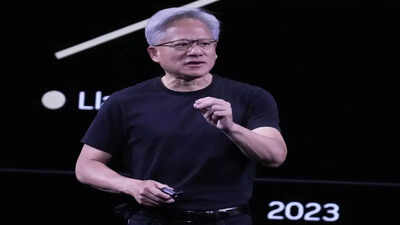
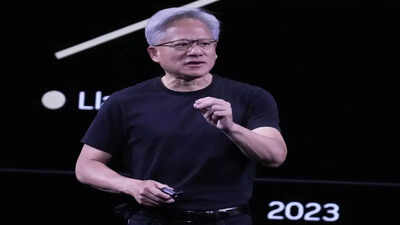
Nvidia CEO Jensen Huang has now acknowledged that the company has ‘largely conceded’ China’s artificial intelligence chip market to Huawei as US export restrictions continue to reshape the global semiconductor landscape, as reported by CNBC. Recently, Nvidia CEO Jensen Huang revealed that the company’s market share in China has dropped to ‘zero’. Huang made the remark during an interview on an episode of the Special Competitive Studies Project’s Memos to the President last month. “Nvidia had, you know, call it 90-some odd percent of the world’s market share. Today, in China, we have now dropped to zero,” said Huang. Now, Huang has praised Huawei and also said that Nvidia lost its market share in China to Huawei.
Nvidia reported record quarter, but China a flashpoint
Nvidia reported another blockbuster quarter, with revenue surging 85% year-over-year to $81.62 billion, alongside an $80 billion share buyback program and a dividend hike. Yet China remains a critical challenge. Huang told CNBC: “Huawei is very, very strong. They had a record year, they’ll likely have an extraordinary year coming up, and their local ecosystem of chip companies are doing quite well, because we’ve evacuated that market.”
US export controls shut Nvidia out
China once accounted for at least one-fifth of Nvidia’s data center revenue, but the company has been effectively shut out since Washington tightened restrictions on advanced AI chip exports. In April this year, Trump administration told Nvidia that it would need a license to sell chips to China and several other countries. Huang said Nvidia has told investors to “expect nothing” in terms of approvals for advanced chip sales.
The rise of Huawei and local ecosystem
The remarks made by Huang highlight how US policy has accelerated Beijing’s push for semiconductor self-sufficiency. Huawei and other local chipmakers are filling the gap left by Nvidia’s exit, with Huang admitting: “We’ve really largely conceded that market to them.”Despite the cautious tone, Huang said Nvidia would be “delighted” to return if conditions improve, noting the company’s 30-year presence in China and long-standing partnerships. Reuters recently reported that some Chinese firms, including Alibaba, Tencent, ByteDance, and JD.com, had received approval from the US Commerce Department to purchase Nvidia’s H200 chips, though broader easing of restrictions appears distant.
Investing in the AI ‘Five-Layer Cake’
Looking ahead, Huang described Nvidia’s opportunity as tied to the “five-layer cake” of the AI industry — spanning energy, chips, infrastructure, models, and applications. He said Nvidia’s priority is to support its supply chain amid surging demand: “As we’re growing hundreds of billions of dollars at a time, we have to support our supply chain so that they are able to support our growth.”