March to dominance: How victories in states is consolidating BJP in Parliament | India News
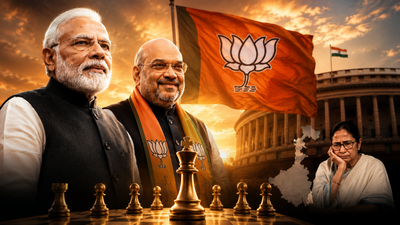
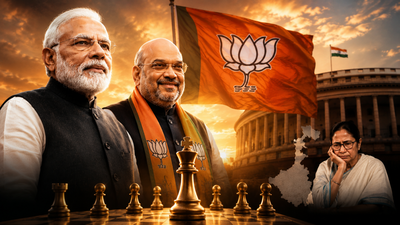
NEW DELHI: “Andhera chhatega, suraj niklega, kamal khilega.”When Atal Bihari Vajpayee uttered those words after the Bharatiya Janata Party (BJP) was reduced to just two seats in the 1984 Lok Sabha elections, it was more an expression of faith than a prophecy.More than four decades later, the BJP has emerged as the dominant force in Indian politics. The party that once struggled for parliamentary relevance now governs much of India, leads the National Democratic Alliance (NDA) at the Centre and increasingly dictates the national political conversation.Yet the BJP’s current political project goes beyond winning elections. The focus seems to be now on converting electoral victories, state-level expansion and opposition fragmentation into lasting parliamentary strength that can help advance its long-term legislative agenda.The developments in West Bengal following the BJP’s sweeping victory in the state are only the latest example of how political gains in the states can reshape the balance of power in New Delhi.
Why Parliament matters
The BJP’s rise over the past decade is reflected most clearly in Lok Sabha.In 2014, Narendra Modi led the party to 282 seats with a vote share of 31.3 per cent, becoming the first non-Congress leader in three decades to secure a majority on his own. Five years later, the BJP expanded its tally to 303 seats while increasing its vote share to 37.4 per cent.The 2024 Lok Sabha election, however, served as a reality check. Although the NDA comfortably returned to power, the BJP’s tally fell to 240 seats, leaving it dependent on allies, majorly JD(U)’s Nitish Kumar and TDP’s Chandrababu Naidu, for a parliamentary majority.From going all-time high to this dip makes the lesson for BJP leadership straightforward and obvious: forming a government requires a majority, but implementing transformational reforms requires much larger numbers.Several proposals associated with the BJP’s long-term agenda – including One Nation, One Election, the implementation of women’s reservation, the Uniform Civil Code and future delimitation-related reforms – would require broader parliamentary support and, in some cases, constitutional amendments.This reality places a renewed emphasis on parliamentary arithmetic.
Bengal: Not just another state win
No state better illustrates the BJP’s current strategy than West Bengal.For more than a decade, Bengal represented the BJP’s most ambitious expansion project. The party invested enormous organisational resources, leadership attention and political capital into challenging Mamata Banerjee‘s Trinamool Congress.In 2026, that effort paid off dramatically.The BJP won 208 seats in the 294-member assembly on May 4, ending the TMC’s 15-year rule and securing one of the biggest political victories of the PM Modi-Shah era.The scale of the triumph becomes clearer when compared with 2021, when the BJP had won just 77 seats. In five years, the party added 130 seats, while the TMC’s tally collapsed from 215 to around 80.The result was not merely an electoral victory. It triggered a political crisis within the opposition camp.Within weeks, dozens of TMC legislators gravitated towards a rebel camp led by Ritabrata Banerjee. Senior leaders publicly questioned the party leadership, while reports emerged that a significant section of MPs could eventually align with the NDA.
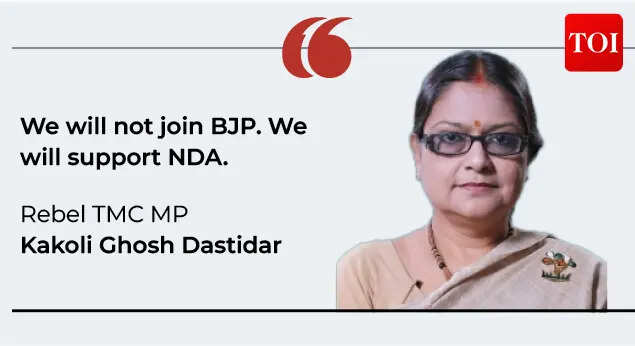
Whether such a realignment ultimately materialises or not in the coming weeks, the political impact is already evident. The BJP has not only captured one of the politically important states but has also weakened a regional rival that once appeared invincible.
Delhi: Ending a 27-year exile
The Bengal breakthrough was preceded by a remarkable comeback in the national capital.For twenty-seven years, the BJP remained out of power in Delhi despite dominating parliamentary elections. The rise of Arvind Kejriwal and the Aam Aadmi Party had fundamentally altered the state’s two-party equation.That changed dramatically in 2025.The BJP returned to power after nearly three decades by winning 48 of the assembly’s 70 seats. The AAP was reduced to 22 seats, while several of its tallest leaders, including Arvind Kejriwal and Manish Sisodia, lost their constituencies.The vote share figures underline how decisive the victory was. The BJP secured 45.6 per cent of the vote against AAP’s 43.5 per cent, yet that narrow gap translated into a massive seat advantage.The win led to the BJP recovering from the setbacks of 2024 Lok Sabha elections while simultaneously weakening one of the opposition’s most vocal national players. After the assembly results, several senior leaders also switched sides and joined the BJP.
Bihar: From junior partner to principal force
If Delhi showcased momentum, Bihar demonstrated consolidation.For decades, the BJP operated as the junior partner to Nitish Kumar’s Janata Dal (United). Even when the NDA dominated Bihar politics, Nitish remained the alliance’s principal face.The 2025 assembly election altered that equation.The NDA comfortably crossed the 200-seat mark in the 243-member assembly. More significantly, the BJP contested on an equal footing with the JD(U), reflecting its growing confidence and organisational strength.The verdict reinforced the BJP’s standing in one of India’s most politically influential states and strengthened its position ahead of future parliamentary contests.Bihar also assumes additional significance because of the looming delimitation exercise. Any future reconfiguration of parliamentary representation is likely to place states such as Bihar at the centre of national political debates.A stronger BJP in Bihar therefore carries implications that extend far beyond Patna.Since the JD(U) was already a constituent of the NDA, there was no significant realignment at the parliamentary level. However, reports suggested that Nitish Kumar’s eventual decision to hand over the chief minister’s post to the BJP was influenced by growing sentiment within his own party, with several leaders seen as increasingly comfortable with a larger role for the saffron party.
Odisha: Breaking a regional fortress
Few victories better demonstrate the BJP’s expanding geographical reach than Odisha.The state sends 21 MPs to the Lok Sabha and elects 10 members to the Rajya Sabha, making it increasingly important in parliamentary calculations.For nearly a quarter century, Odisha politics revolved around Naveen Patnaik and the Biju Janata Dal. The BJP’s rise and eventual victory ended one of India’s longest-running regional political eras and gave the party its first government in the state.The significance extends beyond the assembly.The BJP’s triumph in Odisha did not remain confined to the assembly. In the months that followed, several BJD MPs and senior leaders switched sides, allowing the BJP to convert its electoral victory into broader political and parliamentary consolidation.Control of the state government also gives the BJP influence over future Rajya Sabha elections while expanding its footprint in eastern India. Odisha’s transformation from a BJD bastion into a BJP stronghold stands as one of the most consequential political shifts of recent years.
Maharashtra
Likewise, in Maharashtra, the Maha Vikas Aghadi’s strong performance in the 2024 Lok Sabha elections suffered a severe setback in the assembly elections held just months later.In the parliamentary polls, the Maha Vikas Aghadi, comprising the Uddhav Thackeray-led Shiv Sena (UBT), Sharad Pawar’s NCP (SP) and the Congress, delivered a strong showing.The result posed a major challenge to the BJP and its allies, with the Mahayuti alliance’s relatively weaker Lok Sabha performance reducing the BJP’s strength at the national level.The BJP’s performance in India’s two largest contributors to Lok Sabha strength, Uttar Pradesh and Maharashtra, reduced its overall tally, resulting in the NDA falling below the 300-seat mark for the first time under Prime Minister Modi.However, the political picture changed dramatically in the assembly elections that followed.The BJP-led Mahayuti alliance reclaimed its dominance, decisively defeating the Maha Vikas Aghadi and securing more than 230 seats in the 288-member assembly with a massive mandate.The outcome triggered fresh political realignments in the state, with several leaders from Uddhav Thackeray’s Shiv Sena (UBT), Sharad Pawar’s NCP (SP) and the Congress switching sides and joining the BJP, further strengthening the saffron party’s organisational and political muscle.
Punjab and the AAP rupture: Gains without elections
The BJP’s parliamentary consolidation is not being driven solely by electoral victories.One of the most significant developments came from Punjab and the Aam Aadmi Party.Weeks before the turmoil engulfed the Trinamool Congress, AAP witnessed its biggest internal rupture. Rajya Sabha MP Raghav Chadha, once considered one of Arvind Kejriwal’s closest lieutenants, led a rebellion that fundamentally altered the party’s parliamentary strength.Chadha, unhappy with his position within the party, succeeded in bringing a large section of AAP’s Rajya Sabha members into his camp. The faction crossed the two-thirds threshold required under the anti-defection law, making the split legally sustainable before eventually aligning with the BJP.The move handed the BJP an unexpected boost in the Upper House without a single vote being cast.
Tamil Nadu: The next frontier?
In the last couple of months, Tamil Nadu is increasingly attracting attention in New Delhi.The emergence of Vijay’s TVK has disrupted the state’s traditional political order and complicated equations that had long governed Dravidian politics. The resulting churn has generated fresh tensions within the opposition ecosystem and introduced new uncertainties into the state’s political future.The BJP’s alliance with the AIADMK provides it with a stronger electoral platform, but the party’s interest in Tamil Nadu may not be confined to elections alone.The DMK remains one of the largest opposition parties in Parliament and commands significant influence in both Houses. The party is currently in aloof mode after the Congress quickly jumped the ship to support Vijay’s TVK in government formation. The implications are such that the DMK has also publicly denounced the opposition’s INDIA bloc.This may provide the BJP with an opening.While the ideological divide between the BJP and DMK remains substantial, politics often produces issue-based alignments on specific legislation.As the BJP seeks broader support for reforms such as women’s reservation, One Nation One Election and other structural changes, maintaining channels of communication with powerful regional parties could become politically valuable.As Stalin seeks to rebuild after poll setback and ally loss, the DMK’s role in Parliament could come under greater scrutiny. Whether the BJP can draw the party into supporting key reforms on a case-by-case basis remains a question worth watching.