
Python in a podcast: Raj Shamani’s Figuring Out features an invasive guest as American explorer brings a live snake |
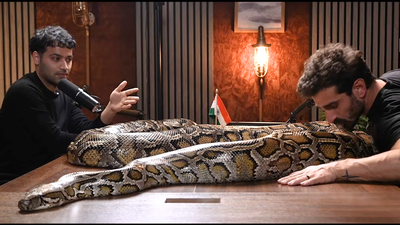
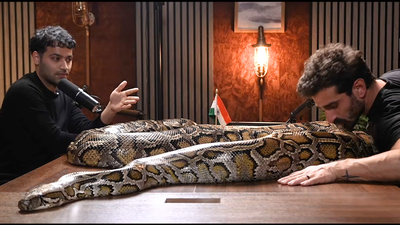
In a moment that instantly set the tone for an unusual episode, Raj Shamani’s Figuring Out podcast featured a live snake in the studio, brought in by American wildlife explorer Paul Rosolie. The guest was a real Burmese python handled in a controlled setting during what was described as the show’s 500th special episode . As the conversation unfolded, the snake became a teaching moment about fear, behaviour and the many ways humans misunderstand wildlife. Its calm yet powerful presence created visible tension in the studio and made the segment one of the most memorable parts of the episode.
The live python moment in the podcast
Before introducing the large python, Paul Rosolie first brought out a smaller non-venomous boa constrictor for a hands-on demonstration. The young snake was calm and slow-moving, using the host’s hand like a branch to balance itself. Rosolie explained that snakes are defensive by nature and focus on feeling secure in their surroundings. Through gentle, steady interaction, he showed how the animal responded to stability, turning the moment into a clear lesson in snake behaviour .The introduction of the larger Burmese python then raised the intensity of the segment. Its presence challenged fear while demonstrating how snakes behave when they are not disturbed. The python moved slowly, sensing its surroundings with its tongue, which Rosolie described as a key way snakes perceive the world.That calm, however, did not remain constant. After repeated handling and a sudden close interaction, the python reacted defensively by hissing and striking. Rosolie later noted that the snake had already been signalling discomfort through its body language, reinforcing the idea that such reactions follow warning signs rather than appearing suddenly .What unfolded on camera was a gradual shift from hesitation to curiosity as the animal moved across the table and over the host, revealing both its strength and controlled behaviour.The Burmese python also carries a very different reputation outside its natural range. In places such as the Florida Everglades, it has become an invasive apex predator capable of preying on a wide range of animals, including alligators, while disrupting local ecosystems . Its spread reflects the broader ecological consequences of human activity, including the exotic pet trade.
Built like a living elastic machine
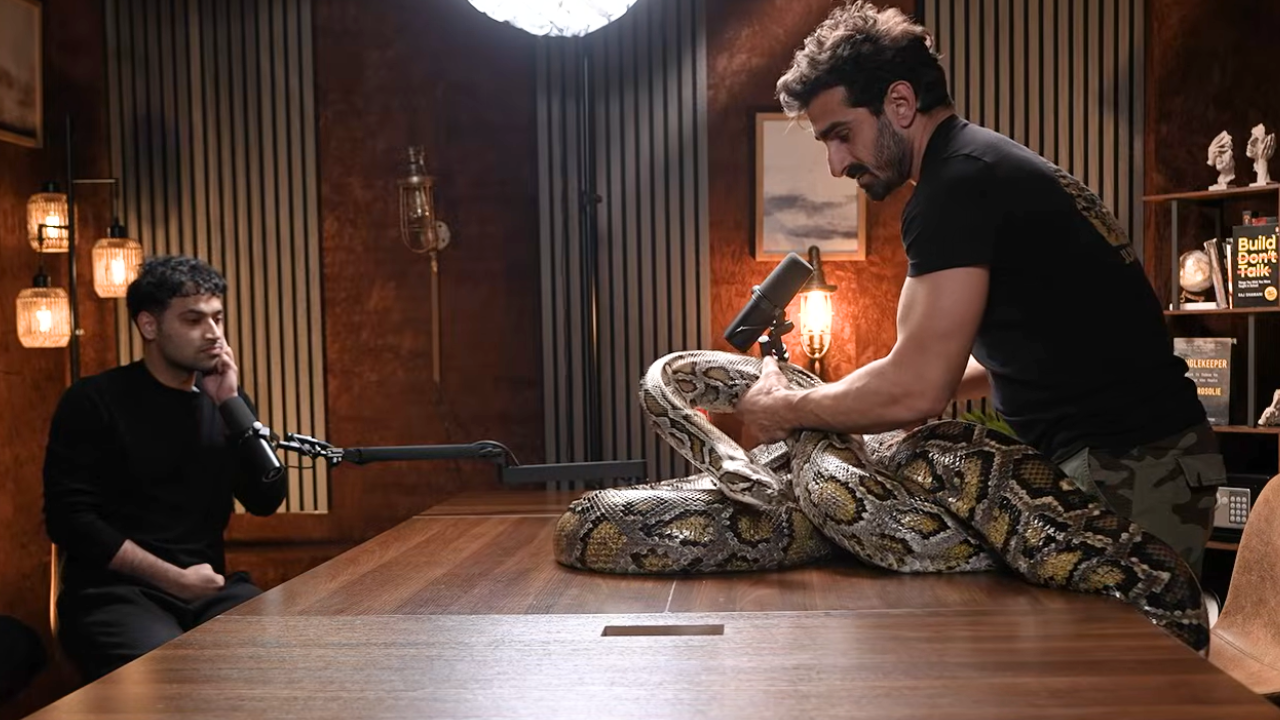
One of the most fascinating things about the Burmese python is its biology. Often described as being built like a “living elastic machine”, the snake does not unhinge its jaws. Instead, it uses highly flexible ligaments that allow each side to move independently.That design lets it consume prey much larger than its head. Its body supports this ability with expandable ribs and highly stretchable skin.The transcript also shows just how powerful the animal is. During the podcast, Rosolie pointed out how difficult it was to lift the python, estimating it to be around 14 to 15 feet long and weighing close to 180 pounds . Its strength was obvious as it wrapped and shifted its weight across the host.After feeding, a python’s metabolism spikes and its organs temporarily enlarge to process food, including bones. Once digestion is complete, the body returns to its normal state, allowing the snake to conserve energy for long periods.The python also uses its tongue and the Jacobson’s organ to detect chemical cues in the environment, helping it locate prey and navigate its surroundings.
Fear vs reality
A lot of the fear around snakes comes from misunderstanding. As Rosolie stressed, snakes are defensive by nature and react when they feel threatened.The podcast offered a clear example of that behaviour. The python stayed calm when handled gently and reacted only after signs of stress were ignored. What many people read as aggression is often a defensive response.Snakes rely on stealth and energy conservation, and they usually avoid confrontation with humans.The image of a large python moving across a podcast table and interacting with the host made the episode stand out. It turned into a vivid demonstration of how wildlife behaves when observed carefully and understood with more context.