
Ships cross Hormuz despite US blockade: Trackers vs US military claims
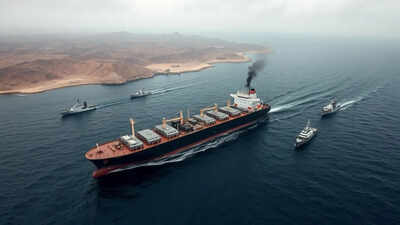
Several Iran-linked vessels managed to transit the Strait of Hormuz despite a US naval blockade, maritime tracking data showed on Tuesday, even as the US military insisted no ship had successfully breached the restrictions and at least six were forced to turn back.Shipping analytics firm Kpler said the Liberia-flagged bulk carrier Christianna crossed the strait after unloading 74,000 tonnes of corn at the Iranian port of Bandar Imam Khomeini in the Gulf, passing Iran’s Larak Island in the strait around on Monday, news agency AFP reported.
A second ship, the Comoros-flagged tanker Elpis, was near Larak Island around 1100 GMT and cleared the strait about 1600 GMT. It was loaded with 31,000 tonnes of methanol, having left the Iranian port of Bushehr in the Gulf on March 31, Kpler data showed.The tracker indicated that the other vessels that crossed included the Argo Maris, which had also sailed from Iran.Maritime experts cautioned that tracking data in the region remains unreliable, with signals often disrupted or manipulated amid ongoing tensions.In contrast, the US military said the blockade remains fully effective. The US Central Command (CENTCOM) stated that “no ships made it past the US blockade” in the first 24 hours and that six merchant vessels complied with orders to turn back towards Iranian ports.The blockade, announced by President Donald Trump after the collapse of peace talks with Tehran in Pakistan, applies to all vessels entering or leaving Iranian ports across the Gulf and the Gulf of Oman. CENTCOM said it is being enforced “impartially” on ships of all nationalities.More than 10,000 US personnel, supported by over a dozen warships and multiple aircraft, are involved in enforcing the operation. The US has warned that any unauthorised vessel entering the blockaded zone could face interception, diversion or seizure. However, humanitarian shipments, including food and medical supplies, are allowed subject to inspection.The move comes amid heightened tensions following weeks of conflict between the US, Israel and Iran, which has already disrupted maritime traffic through the Strait of Hormuz — a critical chokepoint for nearly a fifth of global oil and gas supplies.The blockade has added to volatility in global energy markets, with oil prices briefly rising above $100 per barrel before easing on hopes of renewed diplomacy. Analysts warn the operation could provoke retaliation from Tehran and further strain an already fragile regional situation.