There’s so much more in National Parks that we fail to see
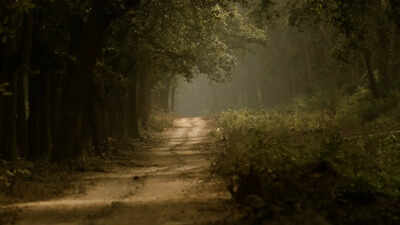
I am a wildlife enthusiast, an animal lover, and an ornithophile, simply put, someone deeply fascinated by birds. I cherish the company of forests far more than prolonged human interaction beyond the boundaries of work. From the tranquil backwaters of Vembanad Lake to the dense wilderness of Satpura National Park, Jim Corbett, and Ranthambore National Park places that feel like second homes to me-I spend my weekends breathing in the crisp forest air, listening to the hauntingly beautiful calls of the nightjar, and sitting quietly in lonely mountain cottages, gazing at distant village lights flickering like fireflies upon dark hillsides.I have encountered tigers many times over the years. The tigers of Corbett, in particular, and those in Satpura too, possess a remarkable confidence. They are unbothered by human presence and continue with their routines with an almost regal indifference. Deer often wander close to safari tracks as well, though the unspoken rule of every national park is clear — one must never disturb, feed, or provoke an animal in any way. Yet, despite the rumble of vehicles and the occasional chatter of tourists, the animals seem to tolerate our presence with astonishing grace.
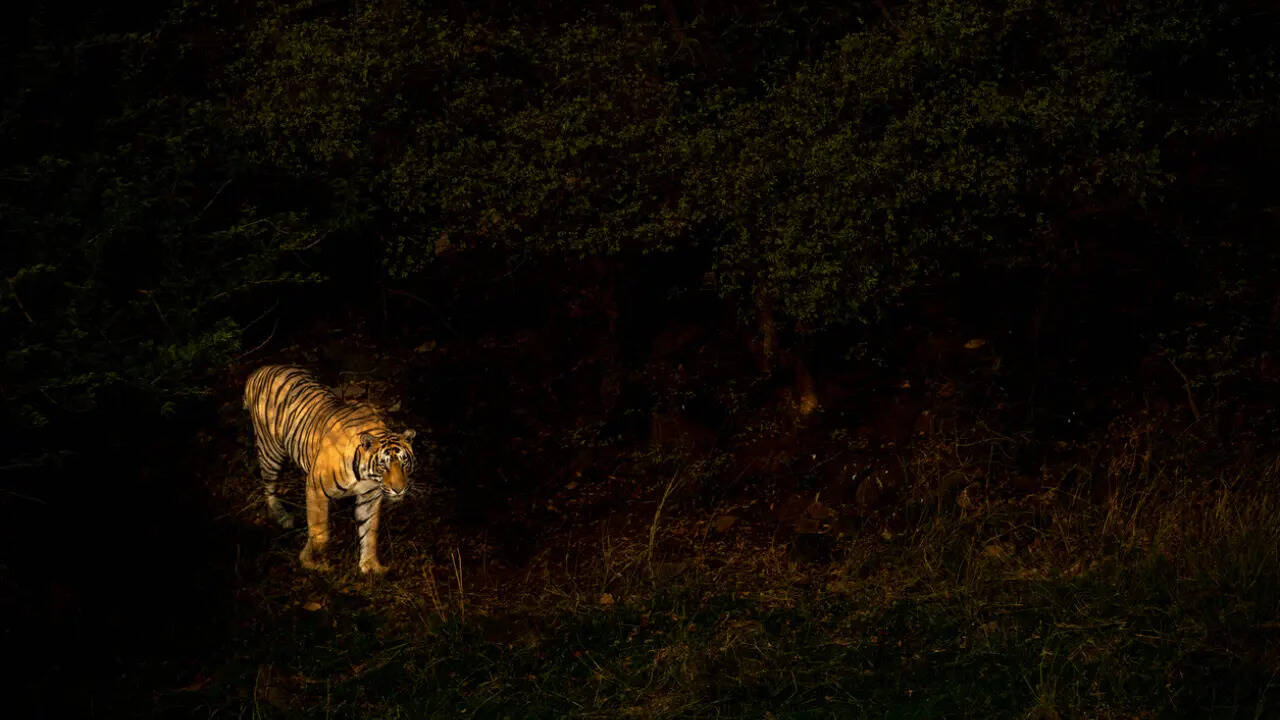
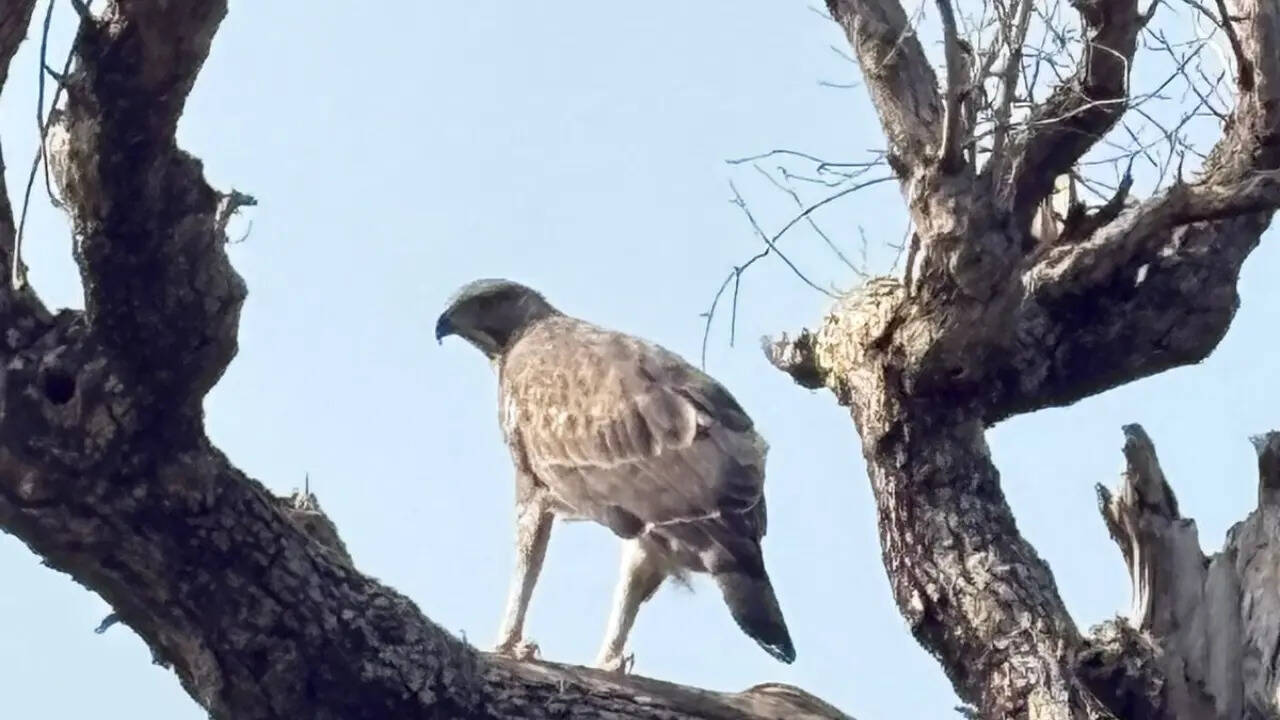
Most days, I am content merely spotting a few rare birds, perhaps a crested serpent eagle gliding overhead, a hornbill hidden among branches, or herds of sambar and chital grazing in silence. On fortunate evenings, there may be a barking deer darting into the undergrowth, a porcupine shuffling through the leaves, or a hare vanishing like smoke into the dusk. A tiger, however, is never guaranteed. And perhaps that uncertainty is what makes every sighting unforgettable.There is something profoundly unsettling and awe-inspiring about locking eyes with a tiger in the wild. It stirs an ancient fear buried somewhere deep within us — a reminder that we are no longer the masters of the landscape. In that moment, one does not quite know whether to look away, remain still, or simply surrender to wonder.
One such encounter remains etched in my memory forever. I was staying at Jim Corbett Marriott Resort & Spa. The place need a mention because it is right on the bank of the Kosi, overlooking the mountains. From its rooms one can see the hills and sometimes from your room you can spot a mountain goat or a group of ponies. From the wooden deck of the resort, one can watch the river flowing quietly below while the forest dissolves slowly into twilight. The cottages are scattered generously apart, offering the kind of solitude one seeks in the jungle — privacy not merely from people, but from the noise of ordinary life.One evening, after returning from a safari, I sat alone on the deck watching the fading light surrender itself to darkness. It was the month of November and there was a chill in the air. The forest was slipping into silence when suddenly I sensed something watching me. Across the riverbank, partially concealed by shadows, was a pair of luminous eyes fixed steadily upon me. I strained my eyes to look deeper into the forest.I froze.As my vision adjusted, I realized I was looking at a tigress. She stood still for a few moments, powerful yet impossibly graceful. Then I noticed movement behind her — two tiny cubs stumbling cautiously through the grass. The tigress glanced toward me again, almost as though weighing whether I posed a threat before she approached the water.
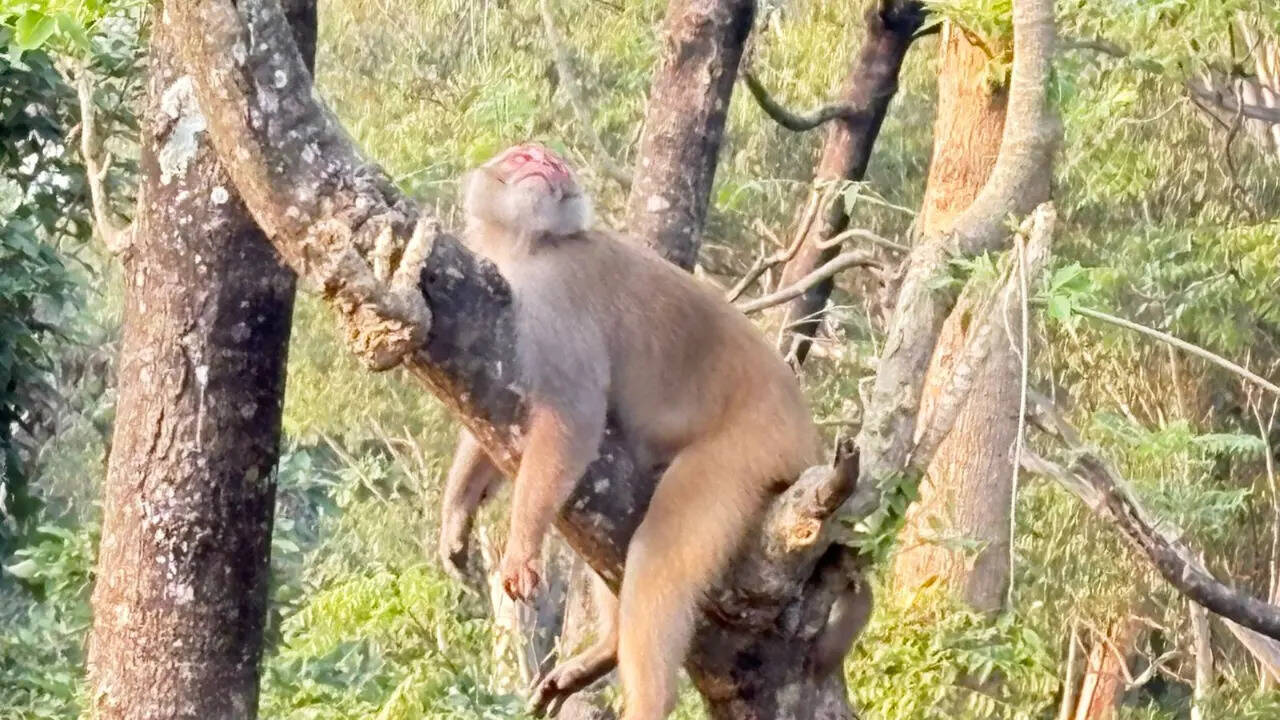
I did not move. I barely breathed.The jungle around us seemed to hold its breath too. Slowly, reassured perhaps by my stillness, she stepped toward the river. The cubs followed close behind. In the gathering darkness, I could hear the soft sound of water as they drank. Soon the night swallowed them completely, and I could no longer see their forms — only imagine them melting silently back into the forest where they belonged. .I remained seated there long after they had disappeared, listening to the river, overwhelmed by the quiet privilege of having witnessed something so intimate, so wild, and so impossibly beautiful.I have stayed in this area of Corbett for innumerable number of times at different properties-from Taj to Zana to Riverview Retreat, but seeing a tiger or even imagining it can come in this area was absolutely out of question.The next morning, I left for the safari at five. Dawn had only just begun to stir. The air was cold and fragrant with damp earth, while the eastern sky glowed in soft shades of orange, patiently awaiting the sun’s arrival. The forest was waking slowly — birds calling from hidden branches, leaves trembling in the breeze, distant alarm calls occasionally breaking the silence.For hours, our jeep wandered through the wilderness chasing possibilities that dissolved into nothingness. A spotted deer here, a serpent eagle there, perhaps the fleeting shadow of a langur leaping across branches — but no tiger.“There is a tigress with two cubs nearby,” our guide said quietly. “She was spotted yesterday.”Hope flickered briefly among us, but as the morning advanced and the heat began to rise, that hope slowly faded into resignation. The jungle had become still. Even the birds seemed quieter now. We had almost accepted defeat and begun our return journey.On the way back, I remember admiring the delicate nests of weaver birds swaying gently from tree branches like little woven lanterns. Then, without warning, the silence shattered.
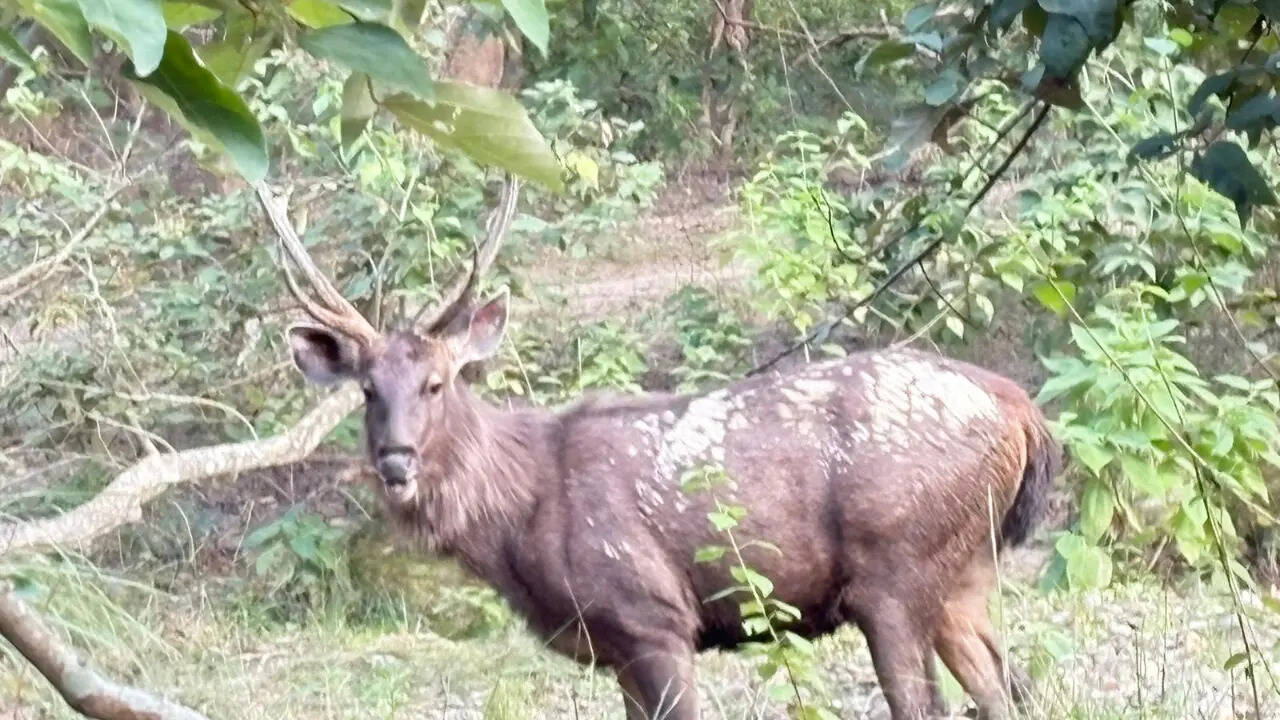
A shrill alarm call rang through the forest.The jeeps ahead screeched to a halt. One after another, vehicles began piling up along the narrow track. And then I saw her.Right in front of us stood the tigress.Magnificent. Silent. Burning with an untamed dignity that no words can ever truly describe. Beside her, moving cautiously through the grass, were her two cubs. Tiny, uncertain, trusting only their mother.For a moment, she looked startled. Her muscles tightened as though preparing to retreat, yet she held her ground. Then her eyes met mine.I cannot explain what passed through me in that instant. My blood seemed to freeze, yet at the same time my heart filled with an unbearable ache. Everyone around me saw a tiger — a thrilling sighting, a triumphant moment for photographs and excitement. But what I saw was a mother. A frightened mother surrounded by machines and strangers in her own home.She looked powerful, yes — but also cornered. Vulnerable.
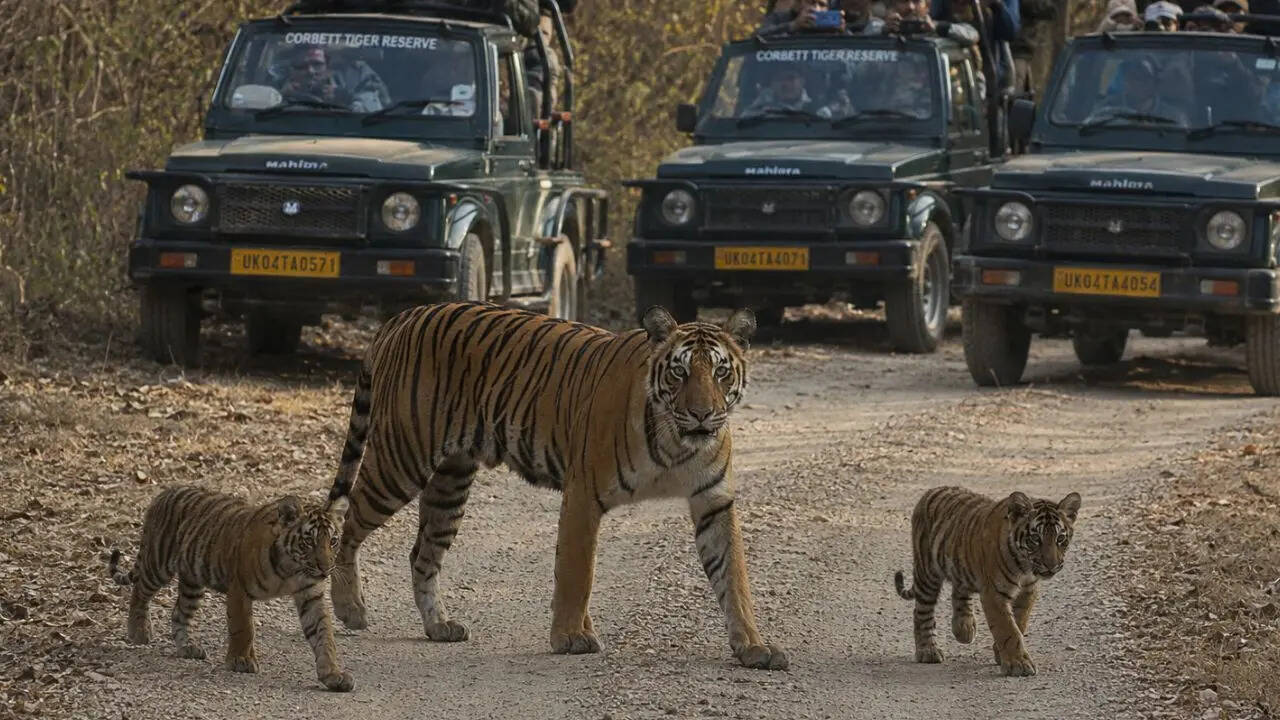
There she was, the undisputed queen of the forest, reduced to something that suddenly felt heartbreakingly close to an exhibit in a zoo. Jeeps hemmed her in from every side. Cameras clicked relentlessly. Voices whispered excitedly. And in her eyes, beneath the fierce amber glow, I thought I saw confusion… perhaps even fear.I felt ashamed.Ashamed that our excitement had become an intrusion. Ashamed that we had transformed a sacred wilderness into a spectacle. We speak endlessly about loving wildlife, yet sometimes our love arrives too loudly, too selfishly, too demanding.
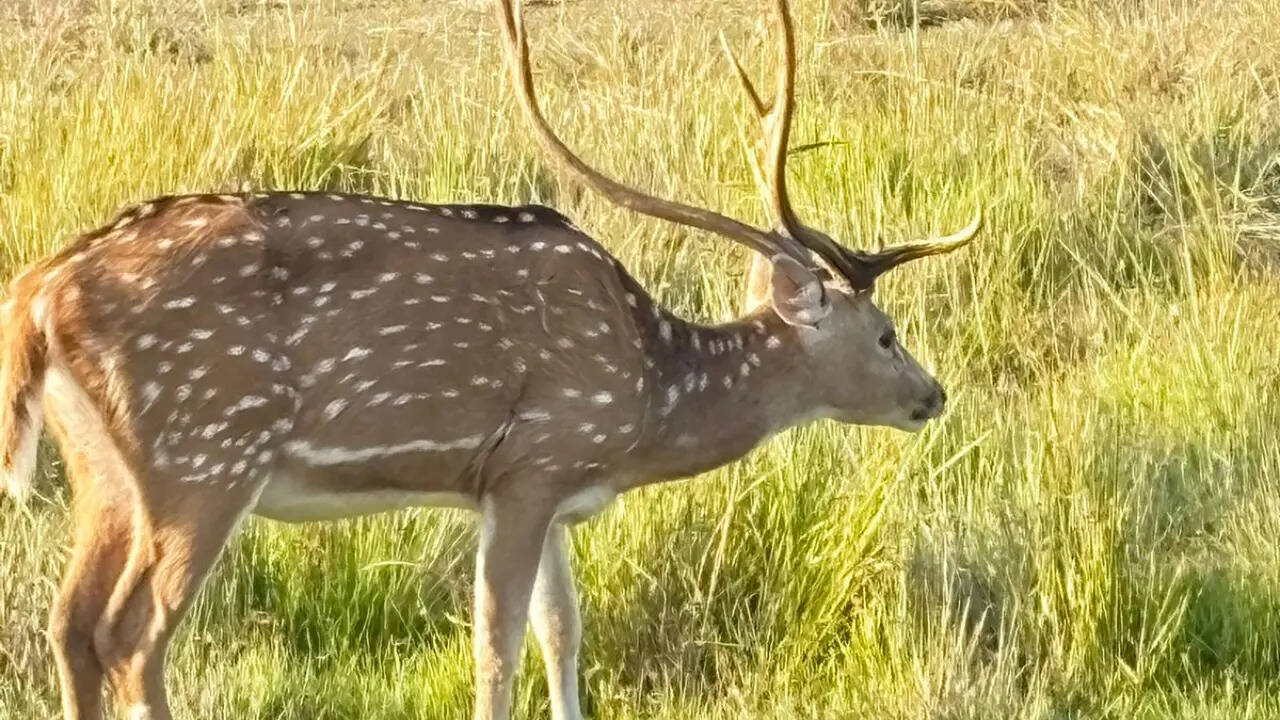
The tigress looked around once more, almost uncertain of which path remained open to her. Then, with extraordinary grace, she slowly disappeared into the vegetation. Not defeated, not submissive — only cautious, as though unwilling to reveal her fear before those watching her. The cubs vanished behind her like drifting shadows, and within seconds the jungle swallowed them whole.But her eyes remained with me.They haunt me even now.Long after the safari ended, long after the jeeps drove away and the tourists celebrated their sighting, I kept thinking about what we are doing in the name of recreation. Jim Corbett National Park now has close to 300 tigers, a remarkable conservation success. Yet at times, parts of the forest feel less like a sanctuary and more like a crowded exhibition where animals are relentlessly pursued for human gratification.Yes, regulations exist. There are limits on vehicle movement and designated safari zones. But one cannot help wondering whether enough is truly being done. How many vehicles should be allowed into a forest at dawn? At what point does wildlife tourism stop being appreciation and begin turning into harassment?We enter these forests believing ourselves to be admirers of nature. But perhaps the greater test of love is restraint — knowing when to stop chasing, when to remain silent, and when to leave the wild untouched in its own magnificent solitude.