This UK couple is growing actual chairs from living trees
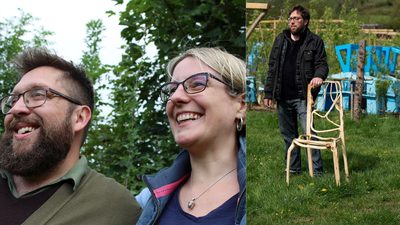
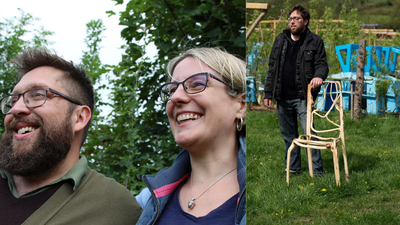
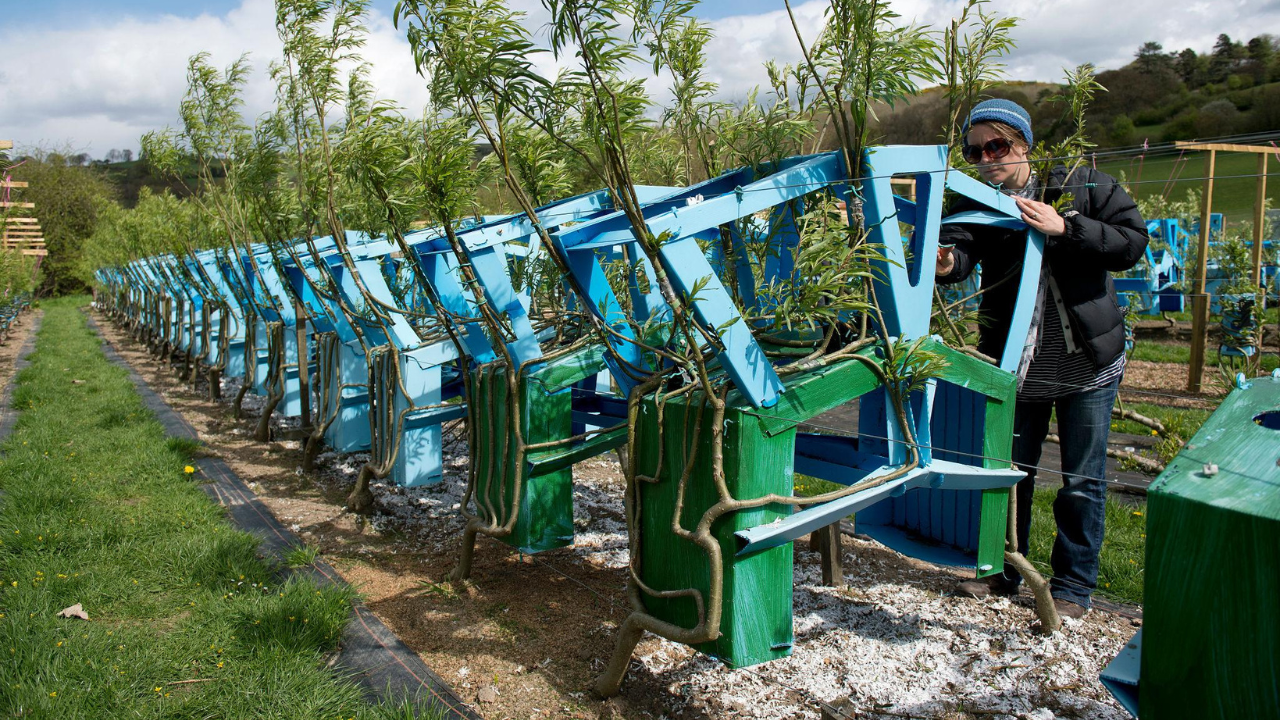
On a quiet patch of countryside in Derbyshire, England, rows of carefully shaped trees are growing in unusual directions. Some curve into loops, others bend like armrests, and a few already resemble the outline of chairs. But this is not an art installation or a sculpture garden. It is a long-running experiment in growing furniture directly from living trees.For nearly two decades, British couple Gavin Munro and Alice Munro have been refining a process that allows willow, oak and ash trees to slowly grow into functional furniture. Instead of cutting timber and assembling pieces together later, the couple shape the tree itself while it is still alive.
How a UK couple grows chair from living trees
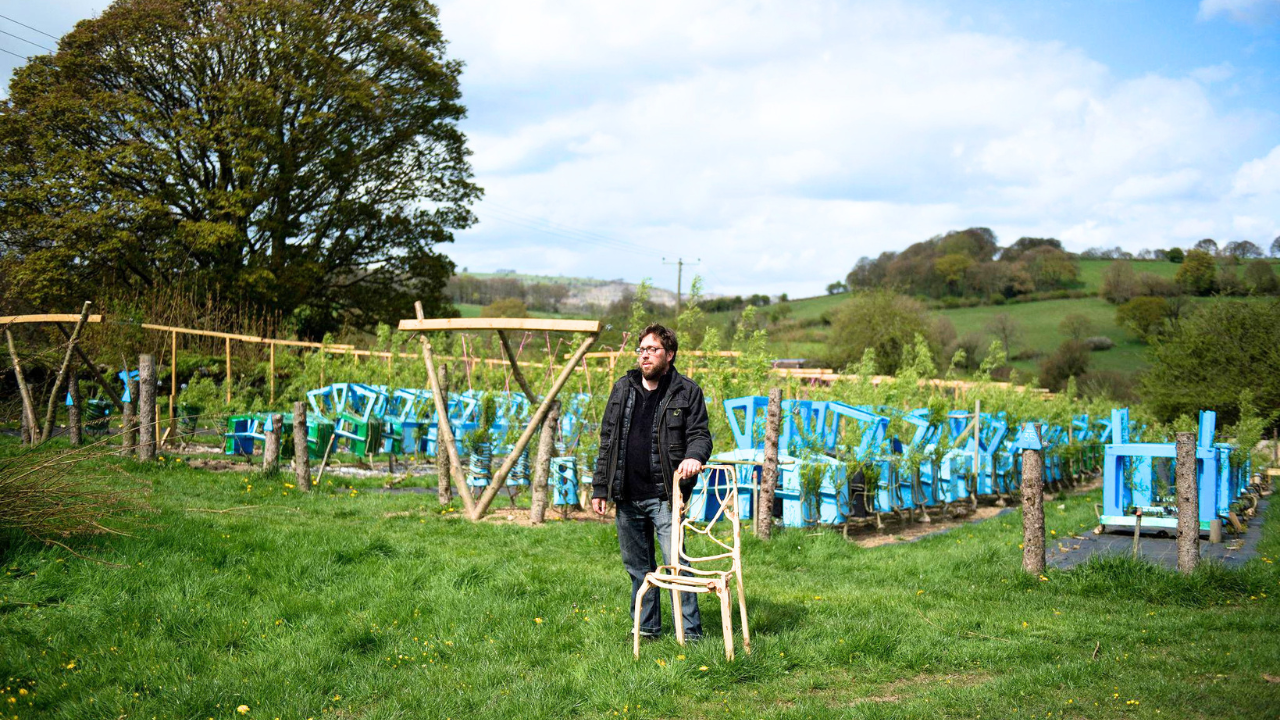
The project is operated through their company, Full Grown, based in Derbyshire. Their aim is to rethink how furniture is made by growing objects into their final shape naturally.Rather than sawing wood into planks and producing waste through industrial manufacturing, the couple guide young trees over specially designed moulds. As the trees grow, branches are trained and pruned into forms that eventually become chairs, stools, lamps and tables. The result is a single continuous wooden structure shaped by natural growth rather than conventional construction.The process begins with planting young saplings or coppiced shoots in carefully arranged rows. The trees are then slowly bent around recycled plastic frames that act as moulds for the final furniture shape.Branches are tied into position and monitored constantly as they grow. Over time, sections are grafted together so they naturally fuse into a single piece of wood. This biological process, known as inosculation, allows separate branches to merge as they thicken. Some trees are even grown upside down because it helps create stronger structural curves for chair legs and backs.The shaping process takes years of pruning, adjusting and monitoring before the furniture is ready to harvest.
Each chair can take nearly a decade
One of the most remarkable parts of the project is the timescale involved. A single chair may require between six and ten years to fully grow, depending on the tree species and design complexity.Fast-growing willow can form furniture relatively quickly, while oak takes much longer but produces stronger and more durable pieces. After harvesting, the furniture still needs around a year of drying and finishing before it can be used.The slow process means the company operates more like a long-term farming project than a traditional furniture workshop.
The childhood inspiration that started it all
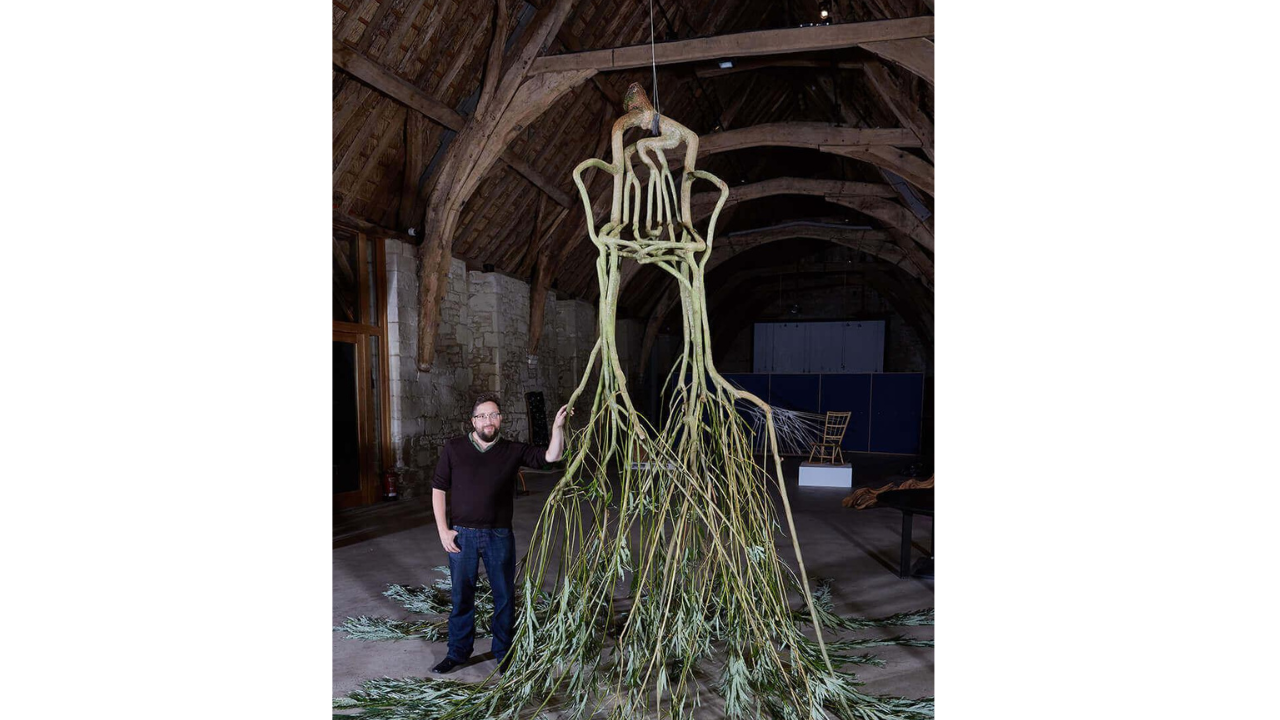
According to reports, Gavin Munro first became fascinated with the idea as a child after seeing a bonsai tree that resembled a miniature throne. Years later, after studying furniture design and working with driftwood furniture in San Francisco, he began experimenting with living trees.The couple formally launched Full Grown in 2005 and started testing designs in a family garden before expanding into larger growing fields. Over the years, they refined techniques for shaping, grafting and stabilising the living furniture structures.
Why the project has attracted global attention
The idea of “growing furniture” has captured worldwide interest because it combines sustainability, craftsmanship and biology in an unusual way.Traditional furniture production usually involves cutting down mature trees, milling timber into boards and producing large amounts of waste during manufacturing. Multiple wooden pieces are then glued or fastened together through industrial processing. The Munros’ method reduces many of those steps because the tree itself becomes the finished structure.Designers and environmentalists have praised the concept as an example of sustainable and regenerative design that works with nature instead of against it.
The connection to ancient living structures
The idea of shaping living plants into useful structures is not entirely new. Many people have compared the project to the famous living root bridges in Meghalaya, where indigenous Khasi and Jaintia communities guide the aerial roots of rubber fig trees across rivers over decades.Like Full Grown’s furniture, those bridges rely on patience, biological growth and long-term natural engineering rather than modern industrial construction. Both examples show how humans can work alongside living systems instead of simply extracting materials from nature.
Where science and design meet
What makes the project especially fascinating is the way it blends biology with industrial design. The furniture is not carved into shape after harvesting. Instead, the shape develops gradually while the organism is alive.Many architects and researchers see projects like this as part of a broader future involving bio-fabrication, living architecture, sustainable materials and regenerative manufacturing. The Munros’ work is often viewed as an early real-world example of these ideas in action.
Why people are fascinated by living furniture
Part of the fascination comes from how unusual the finished pieces look. Every chair carries the natural curves, knots and grain patterns of the living tree it came from. Unlike factory-made furniture, no two pieces are exactly alike.The project also challenges a deeply ingrained assumption about manufacturing. Most furniture begins with cutting trees apart. Full Grown reverses that process entirely by allowing the tree to become the object itself. For many people, the idea feels both ancient and futuristic at the same time.
A powerful vision of sustainability
In a world built around speed and mass production, the Munros’ project operates on patience measured in years rather than weeks.Their work demonstrates an alternative way of thinking about design, one where natural growth becomes part of the manufacturing process itself. While growing furniture may never fully replace industrial production, it has opened conversations about how biology, sustainability and craftsmanship could shape the future of manufacturing in unexpected ways.