
Watch: America’s C-RAM system in action intercepting rockets and fired at US embassy in Iraq
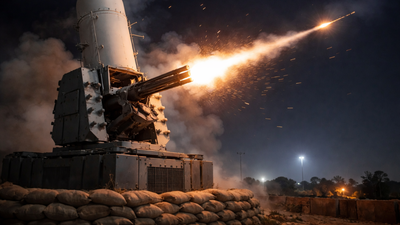
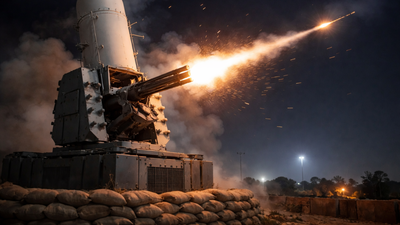
Air defence systems protecting the US embassy compound in Baghdad were activated late Saturday after rockets were fired toward the heavily fortified Green Zone, according to Iraqi security officials. Loud explosions echoed across the Iraqi capital as the American Counter-Rocket, Artillery and Mortar (C-RAM) defence system intercepted incoming projectiles.Security sources told AFP that four rockets were launched toward the US embassy complex. Iraqi officials said three were intercepted by air defences, while another landed in an open area within the embassy’s airbase. A separate security source said all four rockets were effectively neutralised.
Witnesses near the Green Zone reported seeing defensive systems firing into the night sky as loud detonations followed moments later. The incident marks the first attack on the US embassy in Baghdad since the start of the Middle East war, triggered by the joint US-Israeli strikes on Iran.Iraqi Prime Minister Mohammed Shia al-Sudani condemned the attack and ordered security forces to track down those responsible. He said targeting diplomatic missions operating in Iraq was a “terrorist act” that cannot be justified under any circumstances.Iraq has long been a battleground for tensions between Washington and Tehran, and the widening regional conflict has dragged the country further into instability. In recent days, drone and rocket attacks have also targeted Baghdad International Airport, oil infrastructure and bases hosting US troops. Similar incidents have occurred in Iraq’s autonomous Kurdistan region, where American forces maintain a presence.
What is the US C-RAM defence system?
The Counter-Rocket, Artillery and Mortar (C-RAM) system is designed to protect military bases, embassies and critical infrastructure from incoming rockets, artillery shells and mortar rounds.
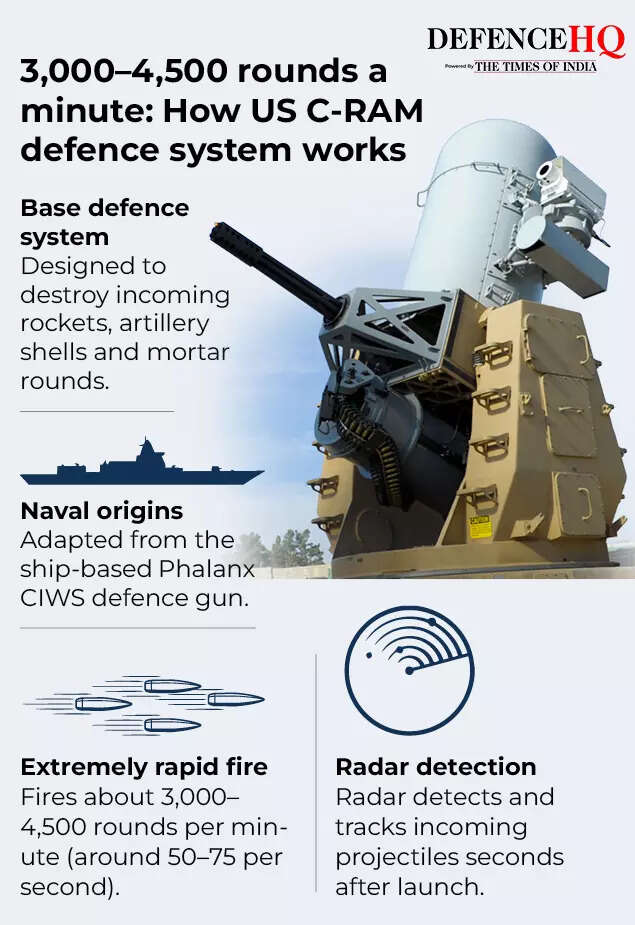
Originally developed by the US Army during the Iraq war, the system is based on the Phalanx Close-In Weapon System, a rapid-fire defence platform previously used on naval vessels to intercept incoming missiles. The land-based version was adapted to counter short-range threats commonly used in insurgent attacks.C-RAM combines radar sensors, fire-control software and a high-speed rotary cannon to detect, track and destroy incoming projectiles in mid-air. Once radar systems identify a rocket or mortar round, the system calculates its trajectory within seconds and fires bursts of ammunition to intercept it before impact.
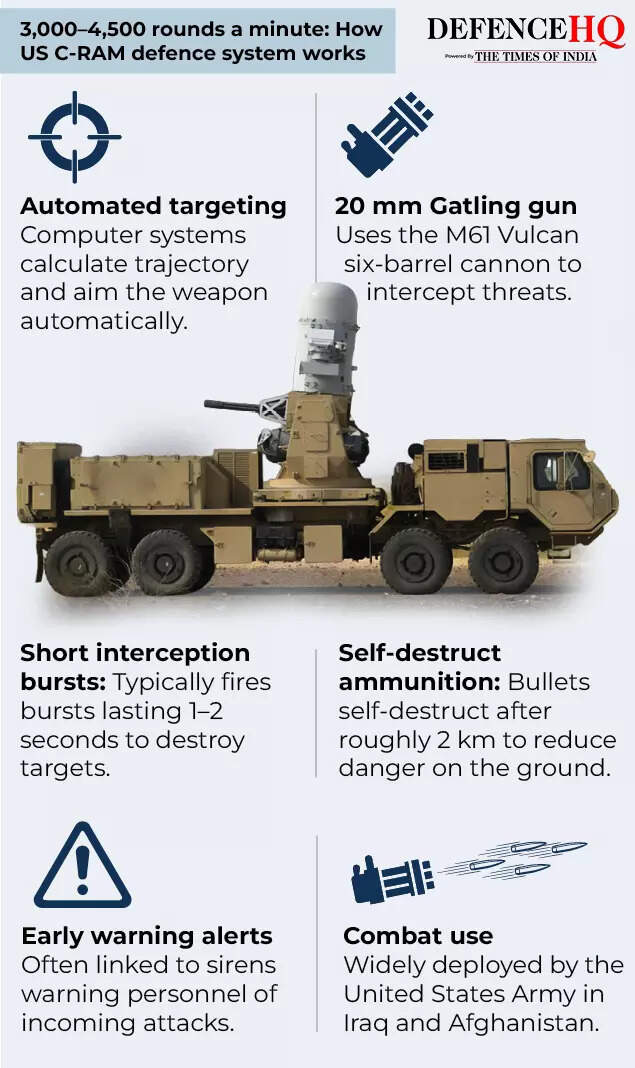
The network integrates several components, including the AN/TPQ-36 Firefinder radar and Lightweight Counter Mortar Radar, which detect and track projectiles immediately after launch. A command-and-control system then predicts the impact location and activates warnings for troops on the ground.Unlike its naval counterpart, the land-based C-RAM uses self-destructing ammunition designed to reduce the risk of civilian casualties from falling debris. Tests have shown the system can intercept a significant proportion of incoming threats, making it one of the primary last-line defence systems protecting US installations in conflict zones.The system has been widely deployed at American bases and diplomatic facilities in Iraq and Afghanistan.