
Why do humans blush? There is a hidden evolutionary reason that you can’t control |
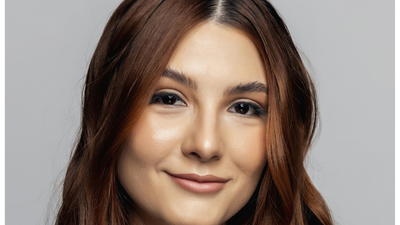
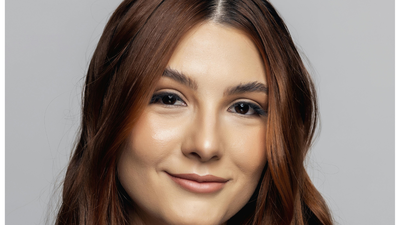
You walk into a room and suddenly feel every eye on you. Before you can even process what is happening, warmth rushes to your face. Your cheeks turn red, your skin tingles, and the more you think about it, the worse it gets. Blushing feels uncontrollable and often embarrassing, yet it is one of the most uniquely human reactions we have. Why would evolution give us a response that seems to highlight vulnerability so visibly? The answer lies in something far more sophisticated than awkwardness. Blushing is not a flaw. It is a deeply social signal, shaped over time to help us navigate relationships, repair mistakes, and maintain trust.
What actually happens when you blush
Blushing is more than just a red face. It is a precise physiological response controlled by the sympathetic nervous system, the same system involved in stress and excitement. However, unlike the usual response where blood vessels tighten, the opposite happens in the face.Tiny blood vessels in your cheeks, ears, neck, and sometimes upper chest expand, allowing more blood to flow near the surface of the skin. This creates the visible redness we recognise as a blush. It is a specialised response, not just a byproduct of stress, and it appears to be finely tuned for social situations.The warmth and slight tingling that accompany a blush come from this increased blood flow. Once it begins, self awareness often intensifies it. The more you notice it, the stronger it becomes, creating a feedback loop that can feel impossible to break.
Why you cannot control it
Blushing is almost impossible to control, and that is exactly why it works. Try forcing yourself to blush or stopping it midway. Most people quickly realise they cannot. This lack of control is not a weakness but a key feature.In evolutionary terms, signals are only useful if they are honest. If blushing could be faked, it would lose its meaning. Psychologists such as W. Ray Crozier have shown that blushing is closely linked to self awareness, especially the moment we realise others are judging us. It is tied to what scientists call “theory of mind,” our ability to imagine how we appear from someone else’s perspective.Because we cannot easily control it, blushing becomes a reliable signal. It tells others that our reaction is genuine, not staged. In early human societies, where trust and cooperation were essential, such honesty would have been incredibly valuable.

A silent signal that repairs social mistakes
Blushing is strongly connected to emotions like embarrassment, shyness, and even moments of unexpected attention. But it is not just an internal reaction. It is a form of communication.One widely accepted idea is the appeasement hypothesis. A blush acts like a non verbal apology. When we make a social mistake or attract unwanted attention, the redness signals that we recognise what happened, that we respect social norms, and that we are not a threat.Research supports this. Studies by Corine Dijk and colleagues have found that people who blush after a mistake are judged more positively. They are seen as more trustworthy, sincere, and likeable. In experiments involving trust-based decisions, observers were more willing to give second chances to those who blushed, suggesting that the reaction helps rebuild damaged trust.In other words, blushing does more than reveal emotion. It actively helps repair social relationships.
Why blushing is uniquely human
Blushing appears to be exclusive to humans. While other primates show emotional expressions, none display the same involuntary facial reddening tied to self-awareness. Charles Darwin famously described blushing as the most distinctly human expression.There are two key reasons for this. First, human faces are relatively hairless, making changes in blood flow clearly visible. Second, blushing requires advanced social thinking. It depends on our ability to reflect on ourselves and consider how others see us.Without this level of cognitive complexity, the trigger for blushing simply would not exist. Evolution appears to have taken a basic biological response and transformed it into a powerful social tool.
The evolutionary advantage of turning red
At first glance, blushing seems like a disadvantage. It exposes vulnerability and draws attention. But in social species like humans, openness can be beneficial.In early communities, where people depended on each other for survival, a clear and honest signal of regret or self awareness could prevent conflict and strengthen bonds. A blush showed that someone understood a mistake and cared about group norms. This made forgiveness more likely and cooperation easier.Modern research continues to support this idea. People who visibly blush after a social misstep are often treated more kindly and are more likely to regain trust. What feels like embarrassment is actually a subtle tool for maintaining harmony.
A deeply human response
The next time your face turns red, it may feel uncomfortable, but it reveals something important. It shows that you are socially aware, that you care about how others perceive you, and that you are capable of empathy and reflection.Blushing is not a flaw to overcome. It is a reminder that we are wired for connection. It reflects a quiet but powerful truth about human nature. We are not meant to navigate the world alone. We are built to understand each other, respond to each other, and, when necessary, repair the bonds that hold us together.