
Why drivers are wrapping car keys in aluminium foil: Here’s how you can save your car from ‘silent theft’
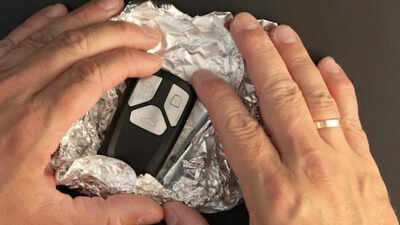
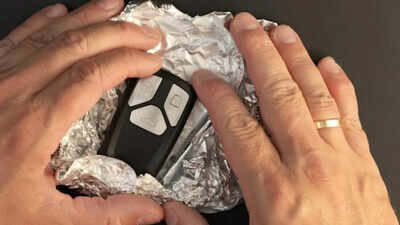
It may sound odd at first: Wrapping your car keys in aluminium foil? Seems like something you’d read on a life-hacks thread, or maybe a tip from your super-paranoid uncle. Still, it’s catching on, and for good reason.This whole habit comes out of a pretty wild new type of crime: ‘silent car theft’. What exactly is a ‘silent car theft’? In this kind of theft, thieves can steal your car in seconds, and there’s not a scratch or smashed window in sight. You wake up, and your car is just… gone. No alarm, no broken glass, not even a hint that anything happened.
Car keys in aluminium foil: What’s really going on?
Here’s the thing: Keyless cars might sound all non-fussy, but the problems they create are quite pressing, too. Most cars these days let you unlock them without going through the usual nuisance of fiddling with your keys. All you need is the fob in your pocket. The car senses the signal, and bam — you’re in.Sure, it feels super convenient, but there’s a catch. Your key fob is always sending out a low-power radio signal. The car keeps listening for it, and when it picks up the signal nearby, it opens up and lets you start the engine.That constant connection is exactly what thieves have figured out how to exploit.Now, a relay attack isn’t about breaking windows or picking locks. It’s all about tricking your car’s brain. Two thieves work together. One stands near your door or window, close to where your key usually sits inside. The other is parked next to your car, ready to grab it.Using cheap electronic gear, they pick up the key’s signal and relay it to your car. The car thinks the key’s right there, so it happily unlocks, lets the engine start, and the thief drives off. The whole thing takes maybe 30 seconds. No noise, no mess, no damage. Your car just vanishes.So, where does aluminium foil actually help?Here’s where people start reaching for the kitchen drawer. If you wrap your key fob in foil, it blocks the signal — it’s kind of like a homemade Faraday cage. The key can’t “talk” to the outside world, and thieves can’t pick up or relay that signal. In theory, simple physics. And in practice, it can absolutely help.It sounds pretty promising, sure. But does it work for real?Some say foil lowers your risk, but it’s definitely not a foolproof fix. Foil tears easily, doesn’t always wrap perfectly, and it gets annoying to use every day. Even tiny gaps can let signals slip out, and after a while, you might forget to wrap the key, or the foil just isn’t holding up.Plus, relay theft (carjacking) is just one way people steal cars. Someone could still break in physically, tow your car, or use other gadgets. So foil’s just a quick patch—not a permanent solution.Why is this happening now?In the world of the digital boom, car theft has also gone digital. The old days of hotwiring and crowbars are fading fast. Thieves are all about technology now. Keyless systems sounded like a great idea, but they’ve turned into a huge security hole, especially in older models. These thefts leave no trace, so they’re tough to investigate and can even mess up your insurance claims.So, how do you protect your car?Here’s what experts really recommend. Foil works in a pinch, but security pros prefer better fixes:
- Keep keys away from doors and windows so thieves can’t pick up their signal as easily.
- Use a proper Faraday pouch instead of foil—it’s built for the job.
- Turn off keyless entry features if your car lets you.
- Add visible deterrents like steering wheel locks.
- Always know where your keys are, especially in public.
It’s important to note that none of these steps guarantee you’ll never lose your car, but they make it way harder for thieves, and that’s good enough for most people.