
Why your dishwasher might be causing your slow sink |
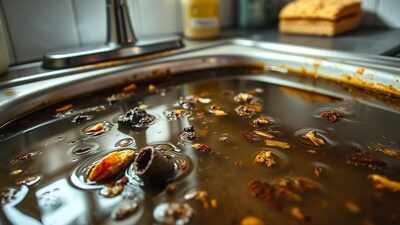
We have all been standing at the sink staring at the water being drained out of our sink, taking our time doing so. Pointing fingers at that random noodle, hair, and declaring victory. But the true problem lies in something unseen yet extremely sticky in nature. There is an accumulation of fat, oils, and grease known as FOG, which is quietly forming a hardened, concrete-like substance deep within the pipes of millions of households. Despite avoiding putting your bacon grease directly down, you could have a fatberg.This problem is not only about what you dump in the sink, but it also deals with the chemistry that happens when the grease mixes with the water. People often imagine greasy substances as floating on top of the water as a thick layer, but in the fast-paced environment of the kitchen, grease turns into thousands of small droplets that evade easy trapping. Grease particles float around the pipes slowly, like sludge, until the right chemical reaction makes them stick permanently.Why your dishwasher makes the problem even more severeWhat is interesting about contemporary plumbing systems is that they allow us to do things faster, yet this technology could be contributing to the problem we try to solve. Manual washing produces large grease globules that are easier to trap in a container than grease droplets created by dishwashers.A detailed study published in the journal Water Research reveals the hidden scale of this issue. The researchers found that nearly 80 per cent of the grease particles produced by dishwashers are smaller than 45 micrometres. To put that in perspective, a human hair is about 70 micrometres wide. These particles are so small that they simply bypass standard grease traps and interceptors, flowing directly into your main sewer line.As soon as they get through to the plumbing system, they undergo a process called saponification, which is actually a scientific concept used in soap making. The only difference is that in the latter case, one gets soft and fragrant bars of soap, while the other one results in a hard wax-like substance. According to the investigation, a combination of fatty acids and the presence of calcium in concrete piping and sewage leads to the formation of “calcium soaps” that become hard as stones. That is the reason why the plumber feels like pulling a solid stone from the pipe.Dispelling the “baking soda and vinegar” mythThe first and probably the most popular remedy offered by many sources in search of a solution to the problem would be using baking soda and vinegar. There is no doubt that there is something satisfying about the foamy reaction produced by the concoction; however, from a scientific standpoint, this technique cannot resolve the problem because of the chemical composition of fat blocks.
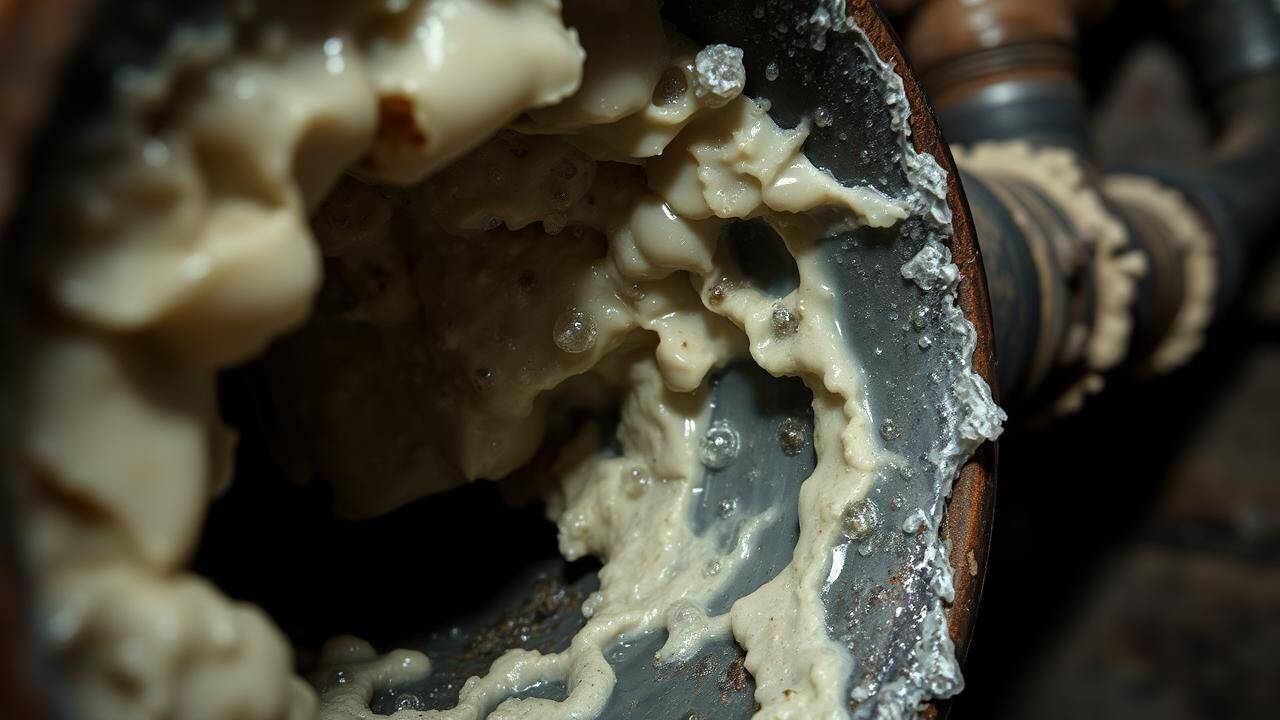
Simple remedies like baking soda and vinegar are ineffective. Source control, including pre-wiping dishes, is crucial for preventing these costly clogs.
According to a review titled International evolution of fat, oil and grease (FOG) waste management, grease buildup accounts for a staggering 40 to 70 per cent of all sewer blockages globally. The study notes that because these deposits incorporate other solids like wet wipes and food scraps, they become reinforced structures that require high-pressure jetting or mechanical removal to clear.The conclusion to draw from this research is very obvious: source control is the only solution to the problem of these periodic blockages. The first step that a homeowner should take is changing the pre-washing technique. It should be changed so that you can no longer let the dishwasher deal with the fatty matter – use paper towels to remove any visible grease and oil from the plates and pans before they even get washed.Smart pre-washing tips for unblocked drainsTo make sure your drain never gets blocked, always remember that the drain is supposed to work only one way – for passing water. Never throw cooking oil down the drain. Even if you pour the still-hot oil, it will immediately solidify upon meeting the cold plumbing underneath your home. To avoid this problem, save up an old glass bottle or an empty coffee tin for pouring the used grease into.For maintenance purposes, flush the pipes each week by pouring a pot of hot water along with some degreasing dish soap into them. This will help to move any free-floating debris out of the pipes before they react with the calcium and becomes hardened deposits. Understanding the small war being fought within your plumbing system can save you from having “concrete” form in there, keeping your kitchen running smoothly without emergency plumbing services.